The internet is a loud, fast, and often confusing place. Every day, we are flooded with videos, headlines, and “facts” that are designed to make us feel something—usually outrage, shock, or disbelief. In the middle of this digital chaos, one creator has become a calm voice of reason. Mitch Clark, known to millions as MitchCK, has built a massive following by doing something deceptively simple: he teaches people stuff. Whether he is debunking a viral myth, explaining a complex scientific concept, or helping people spot misinformation, his goal is always the same—to provide the context that the internet often leaves out.
Today, we are excited to share this PetNarianPets x Mitch Clark feature, exploring the story behind the man who has made “Hope that helps” the most trusted sign-off on social media.
Table of Contents
Making the Complex Simple
Many people see Mitch as a digital educator, but his journey actually began in the world of marketing. While some might think of marketing and education as two different worlds, Mitch sees them as having the same core requirement: effective communication. For years, he has worked in marketing, honing the skill of copywriting. In the marketing world, your job is to take a product or a concept—sometimes a very complicated one—and explain it in a way that is clear, engaging, and accessible. You cannot assume your audience already knows what you know; you have to meet them where they are.
During our conversation, Mitch explained that this is exactly what good education looks like. It is the ability to take something dense and make it easy for anyone to understand. Even as his platform has grown to reach millions, Mitch has not left his marketing career behind. Instead, he has added content creation to his professional life, treating the two as complementary paths. The skills he uses to help a brand reach its audience are the same skills he uses to help a viewer understand why a viral video might be misleading. By keeping one foot in the professional world and one in the creator space, he maintains a grounded perspective that is rare in the high-speed world of social media.
Answering the Call for Context
The story of “MitchCK” as we know it today didn’t start with a grand plan to become a public figure. It started in the comment sections of viral videos during the global disruptions of 2020. At a time when everyone was stuck at home and glued to their screens, the amount of information—and misinformation—being shared was at an all-time high. Mitch noticed a pattern: under every viral myth or half-baked science claim, there were people asking questions. They weren’t satisfied with just the surface level; they wanted to go deeper. They wanted the real answer and the actual context.
Mitch realized that he had the skills to provide that context. He didn’t just want to tell people they were wrong; he wanted to show them how to find the truth for themselves. This wasn’t about being a “debunker” in a negative sense; it was about being a guide. He saw a gap where clear, neutral information should be, and he decided to fill it. This approach resonated immediately. By treating his viewers like intelligent people who were simply looking for better data, he built a community based on mutual respect and a shared love for learning.
Logic Over Emotion
If you look at Mitch’s bio, you’ll see the word “Mentat.” For fans of Frank Herbert’s classic novel Dune, the term is immediately recognizable. In that world, a Mentat is a human whose mind is trained to function with the precision of a computer. They are masters of logic, memory, and data processing. For Mitch, being a Mentat isn’t just a label—it’s a pursuit. It’s about a commitment to training the mind to look at information objectively, without letting emotion cloud the facts.
Mitch is the first to tell you that this isn’t some superhuman ability. He has a naturally curious mind and a strong memory, but the “Mentat path” is something he believes is open to everyone. Every time someone watches one of his videos and decides to do their own research rather than just reacting, they are engaging in that training. It is about moving away from the “gut reaction” and toward a more analytical way of seeing the world. In this PetNarianPets x Mitch Clark feature, we want to highlight that this kind of mental discipline is more important now than ever before. We are all living in a world of data, and learning how to process that data effectively is a survival skill for the modern age.
The TED Talk: A Survival Kit for the Brain
One of the most significant milestones in Mitch’s journey was his TEDx Talk. In this presentation, he laid out a practical framework for navigating the digital world. He called it the ” Survival Kit,” and it consists of three simple steps: Pause, Ask Why, and Double-Check. While these steps might seem basic, they are incredibly powerful when they become a habit. The beauty of this kit is that it doesn’t have an expiration date. It isn’t built around a specific app or a current trend; it is a way of thinking that will remain relevant no matter how much technology changes.
In his talk, Mitch emphasized that the hardest part of the survival kit isn’t the “how,” but the “when.” It’s about remembering to use these tools in the moment when you feel most triggered to react. The internet is designed to make us move fast, but Mitch’s message is that we need to slow down. By taking that small moment to think before we share or comment, we are taking back control of our own attention. This is what it means to have digital sovereignty—the power to decide for yourself what is true and what is worth your time.
The Neurology of the Ten-Second Pause
To understand why Mitch’s survival kit is so effective, you have to look at the way the human brain is wired. When we see something that makes us angry or shocked, a specific part of our brain called the amygdala fires up. The amygdala is responsible for our “fight or flight” response. It is fast, instinctive, and built for survival in a world where we had to react instantly to danger. However, the amygdala isn’t great at logic or accuracy. It just wants us to react.
This is where the “ten-second pause” comes in. By waiting just ten seconds before we react to a piece of content, we allow the prefrontal cortex—the part of the brain responsible for reasoning and judgment—to catch up. Most misinformation is specifically engineered to hit the amygdala and make us react before the logical part of our brain can take the wheel. When you pause, you aren’t just fighting an instinct; you are breaking a bad habit. You are creating the gap where critical thinking lives. Through this collaboration, we want to encourage everyone to try the “ten-second rule” the next time they see a headline that feels too good (or too bad) to be true.
Creating a Place to Exhale: The Importance of Neutrality
One of the most unique things about Mitch’s platform is his commitment to neutrality. In a world where almost everything feels polarized, his page is a rare exception. He intentionally avoids engaging in divisive debates about politics or religion. Instead, he focuses on the facts. This isn’t about being a “fence-sitter”; it’s about creating a space where everyone is welcome.
Mitch describes his page as a place where people can “exhale.” When you visit his profile, you don’t have to worry about being pushed in a certain direction or being told how to feel. You just get the information. He hopes that by providing a neutral ground, he can help people develop the critical thinking skills they need to make their own decisions out in the world. At PetNarianPets, we share this value of objective education. Whether we are talking about animal behavior or digital literacy, the goal should always be to provide the tools for understanding, not to dictate the outcome.
The “Guide” Persona: Empowering the Audience
Mitch’s transition from a “teacher” to a “guide” was a very intentional choice. As he explains, giving someone an answer is satisfying in the moment, but it doesn’t do much for them long-term. A guide, however, does both: they help you with what you need right now, but they also set you up to help yourself down the road. This is the heart of the “Hope That Helps” philosophy. It’s about empowerment through information.
By encouraging his audience to ask questions, Mitch keeps the engine of curiosity running. In his view, the people who stay curious and keep asking “why” are the ones who grow with the times instead of getting left behind by them. This is especially important as we move into an era dominated by artificial intelligence. When the internet is flooded with synthetic content, the ability to ask the right questions becomes our greatest asset. A guide doesn’t just show you the path; they teach you how to read the map.
The Future of Truth in the AI Era
As we look toward the future, the challenges of misinformation are only going to grow. Generative AI can now create images, videos, and articles that look and sound completely real. This is why the work of creators like Mitch Clark is so vital. He isn’t just fighting today’s myths; he is preparing us for a future where “the real” will be harder to find.
Mitch believes that as the digital world becomes more saturated with synthetic content, people are going to crave something real more than ever. Reality is truth, and truth is what spreads when the craving for it hits critical mass. By building a foundation of media literacy now, we are ensuring that we are ready for that moment. The “Survival Kit” from the TEDx Talk isn’t just a set of rules for social media—it’s a philosophy for living in an information-rich world.
Hope That Helps: A Community of Learners
The “Hope That Helps” movement has even expanded into the physical world through Mitch’s shop. While he didn’t set out to build a lifestyle brand, his audience kept asking for merchandise, so he made it. He put the same level of care into creating things people would actually want to wear as he does into his videos. The shop is a way for his community to show their support and carry the message of curiosity and skepticism into their daily lives.
Building a community is a big responsibility, and Mitch is honest about the challenges. He manages a full-time career, posts every day, and tries to keep up with thousands of comments and messages. He admits that he hasn’t solved the “time problem” yet, but his commitment to the mission is unwavering. He doesn’t pretend to have all the answers, but he is dedicated to the pursuit of finding them. This authenticity is what makes him such a trusted figure in the digital space.
The Power of Informed Curiosity
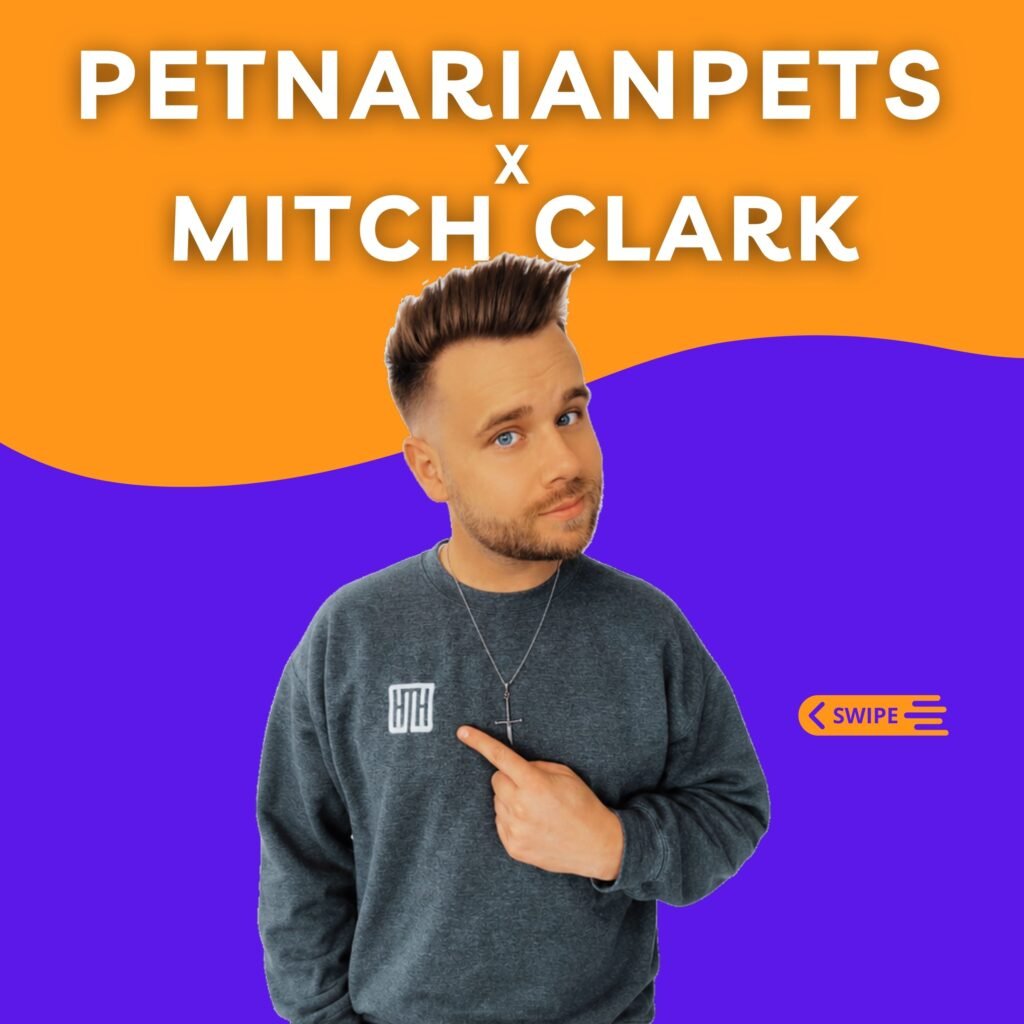
As we conclude this feature, we want to thank Mitch for sharing his story and his insights with us. The PetNarianPets x Mitch Clark collaboration is a reminder that the skills we need to understand the natural world are the same skills we need to navigate the digital one. It all comes back to observation, patience, and the willingness to ask questions.
Whether you are spending a quiet morning, scrolling through your feed, or watching the TEDx Talk, remember the power of the pause. In a world that wants you to react, choosing to think is a radical and necessary act. We are all on this “Mentat path” together, learning as we go and trying to make sense of the world one piece of information at a time.
We hope this deep dive into Mitch’s world has given you some new tools for your own survival kit. Stay curious, stay skeptical, and keep noticing the wonder in the world around you.
Stay wild, stay curious – only on PetNarianPets!
Join The Fun On Instagram, X, Pinterest and YouTube.
Wanna Say Something about animals ? Contact Us.