
WATCH: The Vibrant Red River Hog in its Natural Habitat]
(Video Placeholder: Explore the social lives and stunning colors of the Potamochoerus porcus in this video.)
Table of Contents
The Most Colorful Wild Pig of the African Rainforest
The African wilderness is home to an incredible array of suids, but none captures the eye quite like the Red river hog. Often described as the Most colorful wild pig in existence, this striking mammal is a departure from the drab greys and browns usually associated with wild swine. With its vivid orange-to-reddish coat, contrasting white dorsal stripe, and ornate facial markings, it appears almost as if it were painted by hand. This species is not just a visual marvel; it is a highly adaptable survivor that thrives in some of the most challenging environments on the continent, from dense tropical jungles to marshy riverbanks.
At Petnarianpets, we believe that understanding the nuance of African biodiversity requires looking closely at these often-overlooked forest dwellers. The Potamochoerus porcus is a master of its domain, utilizing its keen sense of smell and powerful build to navigate the undergrowth. While many are familiar with its cousin, the common warthog, the red river species offers a more mysterious glimpse into the ancient lineages of African wildlife. Their presence is a vital component of the forest ecosystem, acting as both a gardener through their foraging and a prey source for the apex predators of the region.
The importance of the African wild hog species cannot be overstated. They are primary seed dispersers and soil aerators. As they root through the damp earth for tubers and invertebrates, they churn the soil, allowing new plant life to take hold. This biological process ensures the continued health of the rainforest. However, their striking appearance has also made them a subject of great interest for wildlife photographers and researchers alike. In the following sections, we will dive deep into the world of this magnificent suid to uncover the secrets of its survival and its unique place in the natural order.
Scientific Classification and Evolutionary History
The taxonomic journey of the Red river hog is as rich as its coat color. Formally known by the Himalayan monal scientific name—wait, let us refocus on the correct nomenclature: Potamochoerus porcus. The genus name Potamochoerus is derived from the Greek words “potamos,” meaning river, and “khoiros,” meaning pig. This refers directly to the animal’s strong affinity for riparian zones. Historically, there was significant debate regarding whether this species and the southern African bushpig were the same, but modern genetic analysis has confirmed their status as distinct species.
| Field | Data Detail |
| Classification | Kingdom: Animalia, Phylum: Chordata, Class: Mammalia, Order: Artiodactyla, Family: Suidae |
| Scientific Name | Potamochoerus porcus |
| Habitat | Rainforests, wet savannas, and swamps of West and Central Africa |
| Diet | Omnivorous: Roots, tubers, fruit, insects, and small vertebrates |
| Lifespan | 15 to 20 years in the wild; up to 22 years in captivity |
| Superpower” or Special Feature | Exceptional swimmers with highly acute olfactory senses |
| Natural Predator | Leopards, Spotted Hyenas, and Pythons |
| Natural Prey | Earthworms, snails, lizards, and fallen forest fruits |
Biological Overview of the Potamochoerus porcus
The biology of the Potamochoerus porcus is a fascinating study in adaptation. Unlike many other pigs that prefer open plains, this species has evolved for life in the shadows. Their bodies are somewhat “streamlined” compared to the bulky domestic pig, allowing them to push through thick vines and tangled roots without getting stuck. Their skulls are reinforced for heavy rooting, and their powerful neck muscles provide the leverage needed to overturn logs and large stones in search of food.
A key biological feature is their nocturnal and crepuscular nature. While they can be active during the day in undisturbed areas, they generally wait for the cover of twilight to emerge. This behavior is a defensive mechanism against daylight-hunting predators. Their eyesight is adequate for low-light conditions, but they rely most heavily on their hearing and smell. A Red river hog can detect the scent of a buried tuber from several inches beneath the mud, a testament to the sophistication of their snout anatomy.
Anatomy and Physical Traits: Why do red river hogs have tufted ears?
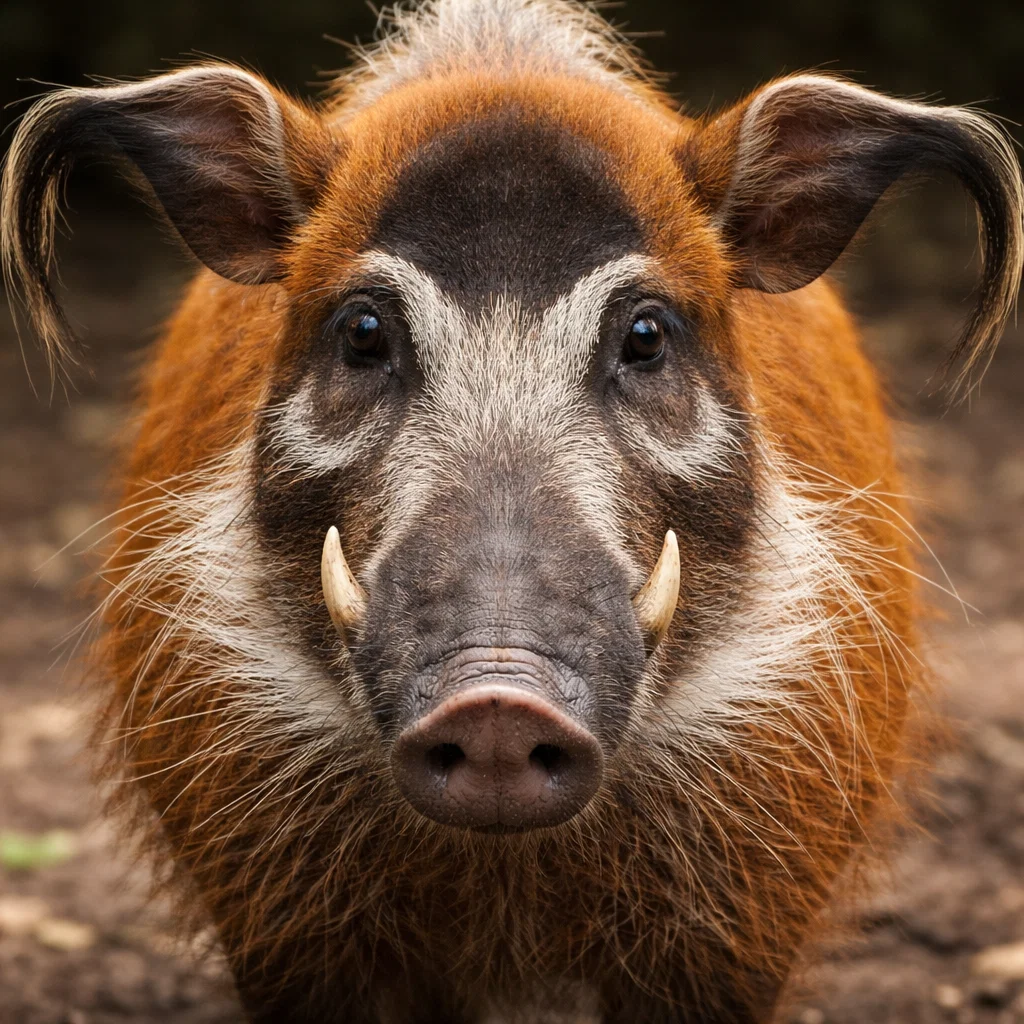
One of the most striking questions researchers receive is: Why do red river hogs have tufted ears? These long, white tassels of hair extending from the tips of the ears are not merely for decoration. While they likely play a role in social signaling—allowing members of a group to see each other in the dim forest light—they also serve a functional purpose. The tufts can act as sensory extensions, picking up subtle vibrations or air movements that might indicate the approach of a predator. Furthermore, when the hog is agitated or alert, it flickers its ears, making the white tufts highly visible to its companions as a silent warning.
In addition to their ears, the Red river hog teeth are a critical anatomical feature. They possess sharp, self-sharpening tusks that grow from both the upper and lower jaws. These tusks are used for defense and for scraping bark or digging. While not as long as the tusks of a warthog, they are incredibly sharp and can inflict serious damage on an attacker. The “mask” on their face—consisting of white circles around the eyes and a white snout—serves as a form of disruptive coloration, breaking up the animal’s outline against the dappled sunlight of the forest floor.
Red River Hog Size: Dimensions and Weight
When considering the Red river hog size, one finds a medium-sized suid that is remarkably dense and muscular. Adult males, often called boars, are typically larger than females (sows). On average, an adult stands between 20 to 31 inches (50 to 80 cm) at the shoulder. In terms of length, they can grow to be 39 to 59 inches (100 to 150 cm) long, excluding the tail.
The weight of these animals varies significantly depending on the availability of food in their Red river hog habitat. A healthy adult boar can weigh anywhere from 110 to 250 pounds (50 to 115 kg). For those asking How big do red river hogs get?, they are roughly the size of a large dog but much heavier and broader. Their low center of gravity makes them extremely stable, which is helpful when they are running through slippery mud or crossing fast-moving forest streams.
The Shimmering Coat: Understanding Pig Coloration
The reason the Red river hog is called the most colorful pig lies in its coat’s unique properties. The hair is coarse and bristly, but it has a natural sheen. The dominant color is a rich burnt-orange or russet red. A prominent white stripe runs the entire length of the back, from the shoulders to the tail. This dorsal stripe is used in displays of dominance; when a hog is threatened, it bristles its back hair, making the stripe appear wider and making the hog look much larger to its opponent.
This coloration provides excellent camouflage in the “red” soils of the African rainforest and the reddish-brown leaf litter. In the shifting shadows of the canopy, the orange tones blend into the surroundings, while the white markings mimic the flecks of sunlight hitting the forest floor. At Petnarianpets, we often highlight this as one of nature’s most effective examples of cryptic coloration that is simultaneously vibrant.
African Wild Hog Species Distribution and Habitat
The Red river hog habitat spans across the tropical regions of West and Central Africa. Their range extends from Senegal in the west, through the Congo Basin, and as far east as the Albertine Rift. They are almost always found near water. Whether it is a slow-moving river, a seasonal swamp, or a permanent lake, the presence of soft, moist soil is a prerequisite for their survival.
They are versatile in their choice of vegetation, inhabiting primary rainforests, gallery forests, and even bushy savannas if there is enough cover. They avoid extremely arid environments where the ground is too hard for rooting. Because they are such capable swimmers, they are often found on islands within large river systems. This ability to cross water barriers has allowed them to colonize areas that other terrestrial mammals cannot reach, ensuring their widespread distribution across the heart of the continent.
Dietary Requirements: What do red river hogs eat in the wild?
For those curious about What do red river hogs eat in the wild?, the answer is almost anything they can find. They are quintessential omnivores. The bulk of their diet consists of plant matter, including roots, bulbs, and tubers which they extract from the ground. They are also fond of fallen fruits, especially those of the oil palm and various forest trees.
However, they do not shy away from animal protein. They are known to eat earthworms, snails, and large insects. Occasionally, they will scavenge on the remains of animals killed by leopards or even hunt small vertebrates like lizards and frogs. In areas near human settlements, they have gained a reputation as crop raiders, often feasting on yams, cassava, and maize. This diet flexibility is a key reason for their ecological success; even if one food source fails, they can easily pivot to another.
Social Structures and “Sounder” Behavior
The Red river hog is a highly social creature. They live in family groups known as “sounders,” which typically consist of 6 to 20 individuals. A sounder is usually led by a dominant male (the boar) and includes several females and their offspring. These groups are tight-knit, and members frequently communicate using a variety of grunts, squeals, and alarm whistles.
Scent marking plays a vital role in their social life. They have glands near their eyes and on their feet that they use to mark trees and trails. This chemical signaling helps keep the group together and warns other sounders to stay out of their territory. Within the sounder, grooming is common, which helps strengthen social bonds and remove parasites from the coarse fur.
Reproduction and the Journey of the Red River Hog Baby
The arrival of a Red river hog baby is a significant event for the sounder. Breeding can happen year-round, but it often peaks during the transition between the wet and dry seasons. After a gestation period of about 120 days, the sow will leave the group to find a secluded hollow or a dense thicket to give birth.
A typical litter consists of 3 to 6 piglets. Unlike the bright red adults, the babies are born with a dark brown coat marked with yellowish-white stripes and spots. This “watermelon” pattern is the perfect camouflage for a small animal that must remain motionless while its mother forages. As the Red river hog baby grows, these stripes gradually fade, and by about six months of age, they take on the vibrant red hue of the adults. The mother is fiercely protective of her young, and the boar will also defend the piglets from any perceived threat.
Interspecies Comparison: Red river hog vs bush pig differences
A common point of confusion in Red river hog facts is the comparison with the bushpig (Potamochoerus larvatus). While they are in the same genus, the Red river hog vs bush pig differences are quite clear upon closer inspection. The red river hog is generally smaller and much more brightly colored. The bushpig tends to be a shaggy grey or brown and lacks the extreme white facial mask and the long, flowing ear tufts.
Geographically, they are also separated. The red river hog is a creature of West and Central Africa, whereas the bushpig is found in East and Southern Africa. Their habitats overlap only slightly. Behaviorally, the bushpig is often considered more aggressive and is more likely to inhabit open scrublands compared to the forest-dwelling red river species.
Human Interaction: Are red river hogs dangerous to humans?
Given their tusks and muscular build, people often ask: Are red river hogs dangerous to humans? In general, they are shy and will choose flight over fight whenever possible. They are not naturally aggressive and will typically bolt into the dense undergrowth at the first sign of a human.
However, any wild animal can be dangerous if cornered or if a mother feels her piglets are threatened. A charging boar, with its sharp tusks and 200-pound frame, can cause significant injury. In some regions, they are viewed as a nuisance because of their tendency to raid crops at night. This leads to human-wildlife conflict, as farmers may take measures to protect their livelihoods. At Petnarianpets, we encourage a respectful distance and the use of non-lethal deterrents to manage these interactions.
Conservation Status: Are red river hogs endangered?
The question Are red river hogs endangered? is currently answered with a “Least Concern” status by the IUCN. They are still relatively abundant throughout their core range in the Congo Basin. However, this does not mean they are without threats. The primary concern for this African wild hog species is habitat loss due to logging and the expansion of agriculture.
Additionally, they are one of the most targeted species in the bushmeat trade. Because they live in groups and have predictable trails, they are easily trapped or hunted. In areas with high human density, local populations have seen a sharp decline. Protecting large swathes of intact rainforest is the only way to ensure that the “most colorful pig” continues to roam the African wilds.
Economic and Culinary Context: Red River Hog Meat
In many parts of West Africa, Red River hog meat is a major source of protein for local communities. The meat is often described as leaner and “gamier” than domestic pork. Because they are wild animals, they are considered edible and are highly prized in local markets.
However, the consumption of Red River Hog meat comes with ecological and health considerations. Over-hunting for commercial markets (the bushmeat trade) is unsustainable and threatens the balance of the forest. Furthermore, like many wild swine, they can carry parasites such as trichinosis or viruses like African Swine Fever. Proper cooking and handling are essential, though conservationists argue that reducing the demand for wild-caught meat is necessary for the long-term survival of the species.
Frequently Asked Questions (FAQ)
What makes the red river hog’s appearance unique?
The Red river hog is unique for its brilliant orange-red coat, a white stripe running down its back, white facial markings that resemble a mask, and long, white-tufted tassels on the tips of its ears.
Where do red river hogs live?
They live in the tropical rainforests, wet savannas, and swamps of West and Central Africa. They are always found near a water source, such as a river or marsh.
Are red river hogs rare or endangered?
They are currently not endangered and are classified as “Least Concern.” However, they face local threats from habitat destruction and intensive hunting for the bushmeat trade.
What is red river hogs most unique behavior?
Their most unique behavior is their social “lek-like” gathering—though they actually live in “sounders”—and their exceptional swimming ability. They are also known for using their white dorsal stripe and ear tufts as visual signals within the dense forest.
Are red river hogs aggressive?
They are generally shy and avoid humans. However, like all wild pigs, they can be dangerous if they are cornered, wounded, or if they are protecting their young.
How many babies does a red river hog have?
A sow typically gives birth to a litter of 3 to 6 piglets. The babies have a unique striped and spotted camouflage that they lose as they mature.
The Enduring Legacy of the Potamochoerus porcus
The Red river hog is a testament to the vibrancy of life in the African rainforest. It is a creature that balances beauty with utility, and social complexity with raw survival instinct. Whether it is through the sound of a “sounder” moving through the leaf litter or the flash of a red coat in the green canopy, the Potamochoerus porcus remains a symbol of the untamed heart of Africa.
By understanding the Red river hog facts, we gain a deeper appreciation for the intricate web of life that sustains our planet’s most vital ecosystems. From their role as seed dispersers to their status as the most colorful wild pig, they are an indispensable part of our natural heritage. At Petnarianpets, we remain committed to bringing you the stories of these incredible animals, fostering a world where wildlife and humans can coexist in balance. Next time you think of a wild pig, remember the red resident of the riverbanks—the vibrant, tufted, and truly remarkable red river hog.
Stay wild, stay curious – only on PetNarianPets!
Join The Fun On Instagram, X, Pinterest and YouTube.
Wanna Say Something about animals ? Contact Us.