
[WATCH: The Master Architects – The Secret Life of the Bagworm Moth]
In this Petnarianpets special, we take a macro look at the incredible engineering of the bagworm moth, from the construction of their silk fortresses to their unique life cycle.)
Table of Contents
Introduction to Bagworm Moth the Architects of the Undergrowth
In the world of entomology, few creatures demonstrate such a high degree of craftsmanship and defensive ingenuity as the Bagworm Moth. Belonging to the fascinating Psychidae family, these insects are often overlooked until their structures—hanging like miniature ornaments from the branches of cedar or arborvitae—become impossible to ignore. To the casual observer, they might appear as mere clusters of dead leaves or small bundles of twigs. However, these are the highly specialized mobile homes of one of nature’s most effective survivalists.
At Petnarianpets, we are dedicated to uncovering the biological marvels that exist right in our backyards. The Bagworm moth represents a pinnacle of adaptation; as larvae, they do not merely find shelter, they build it. This “bag,” constructed from a mixture of silk and environmental detritus, serves as a physical shield against predators, a thermal regulator, and a portable nursery. Whether you are a photography enthusiast looking for a unique subject or a gardener concerned about the health of your evergreens, understanding the complex life of these camouflaged larvae is essential.
Scientific Classification and Biological Overview
The Psychidae family encompasses approximately 1,350 described species globally. While they are found on every continent except Antarctica, they are most diverse in tropical regions. However, for those in North America, the Evergreen bagworm (Thyridopteryx ephemeraeformis) is the most commonly encountered species. Below is a detailed breakdown of the biological and statistical profile of the typical bagworm.
| Field | Data Detail |
| Classification | Order: Lepidoptera, Superfamily: Tineoidea, Family: Psychidae |
| Scientific Name | Thyridopteryx ephemeraeformis (Common species) |
| Habitat | Coniferous and deciduous trees, garden shrubs, and occasionally stone walls |
| Diet | Generalist herbivores (Needles, leaves, and soft bark) |
| Lifespan | Approximately 1 year (completing a full seasonal cycle) |
| Superpower” or Special Feature | Construction of high-tensile silk “log cabins” for protection |
| Natural Predator | Ichneumonid wasps, birds (nuthatches, woodpeckers), and spiders |
| Natural Prey | Not applicable (strictly herbivorous) |
Evolutionary History of the Psychidae Family
The name “Psychidae” is derived from the Greek word “psyche,” which translates to “soul” or “butterfly.” Historically, the Bagworm moth was a source of taxonomic intrigue due to its basal relationship within the order Lepidoptera. They are considered a sister group to the remaining Ditrysia moths, meaning they represent an ancient lineage that has perfected a specific lifestyle over millions of years.
Unlike more “modern” butterflies and moths that rely on rapid flight or chemical toxins for defense, the Psychids invested their evolutionary energy into silk production and environmental mimicry. Their survival through various geological epochs is a testament to the effectiveness of the “mobile home” strategy. By carrying their defense with them, they have successfully colonized diverse environments, from the high altitudes of the Himalayas to the swamps of the southeastern United States.
The Intricate Bagworm Life Cycle
Understanding the Bagworm life cycle is the first step in successful Bagworm identification. The cycle typically begins in late spring or early summer when the eggs, which have overwintered inside the mother’s discarded bag, begin to hatch. A single bag can contain anywhere from 500 to 1,000 eggs, leading to sudden and significant infestations.
Upon hatching, the tiny larvae emerge and immediately begin producing a single strand of silk. This allows them to “balloon” on the wind, a process where they catch air currents to find a suitable host tree. Once they land, their first priority is not food, but construction. They immediately begin building a small, conical structure around themselves. As the larva grows, it adds more material to the bag, enlarging it to accommodate its increasing size. This larval stage is the only time the insect is actively feeding and causing damage to trees. By late summer, the larvae attach their bags permanently to a twig with a sturdy silk band and seal themselves inside to pupate.
Log Cabin Architects: Why do bagworms build cases out of sticks?
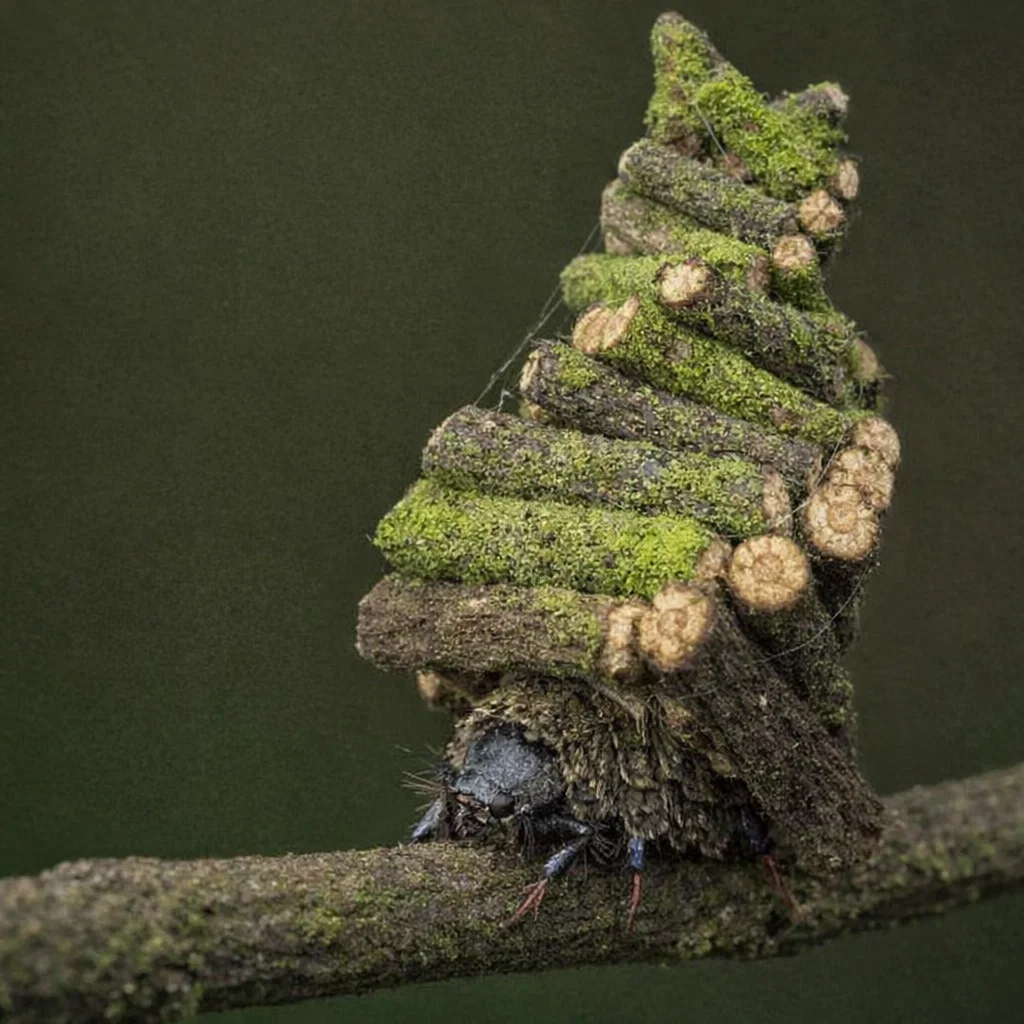
A central question in lepidopteran research is: Why do bagworms build cases out of sticks? The answer is multi-layered. Primarily, the bag is a form of active camouflage. By using material from the host plant—whether it be pine needles, bits of cedar bark, or leaf fragments—the larva becomes virtually invisible to birds and predatory wasps. This is why many people ask What do bagworm cocoons look like?—they look exactly like the tree they are living on.
Beyond camouflage, the bag serves as a thermal buffer. The thick walls of silk and wood debris protect the soft-bodied larva from the scorching summer sun and the dehydrating effects of wind. Additionally, the silk used to line the interior is incredibly smooth, allowing the larva to retract its head and legs instantly at the first sign of vibration. This physical barrier is so effective that even chemical pesticides often fail to penetrate the bag, making manual removal one of the most effective management techniques.
Identification of Camouflaged Moth Larvae
Bagworm identification can be tricky because the appearance of the bag changes depending on the host plant. If a bagworm is on a pine tree, it will look like a cluster of pine needles. If it is on a deciduous tree like an oak, it will look like a bunch of dead, brown leaves. This variability leads to people searching for different Types of bagworms.
Despite the material differences, the structure remains consistent: a spindle-shaped or conical bag, usually 1 to 2 inches long, hanging vertically from a branch. If you look closely at the top of the bag during the day, you might see the dark, armored head of the larva poking out to feed on nearby foliage. If the bag is moved or touched, the larva will quickly retreat, and the opening of the bag will appear to “cinch” shut like a drawstring bag.
The Evergreen Threat: Habitat and Distribution
If you are wondering Where are bagworms found, the answer is almost anywhere with suitable host plants. They have a strong preference for “Evergreen” species, which is why the Evergreen bagworm is the most widely discussed. Arborvitae, juniper, and cedar are their primary targets because these trees provide both food and excellent building materials that remain on the tree year-round, providing a stable foundation for the overwintering eggs.
However, it is not uncommon to find Bagworms in house environments. While they do not eat wood or household fabrics (unlike clothes moths), they may crawl onto the siding of a house, window shutters, or porch railings to pupate. This usually happens when a nearby tree is heavily infested and the larvae are looking for a secure, high-ground location to undergo metamorphosis. While they don’t cause structural damage to a house, their silk attachments can be difficult to scrub off and may leave small scars on paint or wood.
Dietary Habits and Environmental Impact
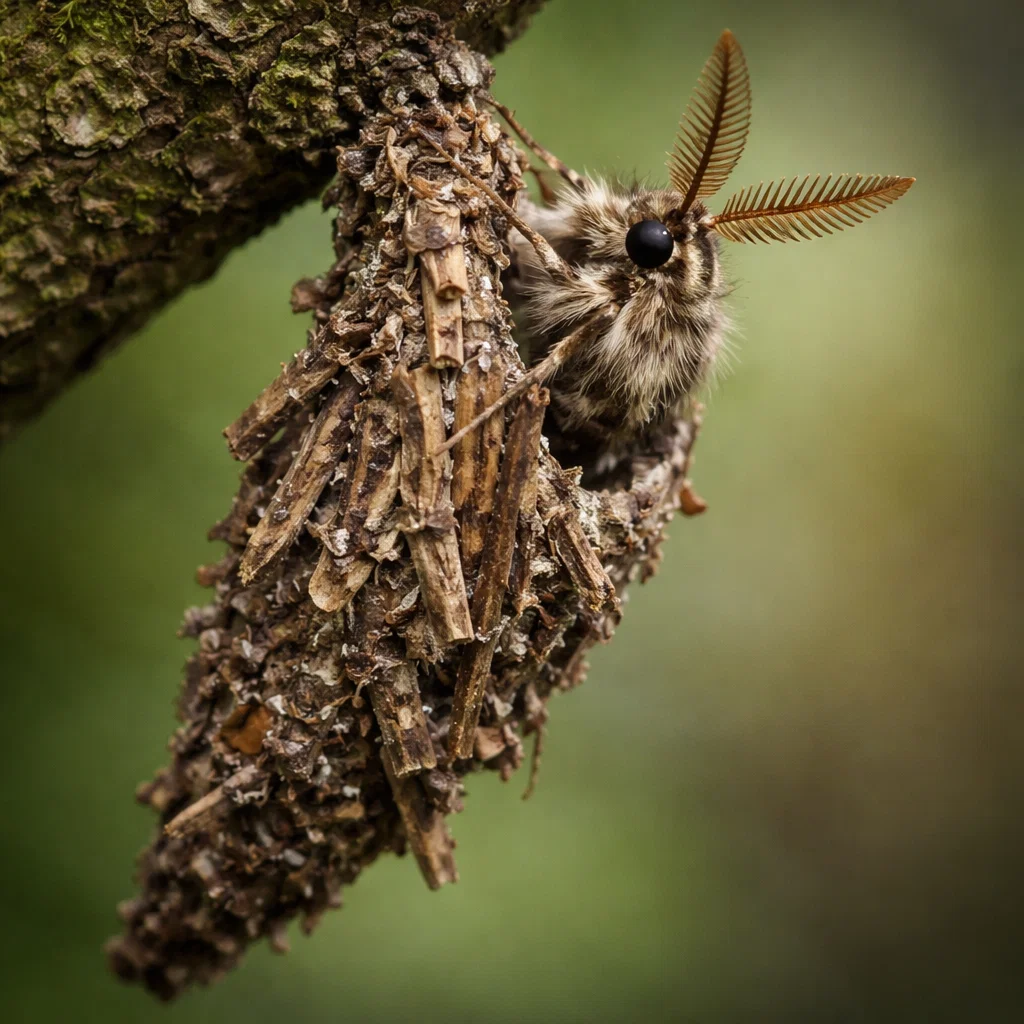
The question of What do bagworm moths eat is actually limited to the larval stage. Adult bagworm moths do not eat at all; they lack functioning mouthparts and live only long enough to mate and lay eggs. Therefore, the larval stage is the only period of environmental impact. They are generalist herbivores, but their damage is most severe on conifers.
Because evergreens do not relocate their sap or energy into the ground during winter, the loss of needles to a bagworm infestation can be devastating. A single heavy infestation can strip a tree of its foliage in a matter of weeks. Without needles to perform photosynthesis, the tree becomes stressed and, if the infestation persists for more than two seasons, it will likely die. Deciduous trees are more resilient, as they can grow new leaves the following year, but repeated attacks will still weaken the tree and make it susceptible to secondary pests like bark beetles.
Physical Traits: Extreme Sexual Dimorphism
One of the most bizarre Bagworm moth facts is the extreme difference between the male and the female. This is known as sexual dimorphism. The male Bagworm moth is what most people would recognize as a moth—it has clear, translucent wings, a dark body, and feathery antennae used to “sniff out” female pheromones. He is a strong flier but a short-lived one, usually surviving only a few days.
The female, however, is a biological outlier. She is completely wingless, legless, and has no eyes or antennae. She looks more like a soft, creamy-white grub than a moth. She never leaves her bag. After pupating, she remains inside the bag, emitting pheromones to attract a male. After mating, she fills her own body cavity with eggs and dies inside the bag, essentially becoming a protective vessel for the next generation. This strategy ensures that the eggs are always protected by the silk fortress she built as a larva.
Material Science: The Incredible Strength of Bagmoth Silk
Recent scientific research has highlighted a “superpower” of the Bagworm Moth: their silk. For years, spider silk was considered the gold standard of biological materials, but studies into the Psychidae family have shown that bagmoth silk may actually be stronger and more durable in certain conditions.
Unlike spider silk, which is designed for elasticity to catch flying prey, bagworm silk is designed for structural longevity. It must hold the weight of the bag and the insect through summer storms and winter snow for an entire year. Researchers are now looking at the molecular structure of this silk for potential applications in sustainable textiles and biodegradable high-strength fibers. The silk is so tough that it often requires scissors or pruning shears to remove a bag from a branch without stripping the bark.
Management Strategies: How to get rid of bagworms
If you have discovered an infestation, you are likely asking How to get rid of bagworms. There are three primary methods:
- Manual Removal: If the infestation is small and the trees are reachable, the most effective method is simply to hand-pick the bags and drop them into a bucket of soapy water. This must be done in late fall, winter, or early spring before the eggs hatch.
- Biological Control: Using Bacillus thuringiensis (Bt) is a highly effective way to manage young larvae in early summer. Bt is a natural soil bacterium that, when sprayed on leaves and eaten by the larvae, disrupts their digestive system. It is safe for humans, pets, and beneficial insects like bees.
- Chemical Control: For massive infestations on tall trees, contact insecticides can be used in the early summer. However, once the bagworms have reached the late summer “pupation” stage and sealed their bags, chemical sprays are almost entirely useless.
For those dealing with How to get rid of bagworms on arborvitae, consistency is key. Because the larvae balloon on the wind, you must check your trees annually, even if you successfully cleared them the previous year.
Myth-Busting: Bagworms dangerous and “Bagworms Bite”
There is a lot of misinformation online regarding whether Bagworms are dangerous. To humans and pets, they are completely harmless. They do not have stingers, and the larvae do not have the mandibles required to pierce human skin. The rumor that Bagworms bite likely comes from people mistaking them for other stinging caterpillars like the Saddleback or the Io moth.
The only “danger” a bagworm poses is to your landscape. They are strictly “plant-dangerous.” Similarly, for those wondering Do bagworm moths turn into butterflies?, the answer is no. They are true moths, though their unique biology means they don’t follow the typical “flighty” path of their cousins.
Frequently Asked Questions (FAQ)
What does a bagworm look like?
A bagworm looks like a small, hanging, cone-shaped bundle of twigs and leaves, usually between 1 and 2 inches long. The larva itself has a dark, armored head and a soft, segmented body that stays hidden inside the bag.
Where is their typical habitat?
Their typical habitat includes coniferous trees like arborvitae, cedar, and juniper, but they can also be found on oak, maple, and fruit trees. They are also occasionally found on the siding of houses or fences.
Are bagworms rare or endangered?
No, bagworms are very common and are considered a major agricultural and landscape pest in many parts of the world. They are not rare and do not currently have a protected status.
What is bagworms most unique behavior?
Their most unique behavior is the construction of a mobile protective case from environmental debris. Additionally, the female’s choice to remain flightless and legless inside her bag for her entire adult life is a significant biological anomaly.
Are bagworm moths dangerous to trees?
Yes, they are highly dangerous to trees, especially evergreens. Because they consume the needles and leaves required for the tree to survive, a heavy infestation can cause complete defoliation and death within two to three years.
The Enduring Mystery of the Bagworm
The Bagworm Moth is a reminder that some of the most complex engineering in the world occurs on a microscopic scale. While they may be a nuisance to gardeners, their ability to transform environmental waste into a high-strength fortress is a biological marvel. From the Psychidae family’s ancient evolutionary roots to the modern material science potential of their silk, these insects are far more than just “worms in bags.”
At Petnarianpets, we believe that by understanding the Bagworm life cycle and the reasons Why do bagworms build cases out of sticks, we can better appreciate the intricate balance of our ecosystems. Whether you are managing an infestation or simply admiring the “log cabins” hanging from a pine tree, the bagworm remains one of the most successful and curious inhabitants of the insect world. Keep your eyes on the branches—you never know what incredible architect might be hiding in plain sight.
Stay wild, stay curious – only on PetNarianPets!
Join The Fun On Instagram, X, Pinterest and YouTube.
Wanna Say Something about animals ? Contact Us.