
[WATCH: The Secret Life of the Tiputini Velvet Worm – New Species Reveal]
(Video Placeholder: In this Petnarianpets exclusive, observe the unique facial structure and haunting calls of the Hypsignathus monstrosus deep in the African rainforest.)
Introduction to the African Megabat
The African wilderness is home to creatures that often seem more like the products of mythology than biological evolution. Among the most striking is the Hammer-headed bat,
A species that challenges our perceptions of what a mammal should look like. Known as the Largest bat in Africa, this creature has captured the internet’s imagination, frequently appearing in viral posts that leave people asking, “Is this real?”
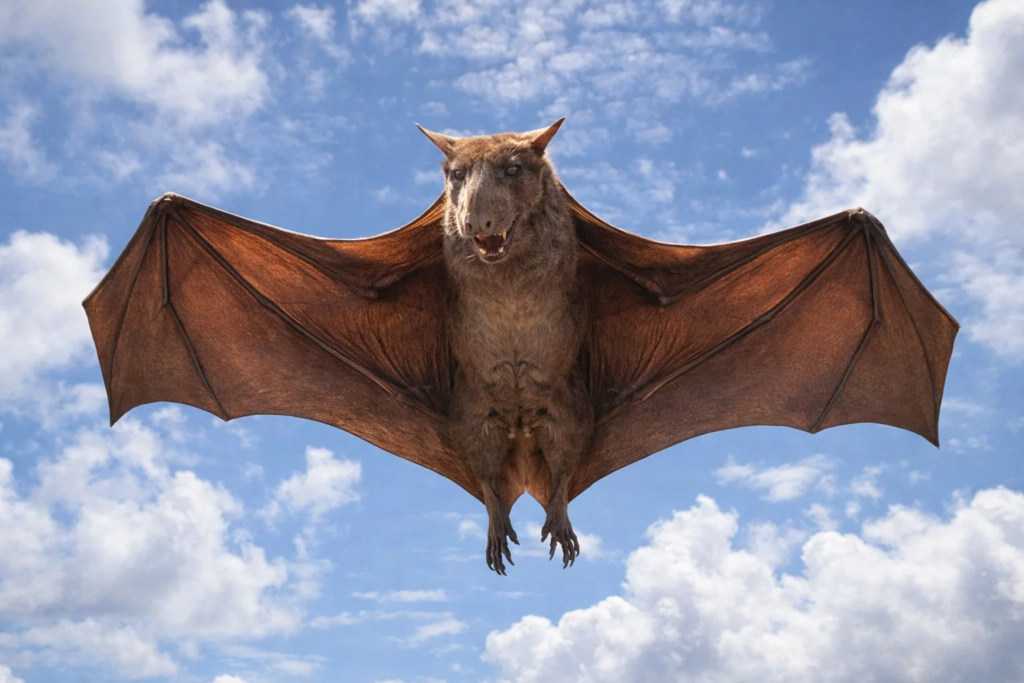
This African megabat belongs to the family Pteropodidae and is a master of the equatorial canopy, playing a vital role in the ecosystem as a primary seed disperser.
At Petnarianpets, we specialize in documenting the world’s most unique fauna. The Hammer-headed fruit bat (scientific name: Hypsignathus monstrosus) is perhaps the apex of morphological specialization in the order Chiroptera. From its massive, boxy head to its haunting nocturnal calls, every aspect of its biology is a testament to the power of sexual selection and environmental adaptation.
Whether you are a student of zoology or a casual nature enthusiast, these Hammer-headed bat facts will provide a deep dive into the life of one of the world’s most misunderstood flying mammals.
Table of Contents
Quick Reference Biological Profile
To understand this giant, we must first look at its place in the natural order. The classification of the species highlights its unique evolutionary path, as it is the sole member of its genus.
The History of Discovery: Hypsignathus monstrosus
The Hammer headed bat discovered by Western science dates back to the mid-19th century. In 1861, the American zoologist Harrison Allen formally described the species based on a holotype collected in Gabon. The specimen had been gathered by Paul Du Chaillu, a French-American explorer famous for his travels through West Africa. The naming reflects the awe and confusion the animal inspired; the genus Hypsignathus comes from the Greek for “high jaw,” while the species name monstrosus literally translates to “monstrous”.
This name was not intended as a slight but rather as a description of the adult male’s facial architecture, which is unlike any other bat on Earth. Since its discovery, researchers have realized that while it may look “monstrous,” it is a perfectly adapted specialist of the African tropics. Its monotypic status—meaning it is the only species in its genus—suggests a significant evolutionary split from its closest relatives in the tribe Epomophorini.
Why do hammer-headed bats have large heads?
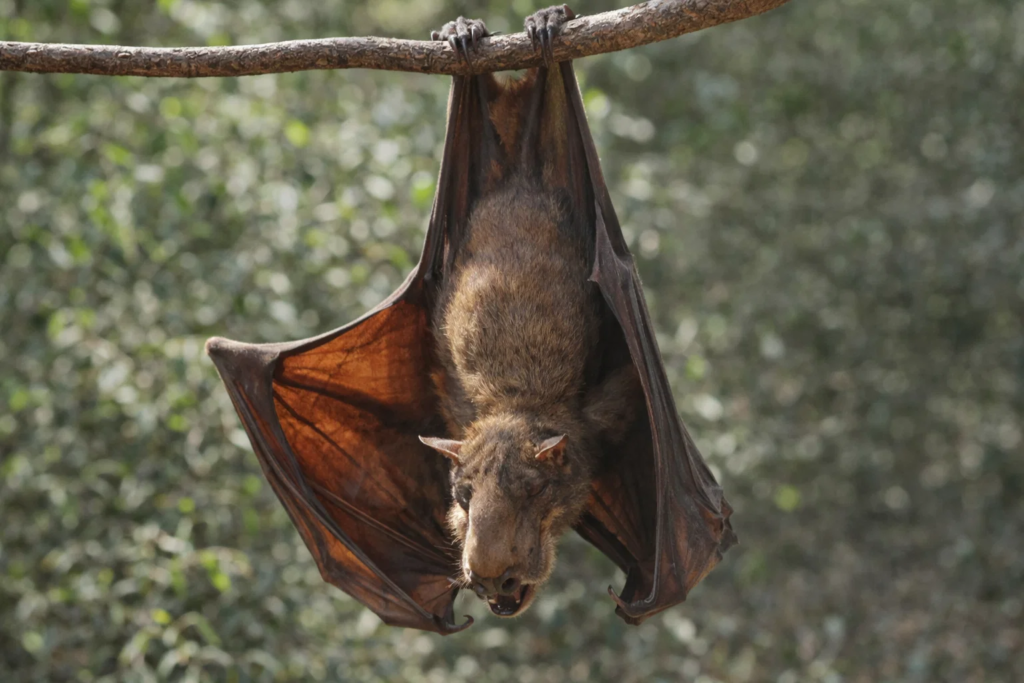
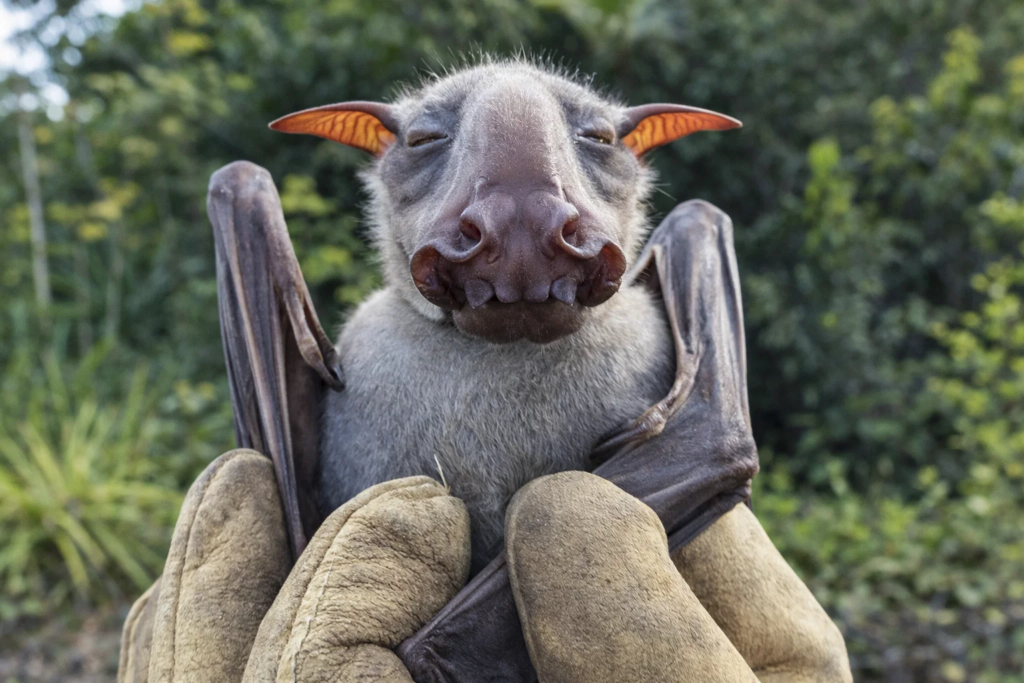
The most striking feature of the male Hammer-headed bat is undoubtedly its face. People often ask: Why do hammer-headed bats have large heads? The answer lies in one of the most extreme examples of sexual selection in the animal kingdom. The male’s “hammer” head is not just for show; it is a highly specialized resonating chamber used to produce low-frequency mating calls.
To accommodate this vocal power, the male’s internal anatomy has been radically restructured. The larynx (voice box) in an adult male is roughly three times larger than that of a female and occupies half the length of his entire vertebral column. This massive structure is so large that it actually pushes the heart, lungs, and gastrointestinal tract backward and to the sides.
This anatomical trade-off is staggering: the bat’s very survival organs are displaced to make room for a voice box that can produce the rhythmic “honking” sounds necessary to attract a mate. Additionally, large, pendulous lips and a warty rostrum further amplify the sound, acting as natural megaphones.
Hammer-headed bat size: Wingspan vs. Human
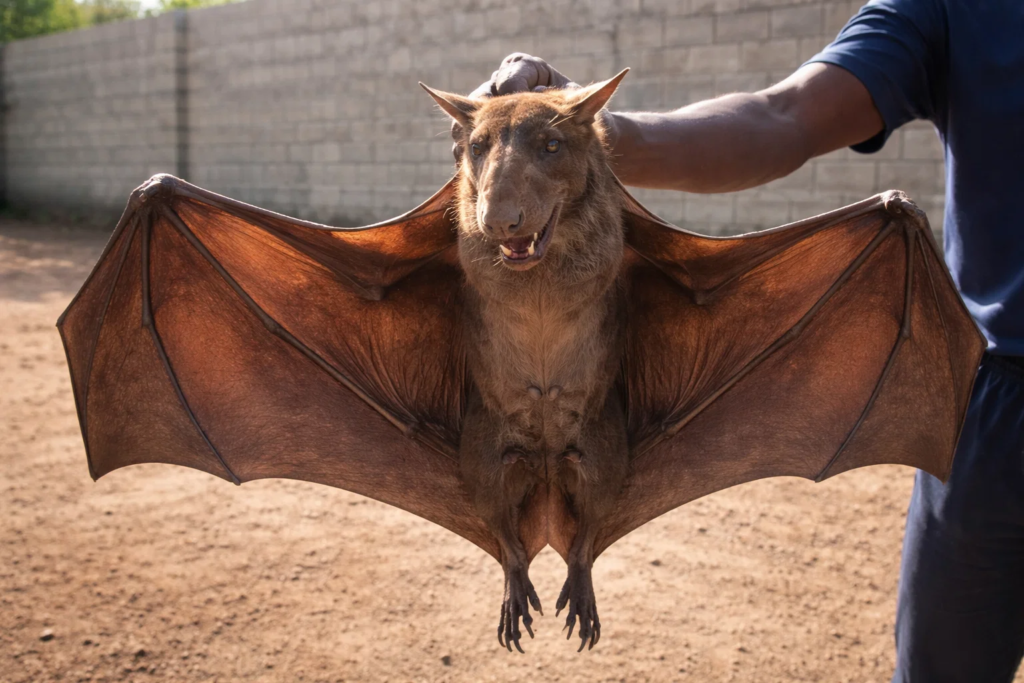
When discussing the Hammer-headed bat size, it is important to distinguish between the two sexes. As the Largest bat in Africa, its dimensions are impressive for any flying mammal.
- Hammer headed bat weight: Males are nearly double the weight of females. A healthy male can weigh up to 420g (15 oz), while females average around 234g (8.3 oz).
- Hammer headed bat length: The body length of a male can reach approximately 250 mm (9.8 inches).
- Hammer-headed bat wingspan vs. human: The Hammer headed bat size in feet is most evident when the wings are spread. The maximum wingspan of a male is roughly 970 mm, which is about 3.2 feet. While this doesn’t reach the 5-foot-plus wingspan of some Asian flying foxes, it is a significant presence when seen in person.
To visualize this, imagine a creature with a wingspan that covers the width of a standard office desk, possessing a head that looks like a miniature moose, flying silently through the forest at speeds of up to 60 mph (96 kph).
Extreme Sexual Dimorphism: Male vs. Female
The Hammer-headed bat female looks nothing like her male counterpart. In fact, they are so different that a casual observer might think they belong to two different species. While the male possesses the namesake boxy head, enormous lips, and specialized larynx, the female has a much more conventional “fox-like” muzzle.
This dimorphism extends beyond just looks. The Physical traits of each sex are tailored to their lifestyle. Females are “trap-liners,” meaning they follow predictable, established routes to find dependable fruit sources with minimal energy expenditure. Males, however, are “search-and-find” specialists. They are willing to fly up to 10 km (6.2 miles) away from their roosts to find high-quality, nutrient-dense fruit patches that can fuel the massive energy demands of their nightly mating rituals.
The Lek System: Hammer-headed bat mating call sound
The behavior that truly defines the African megabat is its “lek” mating system. A lek is a gathering of males in a specific area solely for the purpose of competing for female attention. During the breeding seasons (usually twice a year), anywhere from 25 to 135 males will congregate along riverbeds.
They hang from branches, spaced about 10 meters apart, and begin their performance. This involves rapid wing flapping and the production of a repetitive, metallic Hammer-headed bat mating call sound—a loud “honking” that can occur 60 to 120 times per minute. Females fly through the lek,
listening and observing, before selecting a mate. The competition is fierce: research indicates that only about 6% of the males in a lek are responsible for nearly 80% of the matings. This is survival of the loudest and most physically fit.
Habitat and Geographic Range in Africa
The Hammer-headed bat is strictly a resident of sub-Saharan Africa. Its Habitat is primarily dictated by the availability of humid, tropical environments that support its fruit-based diet.
- Geographic Range: They are found in a broad belt from Senegal in West Africa to northern Angola in Central Africa.
- Environment: They prefer lowland areas (rarely above 1,800 meters) and are most commonly found in riverine forests, swamps, and mangroves.
- Roosting: During the day, they are relatively solitary compared to other bats, roosting in groups of 4 to 5 individuals high in the canopy (20 to 30 meters up). Their grey-brown woolly fur provides excellent camouflage against the foliage.
Dietary Habits: What does a hammer-headed bat eat?
A common question for enthusiasts at Petnarianpets is: What does a hammer-headed bat eat? Despite their intimidating appearance, the Hammer-headed bat diet is almost entirely plant-based. They are specialists in consuming soft, juicy tropical fruits.
- Primary Food: Figs (genus Ficus) make up the bulk of their nutrition.
- Other Fruits: They also consume mangoes, bananas, and guavas, especially in agricultural areas near human settlements.
- Feeding Mechanism: They have a specialized tongue with backward-facing papillae that act like a straw, allowing them to suck the juice and pulp out of the fruit.
- Anecdotal Carnivory: There is a famous, though rare, report from 1968 suggesting these bats might occasionally attack chickens to drink blood or eat meat, but this is not considered standard behavior and was likely an extreme outlier driven by nutrient shortages.
Is the hammer-headed bat dangerous to humans?
When people see photos of this giant bat, the immediate concern is: Is the hammer-headed bat dangerous to humans? Physically, they are not aggressive toward people. They are shy, nocturnal, and generally avoid human contact. However, like any wild animal, they can bite if they feel threatened or are handled improperly—a fact researchers are well aware of, often requiring thick leather gloves for sampling.
The real “danger” is biological. The Hammer-headed bat has been identified as a potential reservoir for the Ebola virus. While they appear to be asymptomatic carriers (meaning the virus doesn’t make them sick), there is a risk of “zoonotic spillover” if humans hunt and consume them as bushmeat.
In parts of Nigeria and the Democratic Republic of the Congo, these bats are hunted for food, which provides a direct pathway for viral transmission during the butchering process.
Hammer headed bat is real or fake? Debunking the Myths
In the age of AI and Photoshop, it is common to ask if the Hammer headed bat is real or fake. We can confirm at Petnarianpets that the animal is 100% real. The confusion often arises because of the forced perspective used in some viral photographs, which can make the bat appear as large as a human. While it is the largest in Africa, it is not “man-sized”.
Its “monstrous” appearance is simply a result of specialized evolution. The features that humans find strange—the boxy head, the massive lips, the weird facial ruffles—are all functional tools that allow the male to survive and reproduce in the dense African rainforests. It is a living, breathing part of the world’s biodiversity, not a internet hoax or a cryptid.
Conservation and Future Outlook
Currently, the IUCN Red List categorizes the Hammer-headed bat as “Least Concern”. This is due to its wide geographic range and the fact that its population remains relatively stable in many areas. However, they are not without threats.
Habitat loss due to logging and the expansion of agriculture is a constant pressure, particularly because these bats require primary, undisturbed forest for their lek sites. Furthermore, their association with the Ebola virus has led to periodic culling or harassment by local populations out of fear.
Protecting the lowland rainforests of the Congo Basin is the single most important factor in ensuring this unique megabat continues to thrive for another million years.
Frequently Asked Questions (FAQ)
What does the hammer-headed bat look like?
The adult male has a massive, hammer-shaped head with enlarged, pendulous lips and a warty rostrum. Females have a much smaller, fox-like head. Both have slate-brown fur and dark wing membranes.
Where is hammer-headed bat natural habitat?
They live in the humid lowland forests, riverine zones, and mangrove swamps of West and Central Africa.
Is the hammer-headed bat rare or endangered?
No, it is currently listed as a species of “Least Concern” by the IUCN, though it faces threats from habitat destruction and the bushmeat trade.
What is hammer-headed bat most unique behavior?
The most unique behavior is the “lek” mating system, where large groups of males gather at night to produce loud honking sounds and flap their wings to attract females.
A Master of the African Canopy
The Hammer-headed bat is a reminder that nature does not follow our standards of beauty; it follows the rules of survival and reproduction. This African megabat has sacrificed the symmetry of its internal organs for a voice that can echo through the jungle, ensuring the continuation of its lineage.
As we’ve explored in these Hammer-headed bat facts, Hypsignathus monstrosus is far from a monster. It is a vital gardener of the rainforest, a complex social creature, and a biological marvel that continues to surprise scientists 160 years after its discovery. At Petnarianpets,
we remain dedicated to bringing you the truth about the world’s most incredible animals—even those that look like they belong in a fantasy novel. Protect their habitat, respect their role in the wild, and continue to marvel at the largest bat in Africa.
Whether you are fascinated by its 32-feather tail (wait, that was the pheasant!) or its three-foot wingspan, the hammer-headed bat remains a crowning jewel of African megabat diversity. As we continue to study the depths of the Congo Basin, species like this remind us that the most incredible creatures are often those that have been hidden in plain sight for centuries. For more deep dives into the world’s most “bizarre” animals, stay tuned to Petnarianpets.
Stay wild, stay curious – only on PetNarianPets!
Join The Fun On Instagram, X, Pinterest and YouTube.
Wanna Say Something about animals ? Contact Us.