
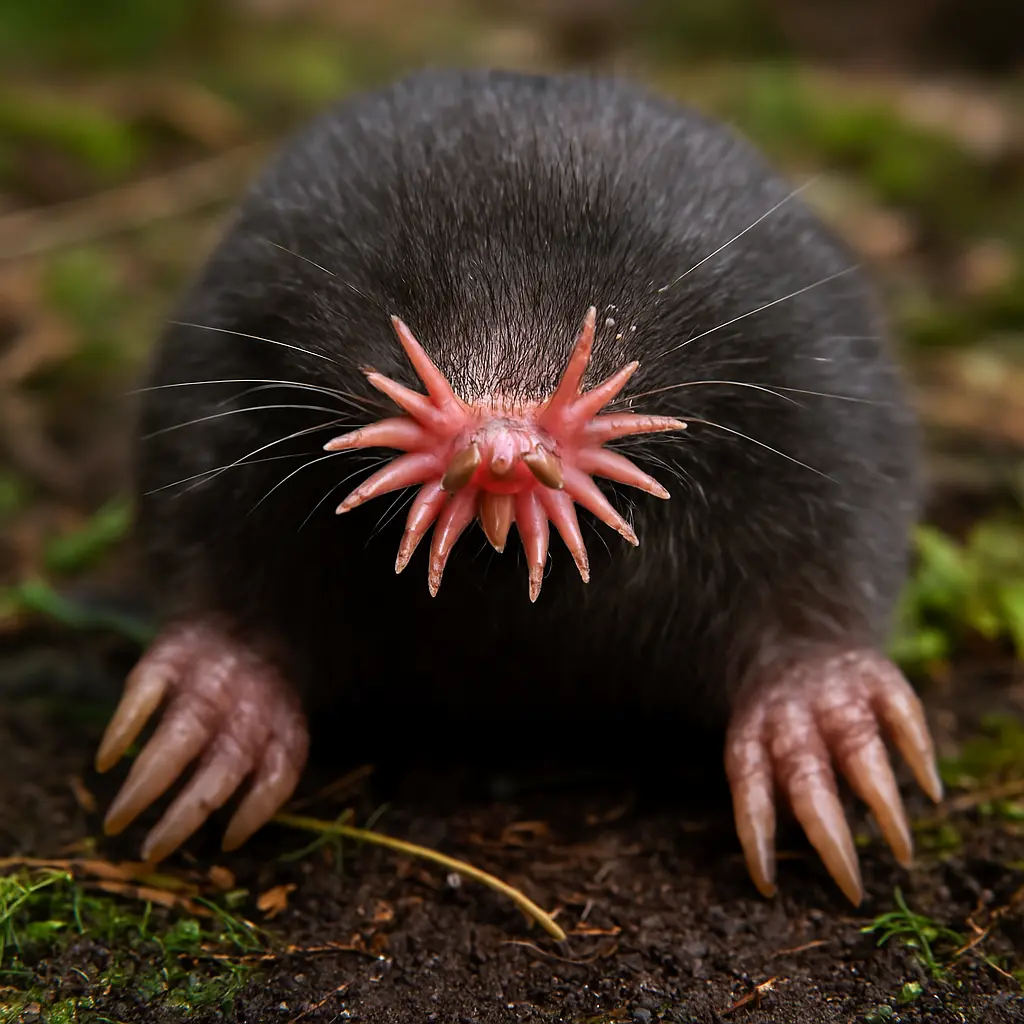
The animal kingdom is full of fascinating creatures, but few are as unique as the star nosed mole. This extraordinary mammal, with its bizarre-looking snout, is a true wonder of nature. From its lightning-fast eating habits to its incredible underwater sniffing abilities, the star nosed mole is unlike any other creature on Earth.
watch a small documentary we made about the star nosed mole. on YouTube.
Key Facts About the Star Nosed Mole
- Fastest eating mammal—can identify and consume food in just 120 milliseconds.
- Has 22 fleshy tentacles on its nose, used for detecting prey.
- Lives in wetlands and thrives in muddy environments.
- Can smell underwater, a rare ability among mammals.
- Practically blind, relying on touch more than sight.
- Non-aggressive and harmless to humans.
What Makes the Star Nosed Mole So Special?
The star nosed mole (Condylura cristata) is native to North America and is primarily found in wetlands, swamps, and moist lowlands. It is known for its distinct, fleshy star shaped nose, which has over 100,000 nerve endings—making it one of the most sensitive touch organs in the animal kingdom.
Unlike other moles that rely solely on their paws to dig through the soil, the star-nosed mole uses its ultra-sensitive nose to locate food with lightning speed. This adaptation allows it to survive in dark and damp underground environments where sight is of little use.
Did You Know? The Fastest Eating Mammal
Among all mammals, the star-nosed mole holds the record for being the fastest eater. Scientists have observed that it can identify and consume prey in just 120 milliseconds. This is an incredibly fast reaction time—making it an efficient hunter despite its small size.
How Does It Eat So Fast?
- The nose’s tentacles scan the environment rapidly, detecting food almost instantly.
- When it finds food, the mole snaps its jaws shut in a fraction of a second.
- Its metabolism is extremely high, requiring it to eat frequently to maintain energy.
This rapid eating ability helps the star nosed mole survive in environments where food is scarce and competition is high.
What’s Special About the Star Nosed Mole’s Nose?
The star shaped nose is not just for show—it’s an advanced sensory tool. With more than five times the number of touch receptors found in a human hand, the mole’s nose functions like a built-in radar, detecting prey with unmatched precision.
- It can identify edible items even in total darkness.
- The tentacles move so fast that they appear blurred to the human eye.
- Scientists believe this structure is more sensitive than the human fingertip.
Are Star Nosed Moles Harmful?
Not at all! Despite their somewhat eerie appearance, star nosed moles are harmless to humans and pets. They are solitary creatures that prefer to stay underground or in water, avoiding human contact. They pose no threat to agriculture, gardens, or household areas.
- They do not damage crops like some other mole species.
- They do not bite humans unless handled roughly.
- Their presence in the ecosystem is actually beneficial, as they help control insect populations.
Can Star Nosed Moles Bite?
Yes, but it’s highly unlikely. Their small, sharp teeth are designed for consuming insects and small aquatic creatures. Unlike aggressive rodents, these moles do not bite out of defense, and their bite is not venomous or dangerous to humans.
- They mainly use their teeth for gripping prey.
- They are not known to attack unless provoked.
- Their main response to threats is to flee rather than fight.
What Is the Lifespan of a Star Nosed Mole?
In the wild, star nosed moles typically live between 3 to 4 years. Their short lifespan is due to their small size and the constant predation from larger animals like owls, foxes, and weasels.
- They mature quickly, reaching adulthood in about 10 months.
- They have one or two litters per year, with an average of 4-5 pups per litter.
- Some moles in captivity have been known to live slightly longer than those in the wild.
Final Thoughts
The star nosed mole is an incredible creature that showcases nature’s innovation at its best. From being the fastest eater in the world to using its bizarre nose as a super-sensitive sensor, this mole is full of surprises. While they might look unusual, these moles play an important role in their ecosystems by keeping insect populations in check.
What do you think about the star nosed mole? Have you ever seen one in the wild? Share your thoughts in the comments!
Liked what you read ? Support Us On Instagram, X, Pinterest and YouTube.
Wanna Say Something about animals ? Contact Us.
Visit Our Store!
Learn About Us!

Thanks for sharing. I read many of your blog posts, cool, your blog is very good.
Your article helped me a lot, is there any more related content? Thanks!