
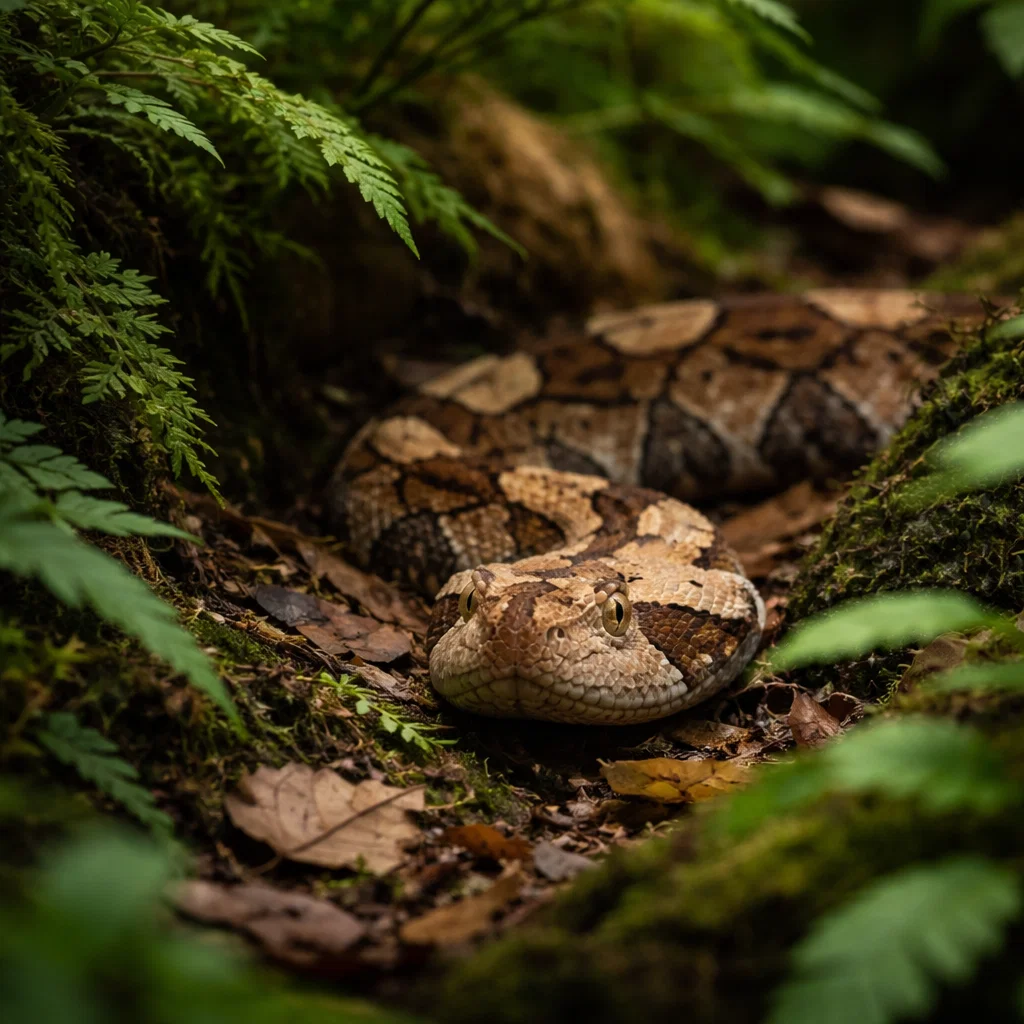
The Forest Phantom
The African rainforest is home to a myriad of specialized predators, but few command as much respect and awe as the Gaboon Viper. Scientifically designated as Bitis gabonica, this heavy-bodied serpent represents the pinnacle of ambush evolution. It is not merely a snake; it is a biological masterpiece of camouflage, mechanical engineering, and chemical potency. For enthusiasts and researchers at PetNarianPets, the study of this viper provides a window into how nature balances extreme lethality with a surprisingly placid temperament. Known for having the longest fangs of any venomous snake and the highest venom yield, this reptile is a titan of the forest floor.
To the uninitiated, the Gaboon Viper may seem like a sluggish, colorful log, but to those who understand its biology, it is the “Forest Phantom.” Its ability to vanish against a backdrop of leaf litter is legendary, making it an apex predator in the shadows of Sub-Saharan Africa. Throughout this article, we will examine the intricate details of its anatomy, the science of its strike, and the terrifying beauty of its presence in the wild.
In the following table, we have summarized the core biological data for this species. This snapshot provides the foundational knowledge necessary before we delve into the complex mechanics of its lifestyle and the famous Gaboon Viper venom that defines its lethality.
| Feature | Details |
| Classification | Class: Reptilia, Order: Squamata, Family: Viperidae |
| Scientific Name | Bitis gabonica |
| Habitat | Rainforests and woodlands of Central, East, and West Africa |
| Diet | Carnivorous: Rodents, birds, small mammals, and frogs |
| Lifespan | 18–20 years in captivity; unknown in the wild |
| Superpower” or Special Feature | Longest fangs (2 inches) and nearly perfect leaf camouflage |
| Natural Predator | Humans, secretary birds, larger monitor lizards |
| Natural Prey | Rats, guinea fowl, rabbits, and small antelopes |
Taxonomy and the Evolution of the Bitis Genus
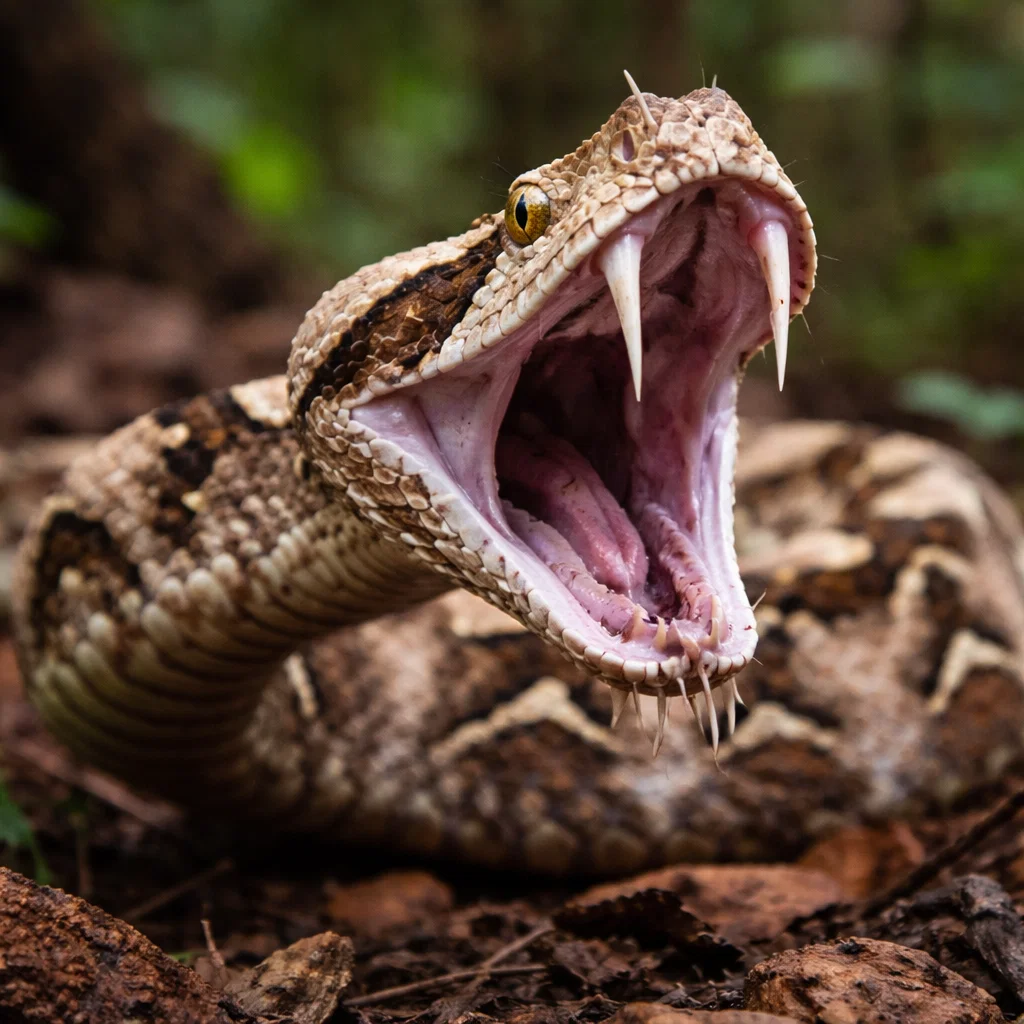
The systematic positioning of this snake is rooted in the genus Bitis, which includes some of Africa’s most famous vipers, such as the Puff Adder (Bitis arietans) and the Rhinoceros Viper (Bitis nasicornis). The Gaboon viper pronunciation is often a point of curiosity for new herpetologists; it is pronounced “ga-BOON,” named after the Gabon region in West Africa where it was extensively documented by early European naturalists.
Within the genus, Bitis gabonica is the largest member. Evolutionary biologists believe that the lineage split from other vipers as the African rainforests expanded and contracted during the Pleistocene. This environment favored a “sit-and-wait” predator—a snake that didn’t need to chase its food but could instead become invisible. This led to the development of the wide Gaboon viper head, which provides the surface area needed for large venom glands and the attachment of powerful muscles for a lightning-fast strike.
Table of Contents
The Geometric Art of Camouflage
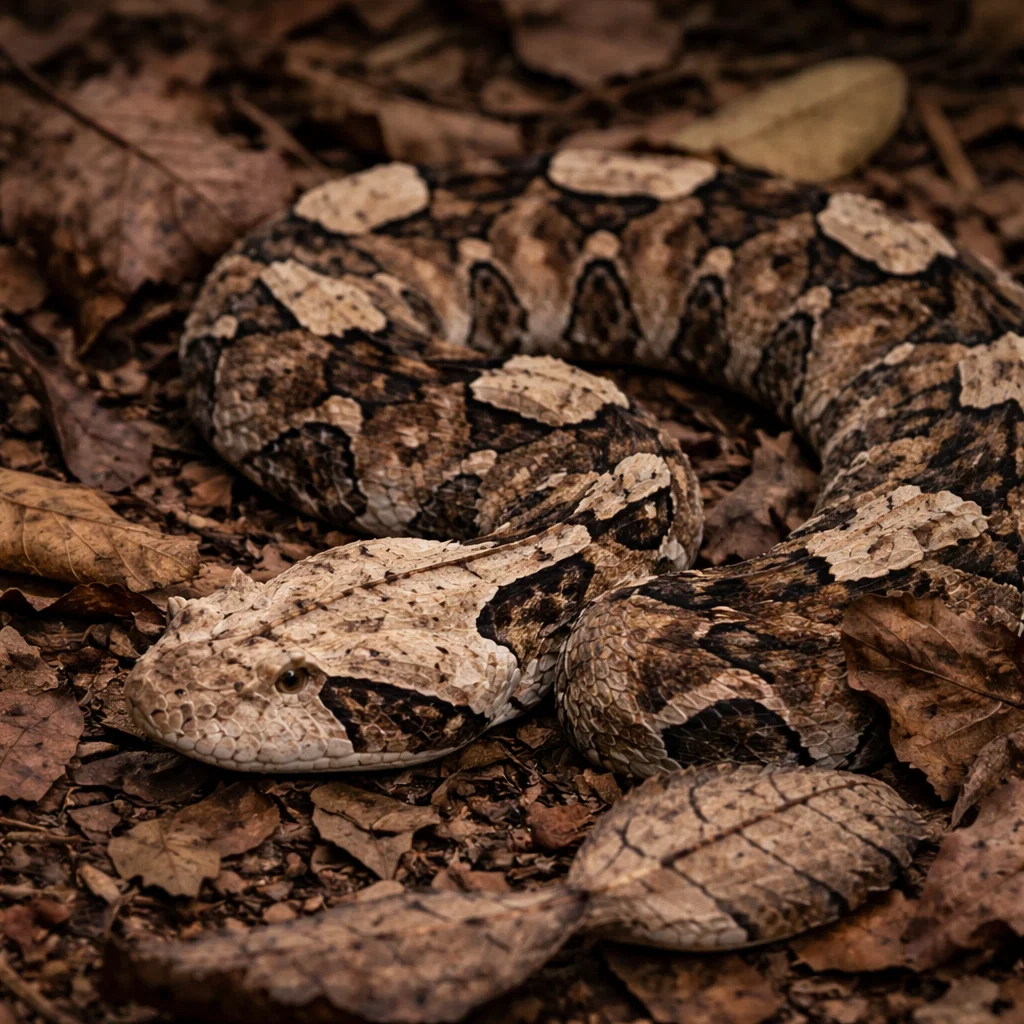
One of the most remarkable things about this snake is how it appears when viewed “out of context” versus in its natural environment. On a plain background, the pattern is loud and vibrant, consisting of rectangles, triangles, and hourglass shapes in shades of purple, pink, tan, and brown. However, the Gaboon viper in leaves is virtually impossible to see.
This is an example of disruptive coloration. The dark line running down the center of the Gaboon viper head mimics the midrib of a fallen leaf, while the pale triangles on the sides simulate the dappled sunlight and shadows of the forest floor. At PetNarianPets, we often discuss how this camouflage is so effective that even experienced trackers have been known to step directly on the snake without realizing it was there. This leads to the animal’s reputation as being “placid,” as it relies on its invisibility rather than fleeing.
Mechanical Marvels of the Mouth
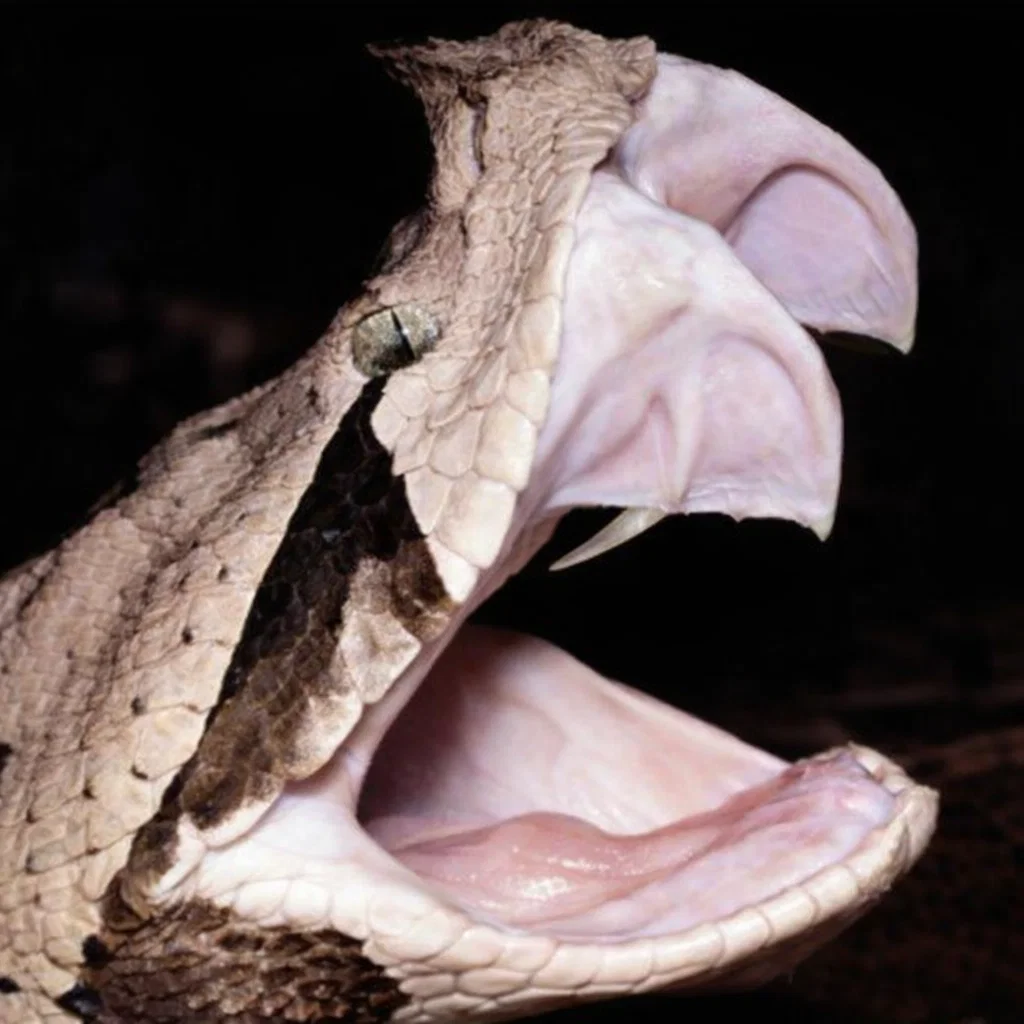
To understand the predatory efficiency of this animal, one must look at the Gaboon viper teeth and the underlying skeletal structure. Unlike most snakes that have fixed teeth, vipers possess a solenoglyphous dentition. This means their fangs are attached to a rotating maxillary bone. When the mouth is closed, the fangs fold back against the roof of the mouth. When the snake strikes, the mouth opens to nearly 180 degrees, and the fangs swing forward into a vertical position.
The Gaboon viper fangs are the longest of any snake in the world, reaching lengths of up to 2 inches (5 cm) in large specimens. These are essentially hypodermic needles designed to penetrate deep into the muscle tissue of the prey. Because the prey items—such as large rodents or small antelopes—are often thick-skinned, the length of the fangs ensures that the Gaboon Viper venom is delivered into the internal organs or the bloodstream, rather than just beneath the skin.
The Biochemical Power of the Strike
When a Gaboon viper bite occurs, it is unlike the strike of a cobra or a mamba. While many elapids deliver a “stab and release” strike, the Gaboon often holds onto its prey. This behavior, known as “strike and hold,” allows the snake to inject a massive quantity of toxins.
The Gaboon Viper venom is primarily hemotoxic and cytotoxic. It works by destroying red blood cells, interfering with blood clotting, and digesting the tissues of the victim. A single adult can produce over 2,000 milligrams of wet venom in one milking, with a dry yield of over 200 milligrams. To put this in perspective, a lethal dose for a human is estimated at around 60 milligrams. The sheer volume of venom injected is often what makes a Gaboon viper bite so devastating, causing massive internal hemorrhaging and necrosis.
Life Cycles and the Young Phantom
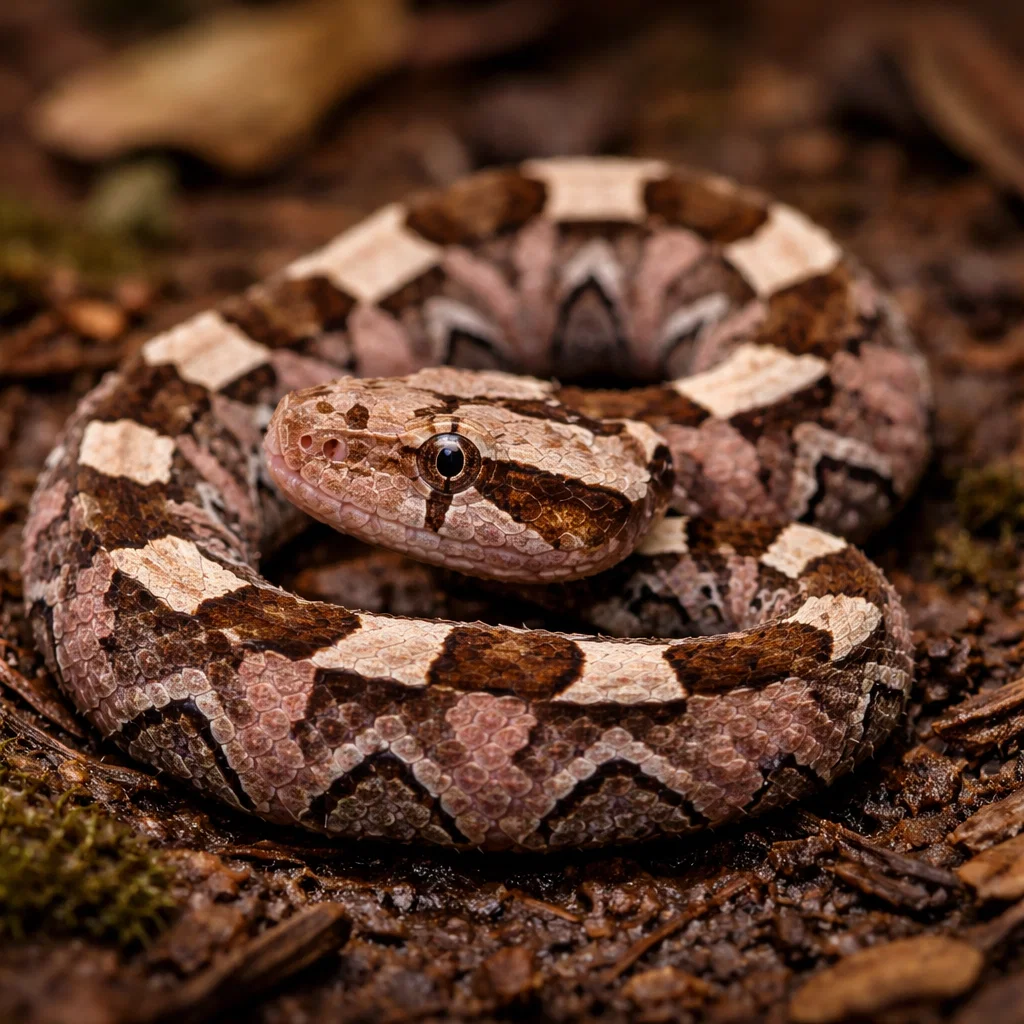
Reproduction in this species is as fascinating as its hunting strategy. Unlike many other reptiles that lay eggs, the Gaboon is ovoviviparous. This means the mother carries the eggs inside her body until they are ready to hatch, eventually giving birth to live young.
A Gaboon viper baby is born fully functional. At birth, they are typically 10 to 12 inches long and already possess functional venom glands and fangs. A single litter can consist of 30 to 60 offspring, though some record-breaking litters have exceeded 80 individuals. These neonates are born with the same complex geometric patterns as their parents, allowing them to disappear into the leaf litter immediately after birth. In the world of PetNarianPets, neonatal care for these vipers is considered high-risk due to their defensive nature and the fact that their venom is just as potent as an adult’s, even if the quantity is smaller.
Ecological Roles and Predatory Dynamics
In the rainforest ecosystem, Bitis gabonica plays the role of a vital regulator. By consuming large quantities of rodents, they help control the populations of animals that might otherwise overgraze the forest floor or spread diseases.+1
Their diet is surprisingly varied. While they primarily target mammals like giant pouched rats and tree hyraxes, they are opportunistic. Large vipers have been documented eating ground-dwelling birds like guinea fowl and even small artiodactyls (even-toed ungulates). The snake’s metabolism is relatively slow, meaning a single large meal can sustain an adult for several weeks or even months. This “energy-efficient” lifestyle is what allows them to remain motionless for days at a time, waiting for the perfect moment to strike.
The Dangers of Coexistence
For humans living in or near the rainforests of Africa, the snake represents a significant medical challenge. Because the snake is so well-camouflaged and so reluctant to move, accidental encounters are common. Interestingly, the snake usually emits a loud, deep hiss as a warning before striking. It is often described as a “hollow” or “bellowing” sound that serves as a final deterrent.
At PetNarianPets, we emphasize that while the Gaboon is not aggressive, its defensive strike is incredibly fast. The distance they can cover in a split second is roughly half their body length. Given that some individuals reach 6 feet in length and can be as thick as a human thigh, the physical force of the strike, combined with the venom, makes them one of the most dangerous animals on the continent.
Scientific Research and Medicinal Potential
Despite its fearsome reputation, Gaboon Viper venom is a subject of intense scientific interest. Researchers are studying the specific proteins within the venom that prevent blood clotting. These proteins may hold the key to developing new treatments for heart attacks, strokes, and other cardiovascular diseases.
The anticoagulants found in the venom are so powerful that they are being used as blueprints for synthetic drugs. This highlights a common theme in herpetology: the very substance that can end a life may one day be used to save millions. By protecting the habitat of Bitis gabonica, we are also protecting a biological library of potential medicines.
Frequently Asked Questions
Can a human survive a Gaboon viper bite?
Yes, a human can survive a Gaboon viper bite, but it is a severe medical emergency. Survival depends entirely on the rapid administration of polyvalent antivenom. Without treatment, the fatality rate is extremely high due to cardiovascular collapse, internal bleeding, and kidney failure. Even with treatment, survivors often face long-term tissue damage or the loss of limbs due to the necrotic effects of the venom.+1
How poisonous is a Gaboon viper?
Technically, the Gaboon Viper is venomous, not poisonous (venom is injected, poison is ingested). It is one of the most dangerous snakes in the world. While it is not the most toxic drop-for-drop (that title goes to the Inland Taipan), its danger lies in its massive venom yield. It can inject more venom in a single strike than almost any other snake, making its “bite” potentially more lethal than more toxic species.
Why do Gaboon vipers have long fangs?
Gaboon Viper fangs are long (up to 2 inches) to ensure the venom reaches deep into the vital organs and muscle tissue of their prey. Since they often eat large, thick-furred mammals, short fangs might only deliver venom to the fatty layers under the skin, which would be less effective. The long fangs act like deep-tissue injectors, ensuring rapid paralysis of the prey.+1
What eats a Gaboon viper?
Despite being an apex predator, the snake has several natural enemies. Secretary birds and eagles are known to hunt them from the air. On the ground, large monitor lizards and honey badgers may occasionally challenge them. However, their primary “predator” is humans, who kill them out of fear or for the bushmeat and leather trades.
Behavioral Observations and Temperament
One of the most paradoxical aspects of this species is its “gentle” reputation among snake handlers. Many keepers at PetNarianPets note that the Gaboon is often reluctant to strike compared to the nervous Puff Adder. However, this is a dangerous trap for the unwary. The snake’s calmness is a strategy; it believes it is invisible. Once that threshold of “perceived safety” is crossed, the snake transitions from total stillness to a violent strike in less than 0.25 seconds.
The Gaboon viper head houses pits that are sensitive to infrared radiation (heat). This allow them to “see” the heat signatures of warm-blooded prey even in total darkness. This thermal imaging, combined with their vibration-sensitive bodies, makes them effective hunters 24 hours a day, although they are primarily nocturnal.
Conservation and the Future of the Forest Phantom
Currently, the Gaboon Viper is not listed as an endangered species, but its future is tied to the health of the African rainforests. Deforestation for timber and agriculture is shrinking their habitat, forcing them into closer contact with human settlements.
Education is the most powerful tool for conservation. By teaching local communities about the benefits of these snakes (rodent control) and providing access to antivenom, we can reduce the number of snakes killed out of fear. Organizations and platforms like PetNarianPets play a role in this by providing accurate information that replaces myth with science.
The Aesthetic and Cultural Impact
In many African cultures, the snake is a symbol of power and duality. Its beautiful patterns have inspired traditional fabrics and art for centuries. The geometric complexity of its scales is a reminder of the intricate beauty of the natural world.
Whether you are looking at a Gaboon viper baby or a massive six-foot adult, the visual impact is the same: it is a creature that demands total attention. The way the Gaboon viper in leaves vanishes into the background is a humbling reminder of how much of the natural world remains hidden from our eyes.
A Masterpiece of Nature
The Gaboon Viper (Bitis gabonica) is a testament to the power of specialized evolution. From its record-breaking Gaboon Viper fangs to its complex Gaboon Viper venom, every part of this snake is designed for a singular purpose: to be the ultimate ambush predator. It is a creature of contrast—vibrantly colored yet invisible, lethally powerful yet surprisingly calm.
As we continue to study this magnificent animal through resources like PetNarianPets, we gain not only a better understanding of reptilian biology but also a deeper appreciation for the ecosystems they inhabit. The Forest Phantom remains a vital part of Africa’s wilderness, a silent guardian of the leaf litter that has survived for millions of years. Respecting its power and protecting its habitat is essential for ensuring that the world’s most impressive viper continues to boom its warning hiss across the rainforests for generations to come.
Stay wild, stay curious – only on PetNarianPets!
Join The Fun On Instagram, X, Pinterest and YouTube.
Wanna Say Something about animals ? Contact Us.
