
The Coconut Octopus (Amphioctopus marginatus) is perhaps one of the most remarkable and charismatic invertebrates inhabiting our oceans today. Often referred to as the “veined octopus” due to the intricate, branching patterns that decorate its skin,
Table of Contents
This medium-sized cephalopod has captured the imagination of marine biologists and the general public alike. Its reputation stems not just from its unique appearance, but from its extraordinary cognitive abilities—most notably its status as the only invertebrate known to utilize tools in a sophisticated, pre-planned manner.

In this comprehensive guide, we will delve deep into the world of this fascinating creature, exploring the Coconut octopus scientific name, its complex behaviors, and the ecological niche it occupies in the tropical waters of the Indo-Pacific. Whether you are a student of marine biology, a fan of the Coconut Octopus Octonauts episode, or simply a nature enthusiast, this article provides an in-depth look at everything from Coconut Octopus size to the truth about Coconut octopus venom.
Coconut Octopus Quick Facts Table
| Category | Details |
| Scientific Name | Amphioctopus marginatus |
| Common Names | Coconut Octopus, Veined Octopus |
| Classification | Class: Cephalopoda, Order: Octopoda, Family: Octopodidae |
| Average Size | Mantle: 5–10 cm; Total length: up to 30 cm |
| Weight | Approximately 400 grams (0.9 lbs) |
| Lifespan | 3 to 5 years |
| Habitat | Tropical waters of the Indo-Pacific (sandy/muddy bottoms) |
| Diet | Carnivorous (Crabs, shrimp, clams) |
| Conservation Status | Least Concern (IUCN) |
| Key Feature | Tool use (carrying coconut shells for shelter) |
Coconut octopus classification and Taxonomy
To truly understand the place of this creature in the natural world, we must first look at the Coconut octopus classification. Like all octopuses, it belongs to the phylum Mollusca and the class Cephalopoda. However, its specific lineage within the family Octopodidae is what sets it apart.
The Coconut octopus scientific name is Amphioctopus marginatus. The species was first described in 1964 by the Japanese malacologist Iwao Taki. He initially named it Octopus marginatus, deriving the specific epithet from the Latin word marginatus, which means “margined.” This refers to the distinct, pale border found around the animal’s eyes. Over the years, taxonomic revisions moved the species into the genus Amphioctopus, a group of octopuses characterized by their medium size and often distinctive “vein-like” skin patterns.
Historically, the species was also known by the name Octopus striolatus, proposed by Dong Zhengzhi in 1976, though this is now considered a junior synonym. The genus Amphioctopus includes several other well-known species, such as the Amphioctopus aegina, but none have achieved the same level of fame for their intelligence as A. marginatus.
Why are they called coconut octopuses?
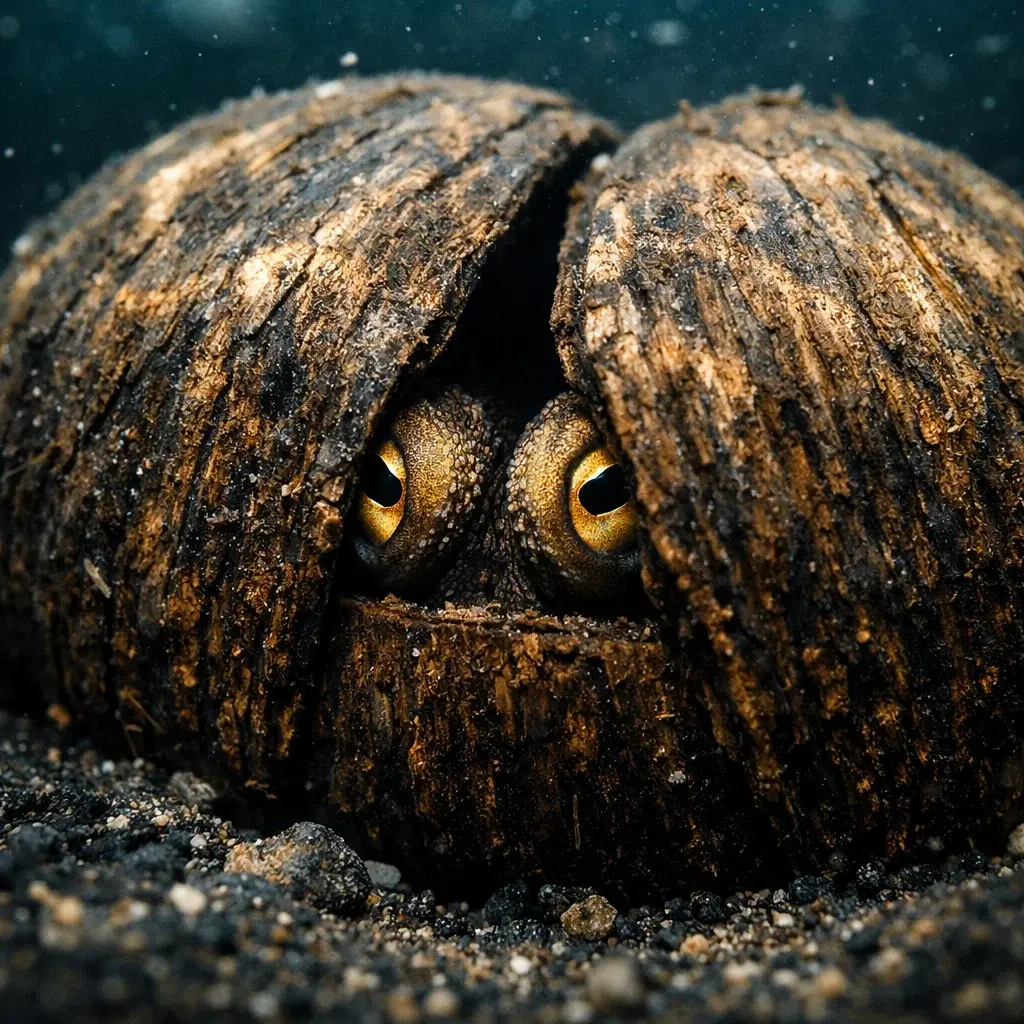
The common name “Coconut Octopus” is derived from its most famous behavioral trait: the habit of collecting, transporting, and utilizing discarded coconut shells as portable armor or shelter. While many octopuses use rocks or shells to barricade their dens, the coconut octopus takes this a step further.
These octopuses inhabit sandy and muddy seafloors where natural hiding spots are scarce. To compensate for the lack of crevices, they have adapted to use human-discarded coconut shells—which are plentiful in coastal regions of Southeast Asia—as a form of mobile home. When they find a shell, they will clean it out, tuck it under their bodies, and carry it across the seafloor. If they encounter a second shell half, they will stack the two together, essentially creating a “clamshell” of protection that they can pull shut when threatened.
This behavior is a prime example of “tool use,” defined as the use of an environmental object to alter the form or function of another object or the user itself. The fact that the octopus carries the shell even when it is not in immediate danger demonstrates a level of forward-planning and foresight that was once thought to be exclusive to vertebrates like primates and crows.
Coconut Octopus size and Physical Appearance
When discussing the Coconut Octopus size, it is important to distinguish between the mantle length and the total length. The mantle—the bulbous part of the octopus’s body that houses its organs—typically measures between 5 and 10 centimeters (2 to 4 inches). However, when you include its eight arms, the total length can reach up to 30 centimeters (approximately 12 inches).
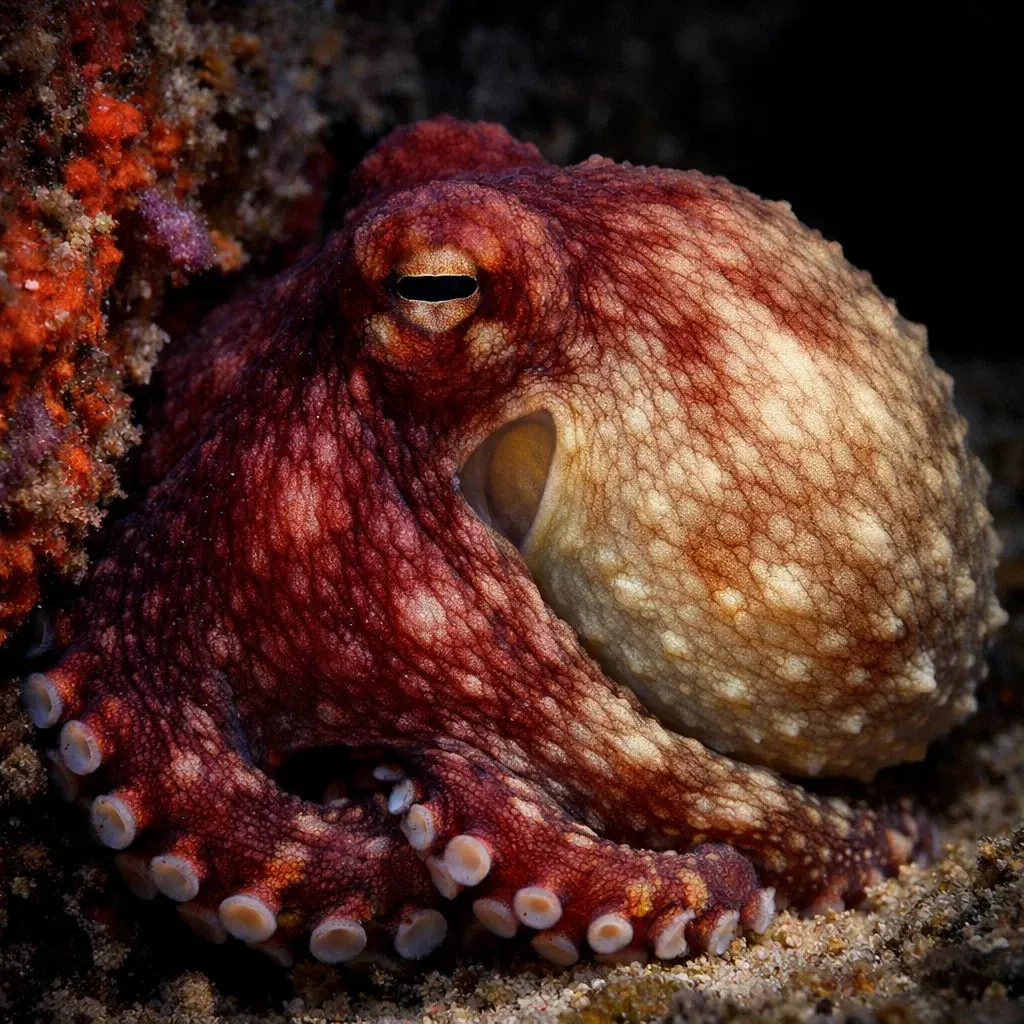
Physically, the coconut octopus is easily identified by its “veined” pattern. Its skin is usually a tan or brownish-purple color, crisscrossed with dark, branching lines that resemble veins. This pattern serves as excellent camouflage against the rippled sand of the seafloor.
One of the most striking features of its appearance is the contrast of its suckers. The suckers are typically a bright white or pale blue, which stands out vividly against the dark edges of its arms. Some observers refer to them as “blue glowing” suckers; however, it is a common misconception that they are bioluminescent. While they may appear to “glow” in certain lighting conditions, they do not produce their own light like the deep-sea Stauroteuthis syrtensis.
Fascinating Coconut octopus facts: Intelligence and Locomotion
Beyond its tool use, there are many Coconut octopus facts that highlight its status as one of the smartest invertebrates on Earth. Research has shown that these octopuses possess both short-term and long-term memories, and their brain-to-body ratio is comparable to that of some mammals and birds.
Bipedal Walking
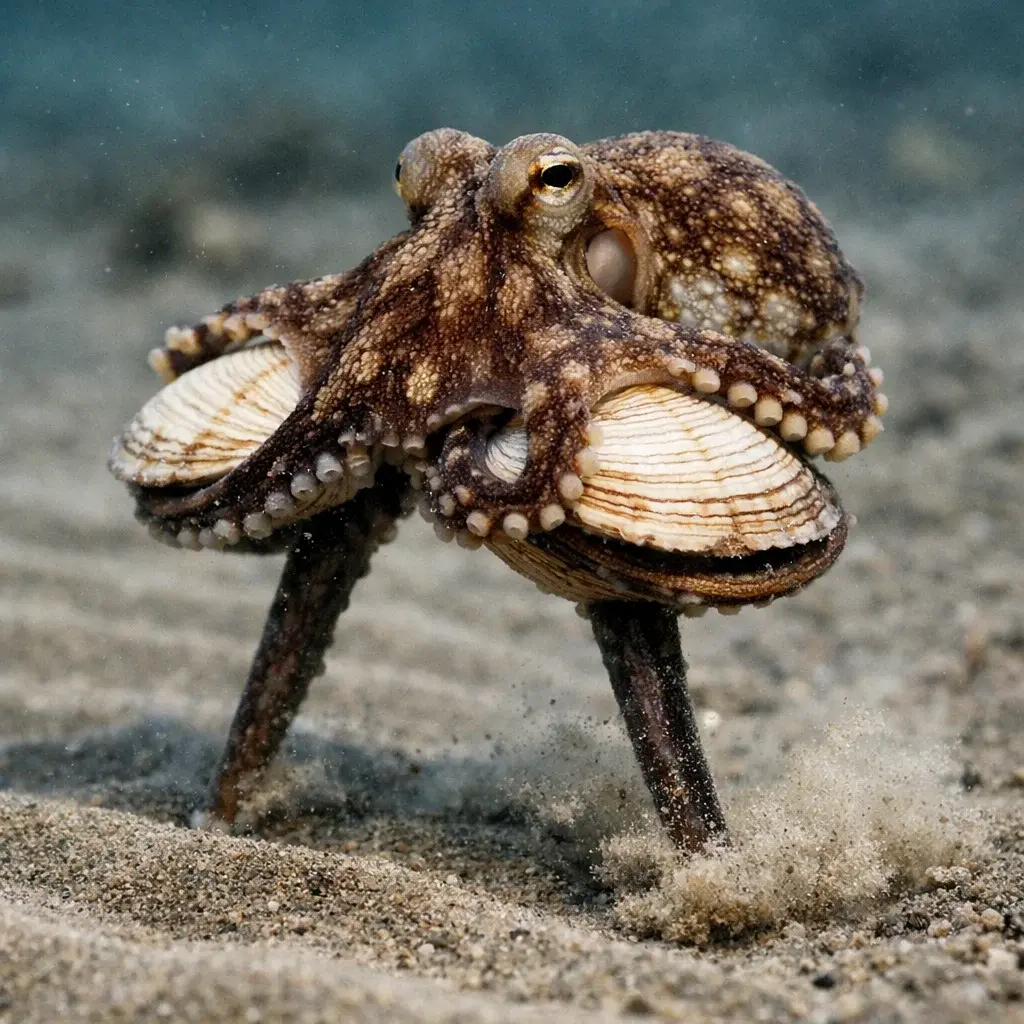
One of the most bizarre sights in the ocean is a coconut octopus “walking” on two legs. Known as bipedal locomotion, this behavior involves the octopus using two of its arms to “walk” or “run” across the sand while using its remaining six arms to hold its coconut shells or to maintain a specific shape.
By walking on two arms, the octopus can maintain its disguise as a rolling coconut or a piece of drifting algae while moving relatively quickly across open ground. This specialized form of movement is rare in the animal kingdom; besides humans and certain birds, only two species of octopus (the coconut octopus and the algae octopus) are known to exhibit this behavior.
Planning and Memory
The act of carrying shells is not a simple reflex. A coconut octopus must evaluate the size and shape of a shell, determine its usefulness, and then endure the “cost” of carrying a heavy, awkward object. This indicates “metacognition”—the ability to think about one’s own needs and future states. They have been observed traveling up to 20 meters while carrying their stacked shells, a significant distance for a creature of their size.
Coconut octopus lifespan and Reproductive Cycle
The Coconut octopus lifespan is relatively short, typically ranging from 3 to 5 years in the wild. This is a common trait among cephalopods, which follow a “live fast, die young” strategy. Their life cycle is marked by a single, intense reproductive event.
The Risky Business of Mating
For the male coconut octopus, mating is a dangerous affair. Females are often larger and more aggressive, and there is a very real risk that the female will attempt to eat the male instead of mating with him. To survive, males have developed several strategies. In some cases, the male will use a “reach” position, extending his specialized mating arm (the hectocotylus) from a safe distance to transfer sperm packets (spermatophores) into the female’s mantle.
In other instances, males may use camouflage to disguise themselves as females to approach a potential mate without triggering an aggressive response. Once mating is successful, the male’s life is essentially over; most males die shortly after the breeding season due to a process called senescence.
The Devoted Mother
The female coconut octopus is a model of maternal devotion. She will lay up to 100,000 tiny eggs (each less than 6mm long) in a safe crevice or inside a coconut shell. For the next several weeks, she will guard the eggs relentlessly, cleaning them and blowing fresh, oxygenated water over them with her siphon.
During this entire brooding period, the female does not eat. She focuses all her remaining energy on the survival of her offspring. By the time the eggs hatch into planktonic paralarvae, the mother is so physically exhausted that she typically dies of starvation.
The Truth About Coconut octopus venom
A common question among divers and ocean enthusiasts is: Is the coconut octopus venomous? The answer is yes, but with an important caveat.
While it is true that all octopuses are technically venomous—possessing salivary glands that produce toxins used to subdue prey—the Coconut octopus venom is not considered dangerous to humans. This is in stark contrast to the infamous blue-ringed octopus, whose tetrodotoxin can be fatal to an adult human within minutes.
For the coconut octopus, venom is a hunting tool. They primarily feed on crustaceans such as crabs and shrimp, as well as bivalves like clams. When hunting, the octopus uses its sharp beak to drill a small hole into the shell of its prey or finds a gap in the armor. It then injects its venom, which paralyzes the victim and begins the process of breaking down its tissues, making it easier for the octopus to consume.
In the context of human interaction, a bite from a coconut octopus might cause localized pain, swelling, or an allergic reaction, but it is not life-threatening. They are generally shy, solitary creatures that would much rather hide in a coconut shell than confront a human.
How smart is a coconut octopus?
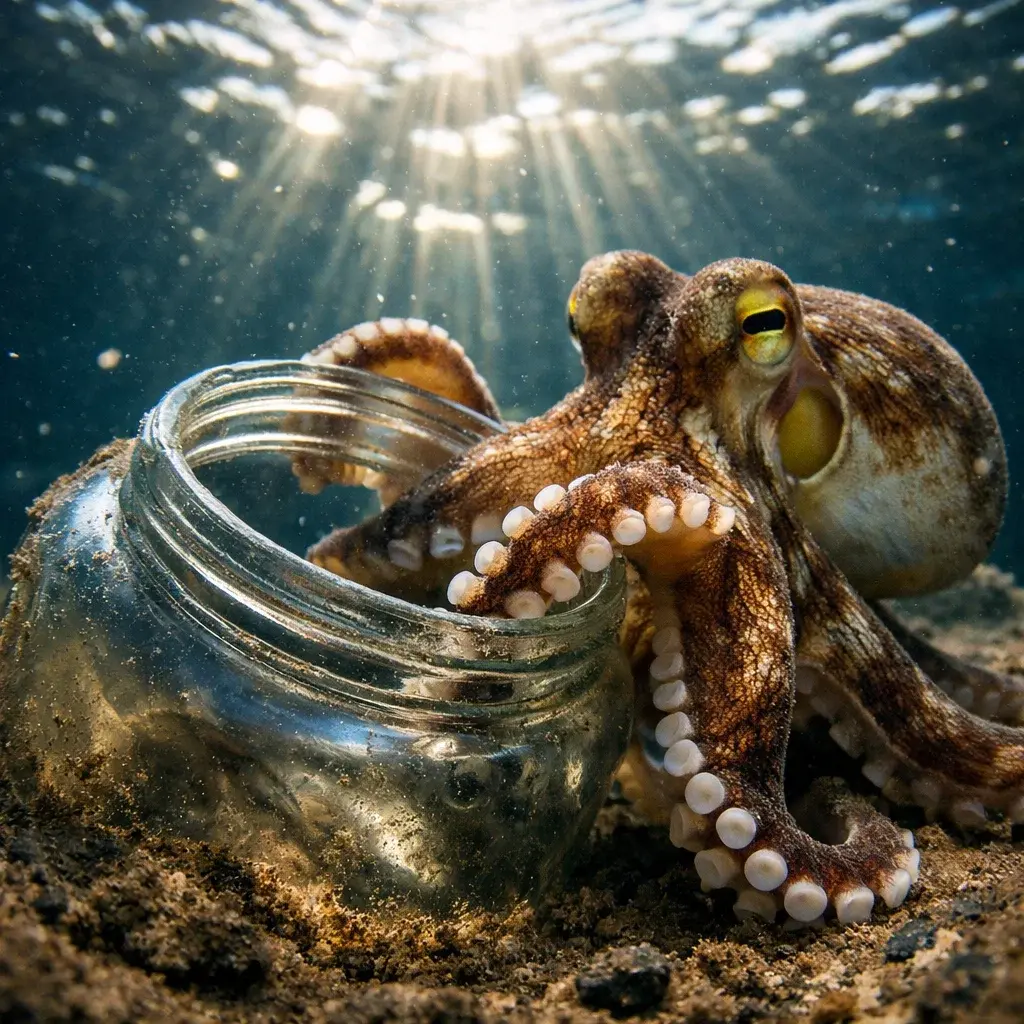
If we measure intelligence by problem-solving and tool use, the coconut octopus is at the top of its class. Their intelligence is not just a curiosity; it is a vital survival adaptation for living in the “muck” environments of the Indo-Pacific.
In these habitats—characterized by vast stretches of volcanic sand and little coral cover—predators like viperfish and sharks are a constant threat. The octopus’s ability to create its own armor out of discarded shells allows it to survive in an environment where other soft-bodied animals would be easily picked off. Their brains are highly centralized and complex, allowing for the coordination of their eight arms, each of which contains millions of neurons and can act somewhat independently of the central brain.
Are coconut octopuses endangered?
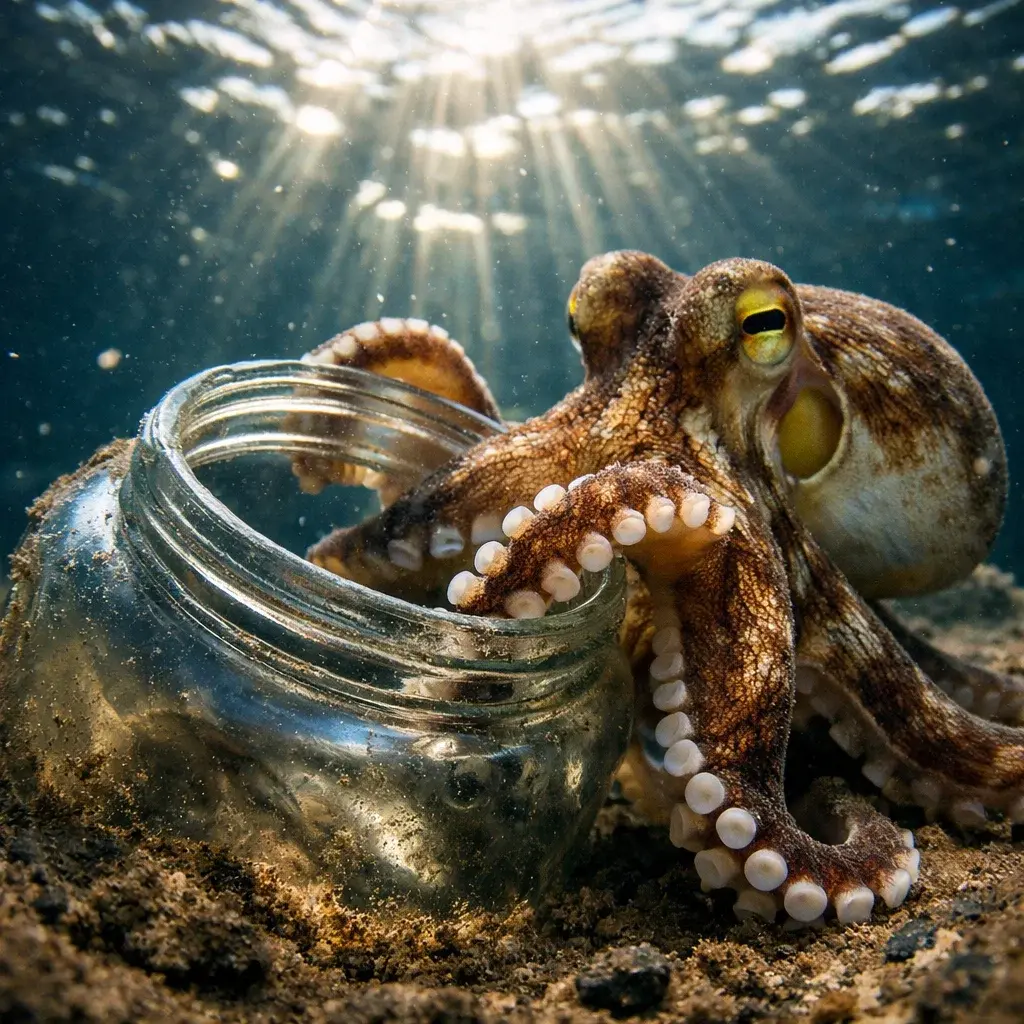
Given the increasing pressure on marine ecosystems, many people wonder: Are coconut octopuses endangered? Currently, Amphioctopus marginatus is listed as Least Concern on the IUCN Red List. They are widely distributed throughout the tropical Indian and Pacific Oceans, and their ability to adapt to human-altered environments—such as using plastic bottles or discarded shells—has likely helped them maintain stable populations.
However, they are not without threats. The primary danger to the species is habitat degradation and overfishing. In some regions, they are caught as bycatch or collected for the aquarium trade. Furthermore, as “muck diving” becomes more popular in places like the Lembeh Strait in Indonesia, increased human presence can lead to habitat disturbance. Conservation efforts focus on protecting the sandy substrates and ensuring that coastal pollution does not deplete the crustaceans they rely on for food.
The Coconut Octopus Octonauts Connection
The species reached a new level of fame through the popular children’s show Octonauts. In Season 4, Episode 6, titled “The Coconut Crisis,” the crew encounters both coconut crabs and the elusive coconut octopus.
In the episode, the character Kwazii and the team help the coconut crabs discover who has been “stealing” their coconuts. It turns out to be a coconut octopus, which is using the shells for protection. The show accurately portrays the octopus’s “stilt-walking” behavior and its use of shells as a portable home. This episode has been praised for introducing young audiences to complex biological concepts like tool use and invertebrate intelligence in a fun and accessible way.
Comparison: Are babirusa dangerous vs. the Coconut Octopus?
In the diverse landscapes of Indonesia—home to the coconut octopus—there are other “enigmatic” creatures that residents and researchers must consider. A common search query alongside these unique animals is: Are babirusa dangerous?
While the coconut octopus is a harmless (to humans) marine invertebrate, the Buru babirusa (Babyrousa babyrussa) is a very different kind of animal. According to the Buru Babirusa Research Report, the babirusa is a “suid” or wild pig endemic to the Indonesian islands like Buru.
| Feature | Coconut Octopus | Buru Babirusa |
| Environment | Marine (Underwater) | Terrestrial (Tropical Forest) |
| Danger Level | Low (Shy, non-lethal venom) | Moderate (Territorial, sharp tusks) |
| Scientific Name | Amphioctopus marginatus | Babyrousa babyrussa |
| Unique Trait | Tool use with shells | Self-impaling tusks (males) |
While the octopus relies on a coconut shell for safety, the babirusa relies on its formidable tusks. Male babirusas possess upper canines that grow upward through the snout and curve back toward the forehead. While they are generally not aggressive toward humans unless cornered, their tusks can be dangerous in territorial disputes between males.
Interestingly, both animals are subjects of intense island biogeography studies in the Wallacean transition zone. The babirusa represents an ancient suid lineage that has adapted to island life over millions of years, much like the coconut octopus has adapted to the unique challenges of the sandy Indo-Pacific seafloors.
Conclusion: A Master of Adaptation
The Coconut Octopus is a testament to the incredible diversity and intelligence found beneath the waves. From its Coconut octopus scientific name to its bizarre bipedal walking, every aspect of Amphioctopus marginatus challenges our traditional views of what invertebrates are capable of.
Whether it is outsmarting predators with a pair of coconut shells or navigating the complex mating rituals of the deep, this octopus remains a symbol of evolutionary ingenuity. As we continue to explore the tropical waters of the Indo-Pacific, from the Lembeh Strait to the Great Barrier Reef, the “veined” master of tools will undoubtedly continue to surprise and inspire scientists for generations to come.
Stay wild, stay curious – only on PetNarianPets!
Join The Fun On Instagram, X, Pinterest and YouTube.
Wanna Say Something about animals ? Contact Us.
I have read so many posts regasrding the blogger lovers however this paragraph is actually a nice post, eep it up.