
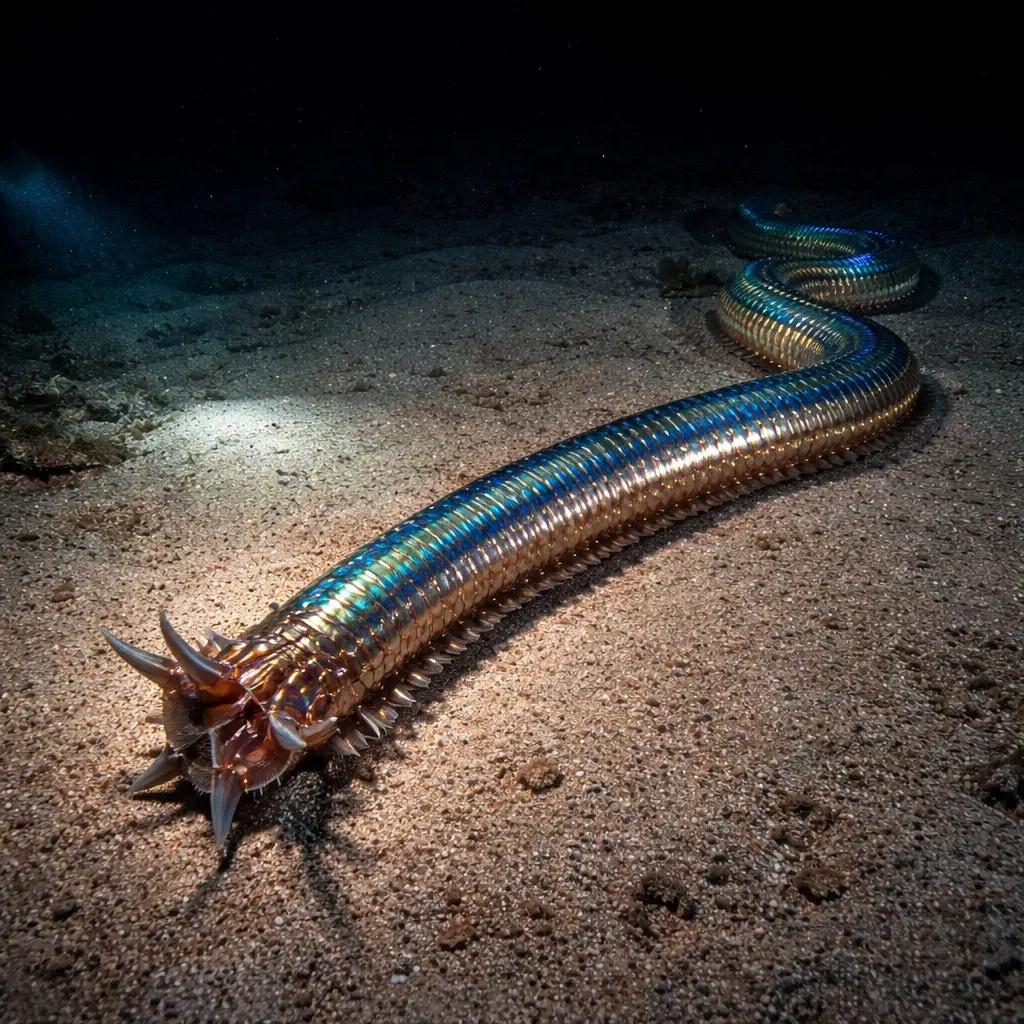
The marine benthic environment is a realm characterized by a high degree of specialization among its predatory inhabitants, yet few organisms exhibit the combination of morphological complexity, mechanical efficiency, and historical resilience seen in the eunicid polychaete Eunice aphroditois. Known colloquially as the Bobbit worm or “sand-striker,” this species represents a pinnacle of ambush-predation strategy within the phylum Annelida.
| Feature | Details |
| Scientific Name | Eunice aphroditois |
| Common Names | Bobbit Worm, Sand-Striker, Great Polychaete Worm |
| Maximum Length | Up to 3 meters (approx. 10 feet) |
| Average Width | 25.5 mm (approx. 1 inch) |
| Habitat | Tropical/Temperate Oceans (Indo-Pacific, Atlantic) |
| Diet | Carnivorous (Fish, Octopuses, Crustaceans, Sharks) |
| Key Weapon | Retractable, serrated pharyngeal jaws |
| Lifespan | Potentially several years (exact wild figures vary) |
While its common name originated in the sensationalized tabloid media of the late twentieth century, its biological lineage and evolutionary adaptations reflect a sophisticated predatory history spanning millions of years.
In this comprehensive guide, we will explore the depths of this creature’s existence, from the science behind its lightning-fast Bobbit worm attack to the harrowing stories of aquarium enthusiasts who have faced a Bobbit Worm calamity firsthand. We will answer critical questions regarding its danger to humans, including the specifics of a Bobbit worm bite and the search for a Bobbit worm bite cure.
Table of Contents
The Ghost of the Sandy Seabed
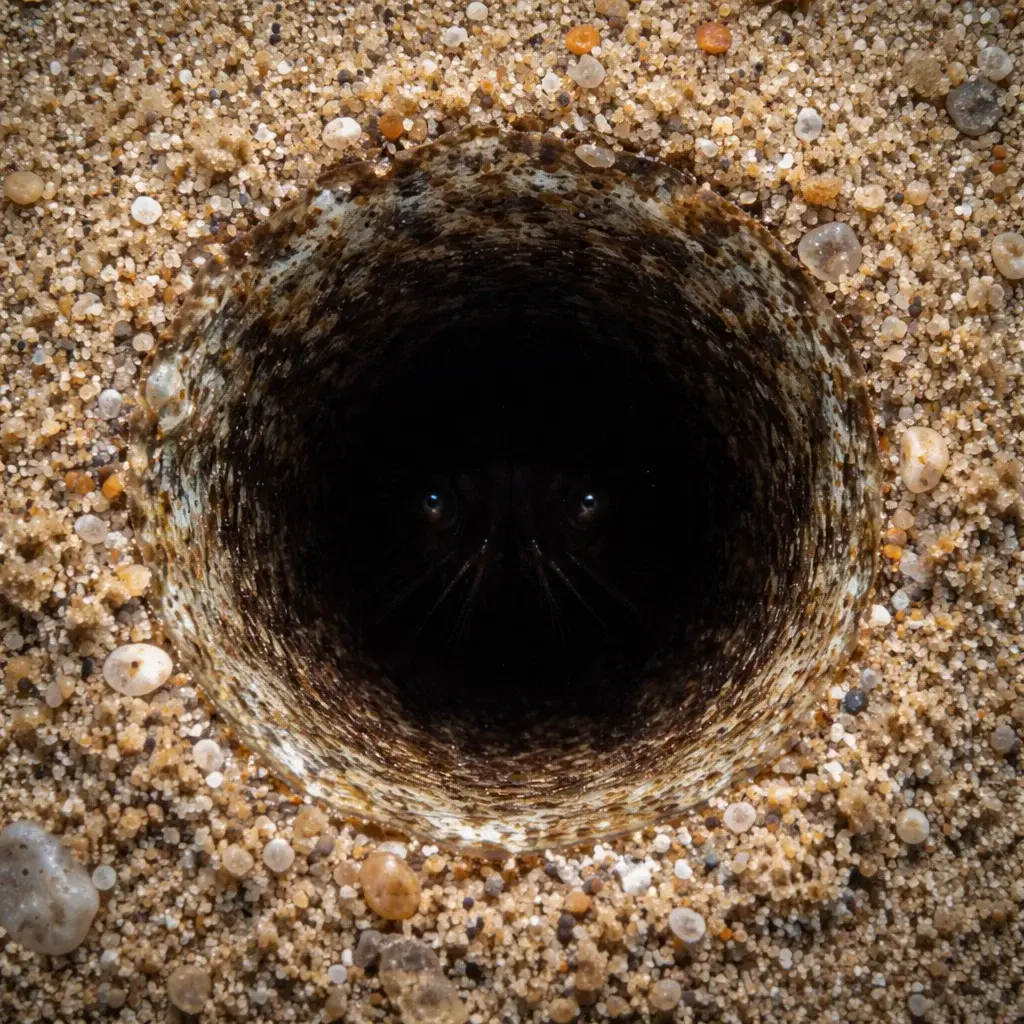
The Bobbit worm is an “errant” polychaete, a group defined by their mobility and often predatory lifestyles. Unlike many of its cousins that drift through the water column, Eunice aphroditois is a master of the subsurface ambush.
It spends the vast majority of its life buried deep within the sediment of the ocean floor, with only its complex mouthparts and sensory antennae protruding into the water column.
Evolutionarily, the bobbit worm is a relic of an incredibly successful lineage. The earliest fossil records place the evolution of giant polychaete worms within the Ordovician period, approximately 400 million years ago. Scientists have discovered fossilized burrows, known as Pennichnus formosae,
That date back more than 20 million years, suggesting that the hunting strategy used by the modern Bobbit worm has remained virtually unchanged for eons. This longevity is a testament to the efficiency of its design, a design that has earned it the reputation of being the “ghost” of the seabed, a predator that strikes from nowhere and vanishes just as quickly.
Why is it called a bobbit worm?
One of the most frequent questions curious naturalists ask is: Why is it called a bobbit worm? The answer lies not in marine biology, but in 1990s American legal history. The nickname was coined by Dr. Terry Gosliner in a 1996 field guide, referencing the infamous 1993 court case involving John and Lorena Bobbitt.
In that case, Lorena Bobbitt used a pair of scissors to sever her husband’s genitalia. The scissor-like, snapping action of the worm’s massive pharyngeal jaws reminded Gosliner of the incident.
This association gave birth to a persistent urban legend: that female bobbit worms engage in a post-mating ritual where they castrate the males and feed the parts to their young.
However, scientific observation has largely debunked this myth. In reality, these worms do not have penises; they are typically broadcast spawners, releasing their gametes into the water column for external fertilization.
Despite the lack of biological basis for the name’s “lore,” the moniker stuck because it perfectly captures the visceral fear inspired by the creature’s powerful jaws.
Bobbit Worm size and Anatomy
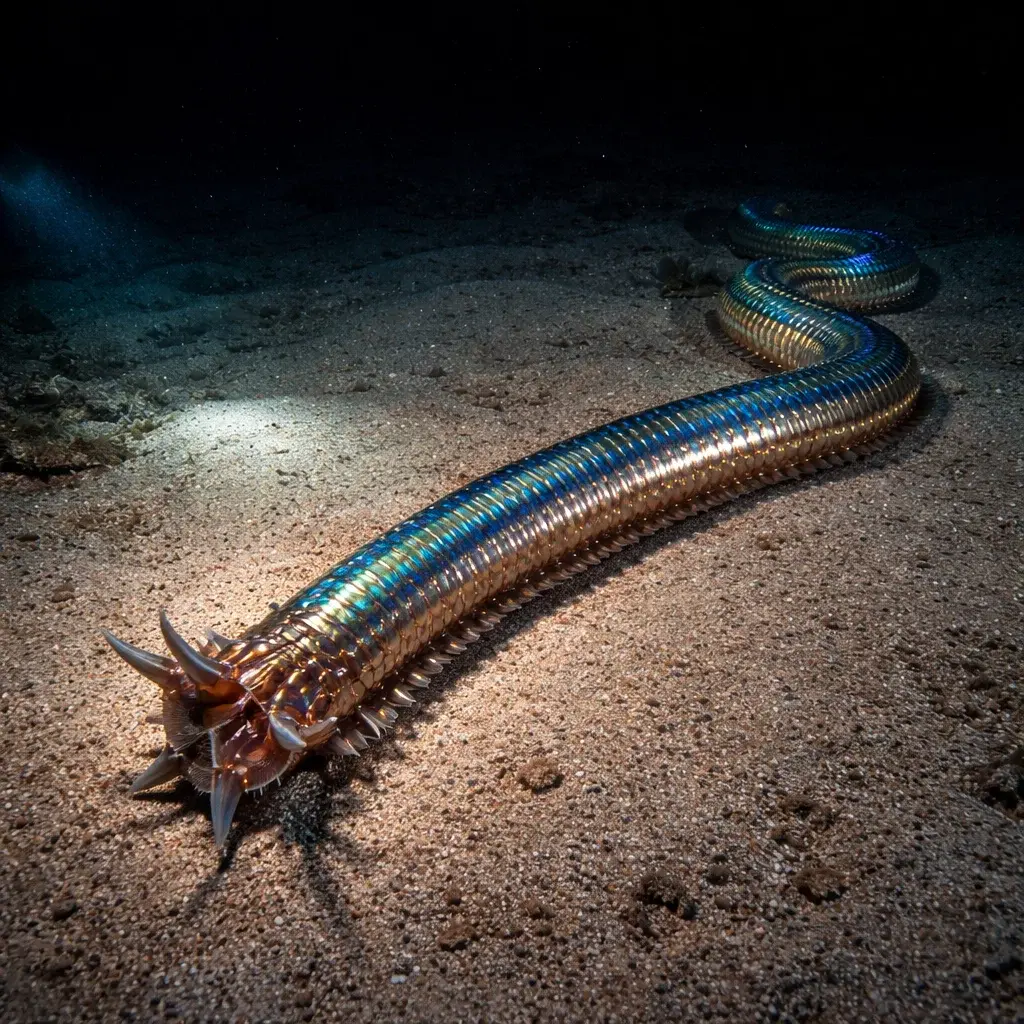
When discussing the physical dimensions of this predator, the Bobbit Worm size is often the first thing that shocks observers. While most bristle worms are a few inches long, Eunice aphroditois can grow to staggering lengths.
- Length: Specimens have been officially recorded at lengths of up to 3 meters (nearly 10 feet).
- Width: Despite their extreme length, they remain relatively slender, usually averaging about 25.5 millimeters (1 inch) in width.
- Segmentation: Their bodies are composed of hundreds of segments, each equipped with powerful muscles and bristles known as chaetae.
The body of the bobbit worm is covered in a specialized cuticle that exhibits a brilliant, iridescent sheen. In the presence of light, the worm shimmers with a rainbow of metallic colors—purples, golds, and greens—which serves as a form of “interference coloration”.
This iridescence, however, is rarely seen in the wild, as the worm only reveals a few inches of its head while hunting under the cover of darkness.
Sensory Organs and Bobbit Worm eyes
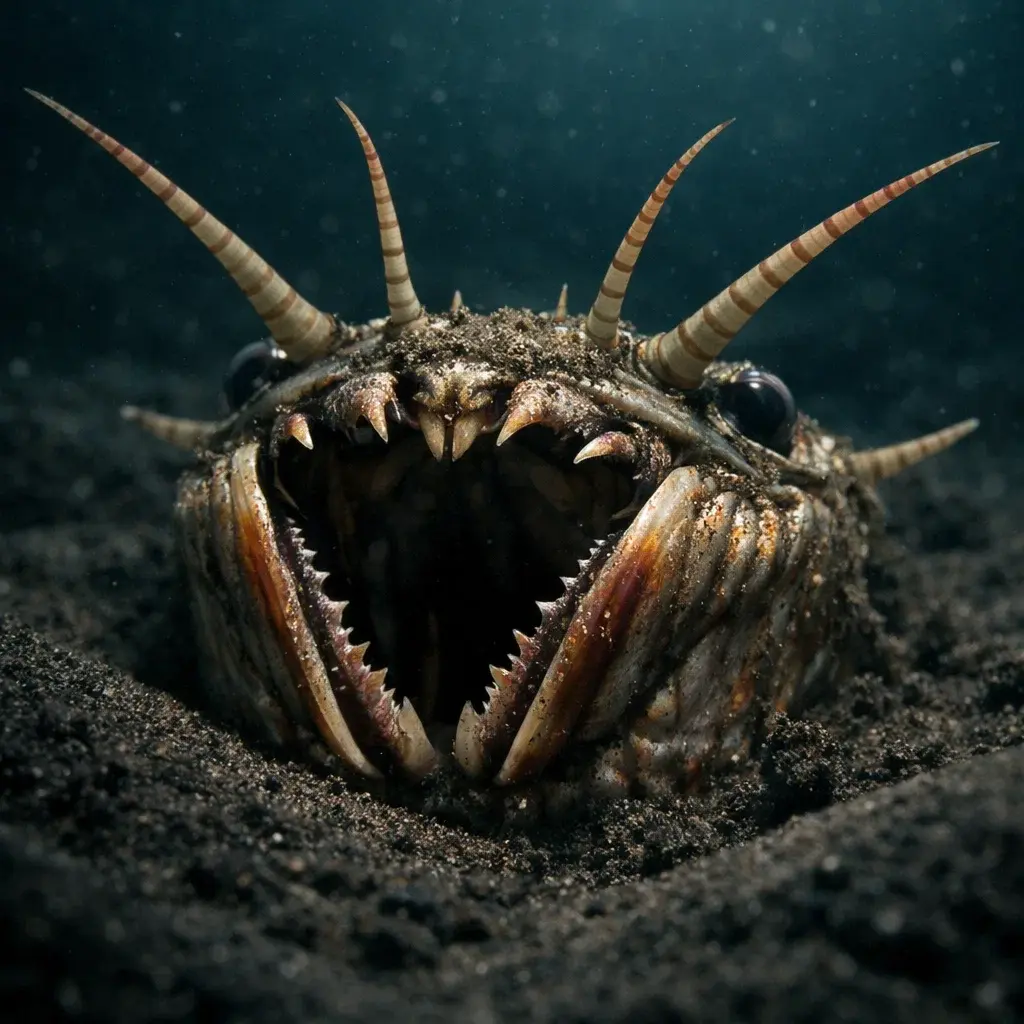
A common misconception is that these worms possess the complex, camera-like eyes of cephalopods or vertebrates. In truth, Bobbit Worm eyes are quite primitive.
They possess simple “eyespots” or ocelli that can detect changes in light intensity and movement, but they do not form detailed images.
To compensate for their limited vision, the Bobbit worm utilizes a sophisticated array of five sensory antennae located around its mouth. These antennae are highly sensitive mechanoreceptors and chemoreceptors.
- Vibration Sensing: They can detect the minute hydraulic pressure changes created by a fish swimming nearby.
- Chemical Detection: They “taste” the water to identify the species of prey and determine if it is worth the energy of an attack.
This sensory suite allows the worm to stay perfectly hidden in the sand, waiting for the precise moment when a target enters the “strike zone”.
Anatomy of a Marine Ambush
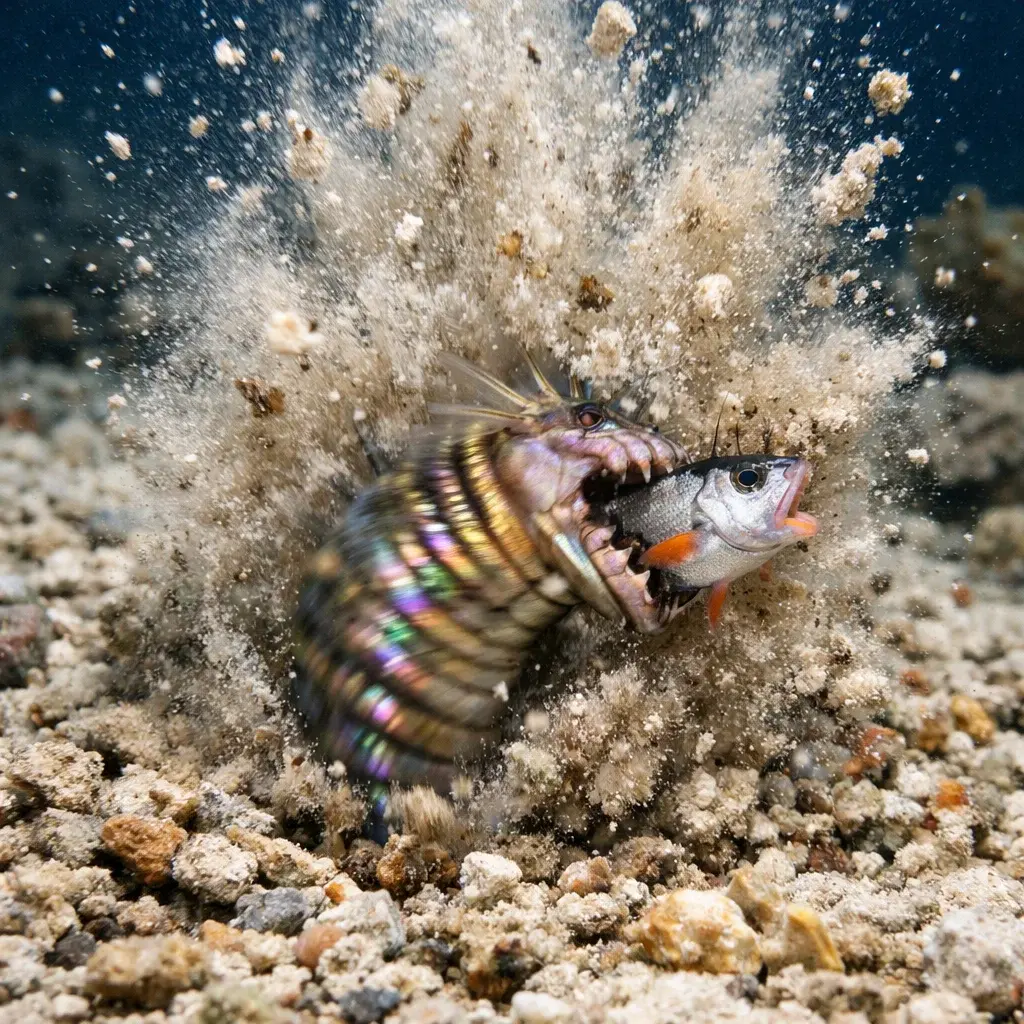
The Bobbit worm attack is one of the fastest movements in the animal kingdom, clocked at speeds of up to 6 meters per second. This incredible velocity is made possible by the worm’s unique pharyngeal apparatus.
When prey is detected, the worm’s pharynx (throat) essentially turns inside out, projecting its massive jaws forward at high speed. These jaws are divided into two main components:
- Mandibles: The heavy-duty lower plates used for crushing.
- Maxillae: The upper, serrated plates that act like a gin trap, interlocking to ensure the prey cannot escape.
The force of the impact is often so great that smaller fish are sliced instantly in two. Once the prey is secured, the worm uses the friction of its long body against the walls of its burrow to drag the victim underground.
The struggle is usually over in a fraction of a second, leaving only a puff of sand where the fish once swam.
The Bobbit worm eating shark
While the primary diet of the Bobbit worm consists of small fish, crustaceans, and octopuses, they are opportunistic feeders that do not shy away from larger, more dangerous targets.
Internet legends and scuba diver reports often highlight the Bobbit worm eating shark as the ultimate display of its dominance.
While a 10-foot worm is unlikely to take down a Great White, they have been observed attacking small, bottom-dwelling sharks such as dogfish or juvenile reef sharks that venture too close to the sediment.
The worm’s strategy is the same: a surprise lunge at the soft underbelly or the gills, followed by a violent retraction into the burrow. Even if the shark is too large to be dragged under, the Bobbit worm attack can leave it with a lethal wound, which the worm may later feed upon as the animal weakens.
Exploring Bobbit worm venom
Beyond its mechanical strength, the Bobbit worm utilizes a potent chemical arsenal. The Bobbit worm venom is a complex mixture of neurotoxins designed to incapacitate prey rapidly.
Research into related polychaetes has identified compounds like nereistoxin, which blocks acetylcholine receptors, causing paralysis. While specific studies on Eunice aphroditois venom are limited, victims of a Bobbit worm bite report immediate numbness and a stinging sensation similar to a bee or jellyfish.
Furthermore, the worm’s body is covered in thousands of tiny bristles (chaetae). These are not just for movement; they are hollow, venom-filled “harpoons” that can break off in a predator’s mouth or a human’s skin.
This secondary defense system ensures that even if a creature survives the jaws, it will suffer long-term pain and irritation.
Bobbit worm bite Symptoms and Cure
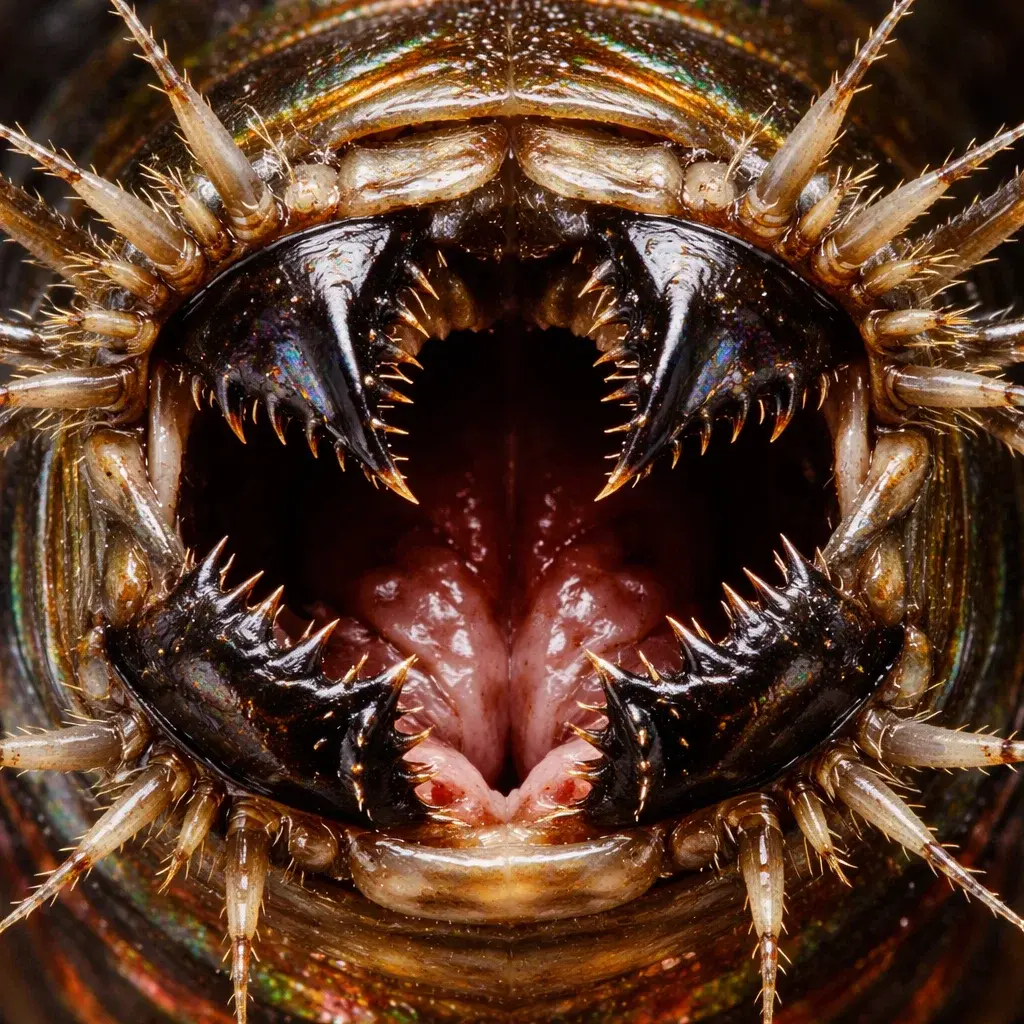
For divers and aquarium owners, the question of how painful is a bobbit worm bite? is a matter of serious concern. The answer is: excruciatingly painful, followed by a lingering discomfort.
Symptoms of a Bite
- Lacerations: The jagged mandibles can cause deep, clean cuts that bleed profusely.
- Numbness: The neurotoxic Bobbit worm venom often causes localized paralysis or a complete loss of sensation in the affected limb.
- Infection: Because these worms live in bacteria-rich sediment, the risk of “marine infection” (such as Vibrio) is extremely high.
The Search for a Bobbit worm bite cure
If you are bitten, there is no single “antidote” for the venom, but a specific Bobbit worm bite cure involves a combination of mechanical and medicinal steps:
- Bristle Removal: Use sticky tape or a bank card to scrape away the venomous bristles without breaking them further into the skin.
- Neutralization: Soaking the wound in vinegar or very hot water (as hot as tolerable) can sometimes help denature certain proteins in the venom.
- Antiseptics: Clean the area thoroughly with soap and water to prevent secondary infections.
- Medical Attention: If numbness persists or if the wound begins to swell excessively, seek professional medical help immediately, as nerve damage can sometimes be permanent.
Preventing a Bobbit Worm calamity
In the world of marine aquariums, there is perhaps no greater nightmare than the Bobbit Worm calamity. These worms often enter home systems as “hitchhikers” inside “live rock”—porous pieces of coral or rock harvested from the ocean.
A tiny, 2-inch worm can hide undetected inside a rock for years, growing in the shadows while the owner wonders why their expensive fish and corals are disappearing.
One of the most famous accounts is known as “The Bobbit Worm Chronicles,” documented in 2009 by an aquarium owner named Steve in Michigan.
Steve noticed his corals were being “eaten like corn on the cob”. He eventually discovered a 4-foot-long bobbit worm living inside his lace rock. His attempts to remove it became legendary:
- Poison: He tried injecting shrimp with copper (toxic to invertebrates), but the worm ate it and survived.
- Superglue: He stuffed a shrimp with superglue to try and seal the worm’s jaws shut; the worm simply digested the glue and came back for more.
- Glass: He even tried feeding it broken glass, which also failed.
The Bobbit Worm calamity was only resolved when Steve dismantled the entire tank and manually extracted the creature, which had grown large enough to dominate the entire ecosystem.
Is the bobbit worm truly unkillable?
The legend of the “unkillable” worm stems from its remarkable regenerative abilities. Many people ask, “Can the bobbit worm be killed?” while fearing that it might be impossible.
The bobbit worm is a segmented organism. If a predator or an angry aquarium owner tries to pull it out and it snaps, the segments can often survive. The head end will almost certainly survive and grow a new tail. Some research even suggests that certain segments can regenerate a new head, potentially turning one worm into two.
However, they are not immortal. They can be killed through:
- Physical Destruction: Complete crushing of the head and pharyngeal apparatus.
- Osmotic Shock: Fresh water can be lethal to these highly adapted saltwater organisms.
- Predation: In the wild, certain fish like the Peters’ monocle bream have learned to “mob” the worm, blowing jets of sand into its face until it retreats, allowing the fish to feed safely nearby.
Comparison of Polychaete Predators
To understand why the Bobbit worm is uniquely terrifying, let’s compare it to other common marine worms.
| Feature | Bobbit Worm (E. aphroditois) | Fireworm (Hermodice carunculata) | Bloodworm (Glycera dibranchiata) |
| Maximum Length | Up to 3 meters | Up to 30 centimeters | Up to 35 centimeters |
| Primary Weapon | Crushing pharyngeal jaws | Venomous, stinging bristles | Copper-tipped fangs |
| Hunting Style | Ambush (Subsurface) | Scavenging / Slow predation | Burrows in mud / Active hunting |
| Venom Effect | Numbness, paralysis | Intense burning sensation | Painful, bee-sting like |
| Aquarium Status | Destructive “Calamity” | Common scavenger (often safe) | Rare in home tanks |
A Master of Survival
The Bobbit worm is a masterwork of evolutionary engineering. From its iridescent, shimmering skin to its 400-million-year-old hunting lineage, it stands as one of the ocean’s most effective and terrifying predators.
While it may be the source of countless nightmares and Bobbit Worm calamity stories in the aquarium hobby, it also commands a certain level of respect.
Its ability to survive extreme measures—from superglue to copper poison—highlights a resilience that few other creatures possess.
Whether it is the Bobbit worm eating shark or simply waiting for a passing snail, the sand-striker remains a vital, albeit creepy, component of the marine food web.
If you ever find yourself diving in the Indo-Pacific or setting up a new reef tank, keep a watchful eye on the sand.
You never know when those five antennae might be tasting the water, waiting for the perfect moment to launch a Bobbit worm attack. Respect the distance, mind the jaws, and remember that in the world of the bobbit worm, the most dangerous things are often the ones you cannot see.
Stay wild, stay curious – only on PetNarianPets!
Join The Fun On Instagram, X, Pinterest and YouTube.
Wanna Say Something about animals ? Contact Us.