
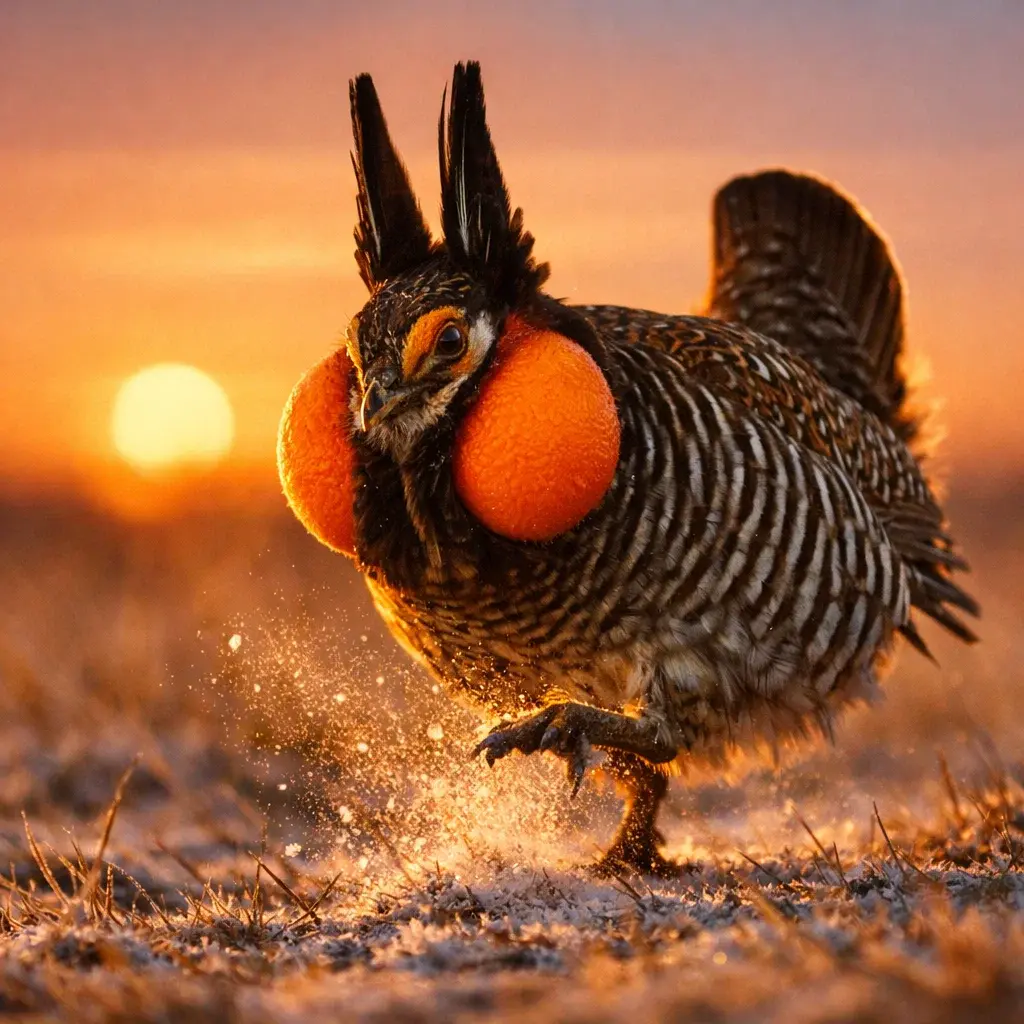
Explore the fascinating world of the Prairie chicken, the iconic “drummer” of the American grasslands. From the booming rituals of the Greater Prairie Chicken to the legal shifts of 2025. Discover why this species is a vital indicator of ecosystem health. Learn about their habitat, survival secrets, and more!
Table of Contents
The Drummer of the Plains
The North American grasslands are home to a creature that embodies the spirit of the wild frontier: the Prairie chicken. Belonging to the genus Tympanuchus, these birds are not merely inhabitants of the plains but are intrinsically linked to the structural integrity and health of the Great Plains. Historically,
They were a pervasive presence across the continent, with populations that once rivaled the numbers of the American bison. Today, they serve as a critical “indicator species,” meaning their population trends directly reflect the stability and health of disappearing tallgrass and mixed-grass ecosystems.
The biology, behavior, and conservation of this remarkable bird. Whether you are interested in the Prairie chicken beauty displayed during mating rituals, or the current Prairie-chicken population status,
This article provides the deep insights required by enthusiasts and conservationists alike, supported by the latest data from community resources like Petnarianpets.
Biological and Taxonomic Summary
| Category | Details |
| Scientific Name | Tympanuchus cupido (Greater) / Tympanuchus pallidicinctus (Lesser) |
| Kingdom | Animalia |
| Order | Galliformes (Landfowl) |
| Family | Phasianidae (Grouse, Turkeys, Pheasants) |
| Status (2025) | Varied; Lesser species delisted by court order in August 2025 |
| Primary Habitat | Unfragmented native grasslands |
| Key Behavior | Communal lek mating system |
Understanding the Evolutionary Lineage of Tympanuchus
The systematic classification of these birds places them in the order Galliformes, a group of ground-feeding, heavy-bodied birds. The genus name, Tympanuchus, is derived from Greek roots that refer to the “kettledrum” sound produced by males during their iconic courtship displays.
The specific epithet for the Greater species, cupido, was selected by Carl Linnaeus in 1758. He was inspired by the erectile neck feathers of the males, which reminded early naturalists of the wings of Cupid, the Roman god of love.
Within this genus, scientists recognize two extant species: the Greater Prairie Chicken (Tympanuchus cupido) and the Lesser prairie chicken (Tympanuchus pallidicinctus). A third closely related species, the Sharp-tailed Grouse, often shares habitat with them in the northern Great Plains.
The Greater species further includes several subspecies, such as the nominate Greater Prairie-Chicken, the critically endangered Attwater’s Prairie-Chicken of the Gulf Coast, and the tragically extinct Heath Hen of the Atlantic seaboard.
Greater vs. Lesser Prairie Chicken
While the two species are genetically similar, they are distinguished by several physical and behavioral traits. The Greater Prairie Chicken is the larger and more widely distributed of the two. It typically measures between 16 and 18 inches in length and can weigh up to 42 ounces. In contrast, the Lesser prairie chicken is more diminutive, averaging 15 to 16 inches and weighing between 22 and 29 ounces.
Beyond size, they are differentiated by the coloration of their specialized courtship structures. The esophageal air sacs of the Greater species are a vibrant orange, while those of the Lesser species are reddish or reddish-orange. Their vocalization frequencies also differ, and while they generally occupy separate ranges, a narrow zone of overlap exists in western Kansas where hybridization has been documented.
Anatomy and the Concept of Prairie Chicken Beauty
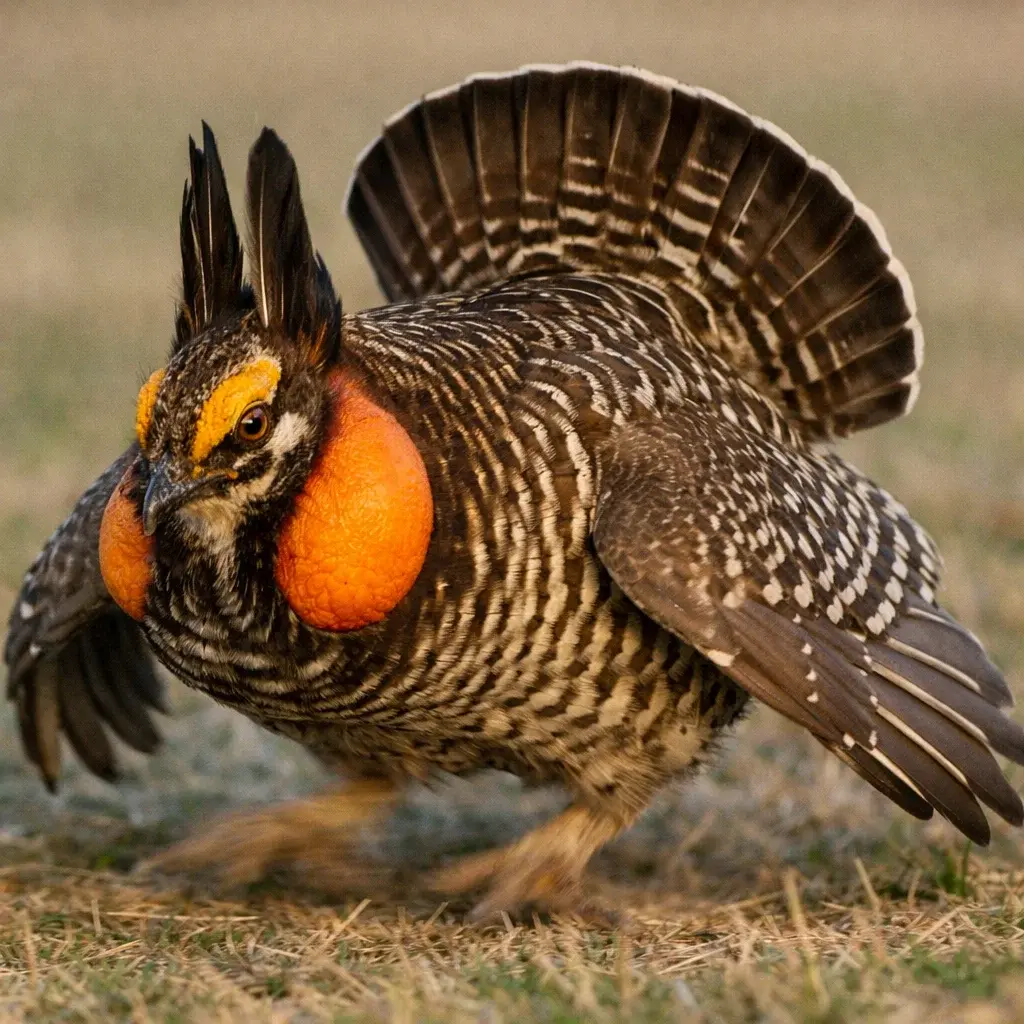
To the casual observer, a resting bird might seem plain, but the Prairie chicken beauty is revealed through its complex adaptations and vibrant display ornaments. Adult birds possess a “cryptic” plumage pattern of horizontal barring—alternating bands of dark brown, buff, and white. This disruptive coloration is an essential survival tool, allowing them to blend seamlessly into the vertical stalks and shifting shadows of the prairie to avoid predators.
The Role of the Prairie Chicken Female
The Prairie Chicken female is the master of camouflage. Her plumage is more muted than the male’s, lacking the bright eye combs and air sacs, which allows her to remain nearly invisible while nesting. This is critical because she must sit on Prairie chicken eggs in tall, dense “residual” grass for weeks, hidden from the keen eyes of hawks and coyotes.
Male Ornaments and Displays
Male birds possess three primary anatomical features used for breeding:
- Pinnae: Elongated feathers on the sides of the neck that can be erected to look like ears or horns.
- Air Sacs: Unfeathered patches of skin on the neck that inflate to amplify their “booming” calls.
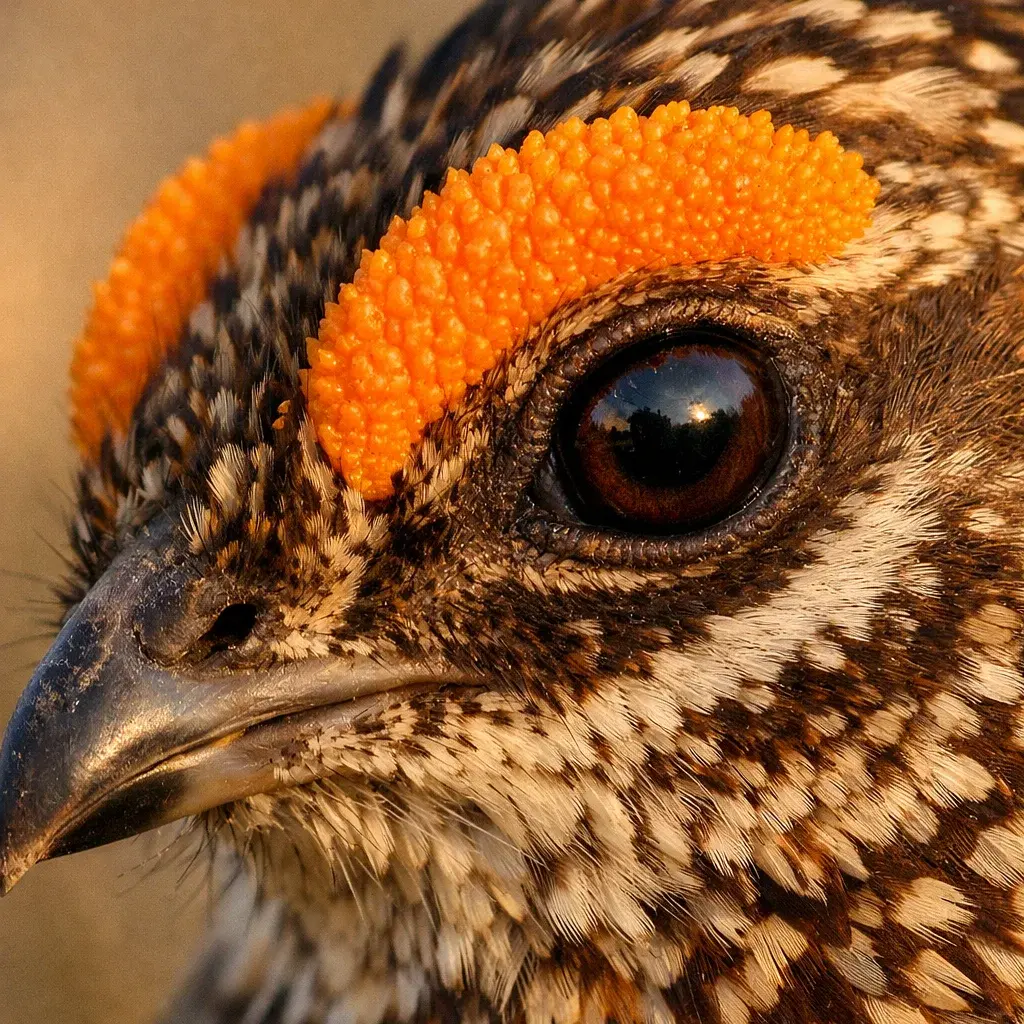
- Eye Combs: Fleshy, supraorbital combs above the eyes that engorge with blood and intensify in color during the lekking season.
The Spectacle of the Communal Lek
The social life of these birds revolves around the Prairie chicken lek system. A lek is a traditional communal “booming ground” where males gather to compete for female attention. Some of these grounds have been used by generations of birds for over 100 years.
The Booming Ritual
Starting as early as late January, males arrive at the lek before dawn to begin a choreographed sequence of sounds and movements:
- The Stomp: The male stamps his feet rapidly, hitting up to 20 beats per second.
- The Boom: He inflates his air sacs to produce a resonant three-syllable call (“whoo-doo-doooohh”) that can be heard over two miles away.
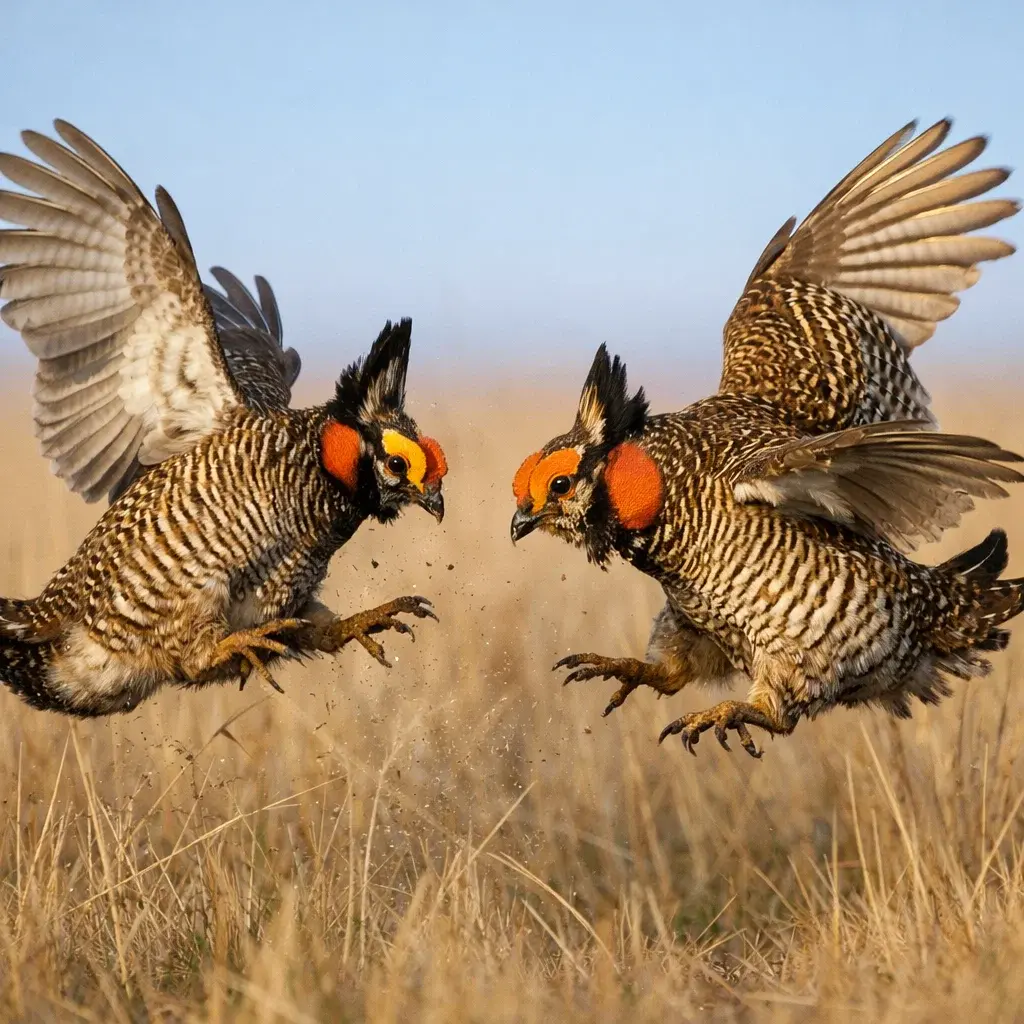
- The Flutter Jump: To show dominance, males leap into the air while flapping their wings and emitting cackles or whines.
- The Spar: Dominant males defend small territories through ritualized standoffs or physical clashes.
The lek is highly hierarchical, with the most experienced “center” males performing approximately 90% of the matings. Females observe these displays carefully, choosing mates based on the intensity of their dance and the quality of their physical ornaments.
Habitat and Geographic Strongholds
The Prairie chicken is strictly a North American bird, though its range has contracted significantly since the 19th century. They are “area-sensitive” creatures, requiring expansive, treeless landscapes of at least 2 to 5 square miles to sustain a healthy population.
Regional Populations: Kansas to Oklahoma
- Kansas: Currently the only state that supports significant populations of both the Greater and Lesser species.
- Nebraska: Serves as a stronghold for the Greater species, particularly in the Sandhills.
- Prairie chicken Oklahoma: The state maintains northeast populations of the Greater species and eastern plains populations of the Lesser species.
- Texas: Home to the critically endangered Attwater’s subspecies along the coast.
The structural height of vegetation is the primary factor in habitat selection. Greater species prefer tallgrass and mixed-grass prairies, while Lesser species are found in more arid grasslands dominated by sand sagebrush.
Dietary Habits and Foraging Ecology
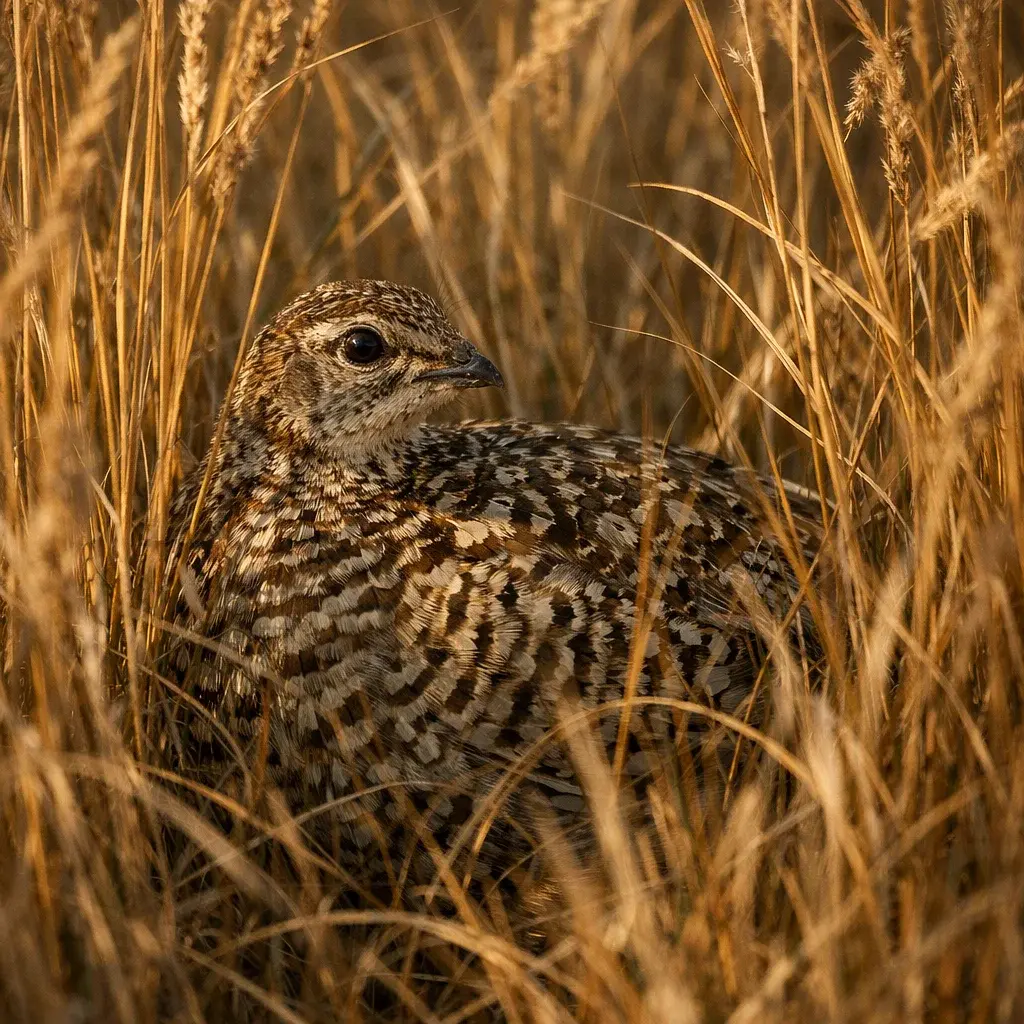
These birds are highly adaptive foragers, shifting their diet seasonally to survive the extreme climate of the Great Plains.
Juvenile Needs and Chick Survival
During their first few weeks, chicks are almost exclusively insectivorous. They hunt for protein-rich grasshoppers, beetles, and crickets necessary for rapid bone development.
The availability of “insect biomass” is the most critical factor for brood success. In some southern regions, invasive fire ants have devastated native insect populations, leading to declines in chick survival.
Adult Omnivory
As adults, their diet expands to include green shoots, buds, and flowers in the spring and summer. In the fall and winter, they transition to seeds and grains. They have adapted well to agricultural landscapes, often feeding on waste grains like corn, soybeans, and wheat. Interestingly,
if deep snow covers ground-level food, they exhibit arboreal behavior, climbing into trees to eat buds.
Biological Adaptations for Survival
The survival of the Prairie chicken depends on several unique physiological and behavioral traits.
- Myoglobin and Dark Meat: One of the most remarkable traits is the high concentration of myoglobin in their breast muscles. This oxygen-binding protein allows for high-stamina flight, which was historically necessary to follow bison herds or escape prairie fires. This is why Prairie chicken meat is dark, unlike the white meat of domestic chickens or pheasants.
- Snow Burrowing: During dangerous winter wind chills, the birds dive into deep snowdrifts. The snow acts as an insulator, creating a warm “sleeping bag” that keeps them much warmer than the ambient air.
- Respiratory Mechanics: The “boom” is a mechanical feat where esophageal air sacs act as resonant chambers for the syrinx (voice box) . This allows the low-frequency sound to resist fading, reaching potential mates across vast distances.
Cultural and Historical Significance
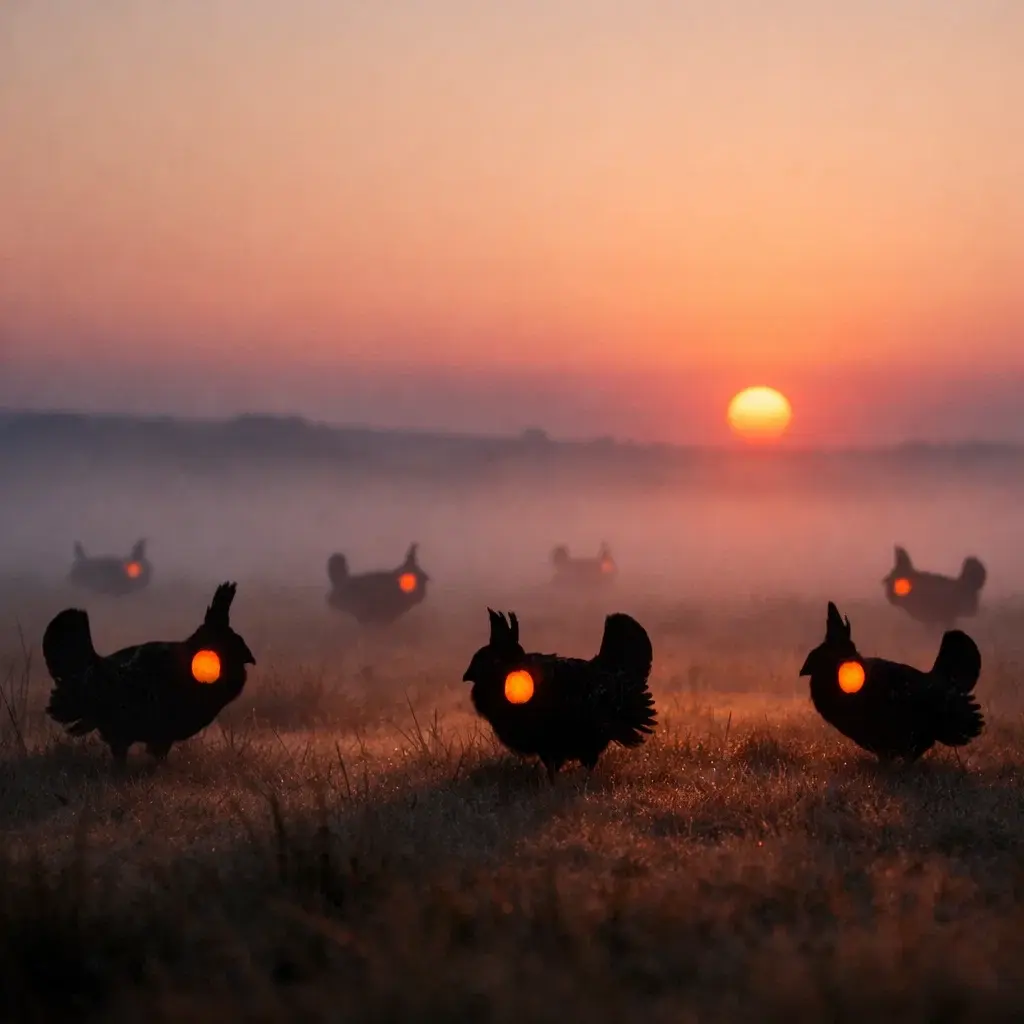
For many Indigenous Nations, the Prairie chicken is a sacred and symbolic animal. The “Chicken Dance” of the Blackfoot, Sioux, and Mandan cultures is an ancient tradition where dancers wear regalia mimicking the bird’s plumage.
Their intricate footwork replicates the 20-beat-per-second stomp of the lekking male, symbolizing the deep interconnection between people, wildlife, and nature.
Historically, the bird also provided a cautionary tale for conservation. The extinction of the Heath Hen on Martha’s Vineyard in 1932 was a pivotal moment in American history.
The last survivor, a male known as “Booming Ben,” was seen for years returning to his lonely lek, booming for mates that no longer existed. This marked the first time the public witnessed an extinction in real-time, leading to a major shift in wildlife protection attitudes.
Prairie Chicken vs. Others
While they belong to the same family as pheasants and other grouse, there are distinct differences that every birder and hunter should know.
| Feature | Prairie Chicken | Sharp-tailed Grouse | Pheasant |
| Tail Shape | Square, dark | Pointed, white | Long, tapered |
| Breast Pattern | Horizontal bars | V-shaped chevrons | Mottled/Speckled |
| Legs | Partially feathered | Fully feathered | Unfeathered |
| Meat Type | Dark/Rich | Dark/Rich | White/Mild |
| Habitat | Open Prairie | Brushy Grasslands | Agricultural/Brush |
The most noticeable difference in flight is the silhouette: the square, dark tail of the Prairie chicken is a definitive field mark compared to the light-colored, pointed tail of the Sharp-tailed Grouse.
Conservation and the 2025 Legal Horizon
The Prairie-chicken population faces ongoing threats from habitat fragmentation and human infrastructure. They are known to abandon breeding grounds near “vertical structures” such as wind turbines and power lines, as these provide perches for predatory hawks.
The 2025 Legal Shift
The legal status of the Lesser species has been a subject of intense litigation. While it was listed under the Endangered Species Act (ESA) in 2022, a federal court in Texas vacated these protections on August 12, 2025. As of late 2025, the Lesser species is no longer federally protected,
Shifting conservation responsibility to state-level management and private landowner alliances. These alliances often use “conservation banking” to pay ranchers for maintaining the critical habitat these drummers need to survive.
Frequently Asked Questions
What is another name for prairie-chicken?
In addition to their common name, they have been known as the Pinnated Grouse (referring to their neck feathers), the Boomer (referring to their vocalization), and the Prairie Hen . Indigenous peoples, such as the Ojibwa and Potawatomi, refer to them as the Kewaunee.
Can you eat prairie-chicken?
Yes, they are edible and remain a hunted game bird in several states. The meat is dark and rich, high in myoglobin, and offers a flavor profile similar to venison. It is highly recommended to brine the meat before cooking to a medium-rare temperature.
Are there still prairie-chickens?
Yes, there are still Prairie-chickens in North America, though their range is much smaller than it was historically. The Greater Prairie Chicken remains stable in states like Kansas, Nebraska, and South Dakota. However, some subspecies, like Attwater’s, are critically endangered, and the Heath Hen is extinct.
What’s the difference between a prairie-chicken and a pheasant?
The primary differences lie in their appearance and meat. Prairie chickens have square tails and horizontal barring on their feathers, while pheasants have long, tapered tails. Furthermore, the Prairie chicken has dark, iron-rich meat due to high myoglobin, whereas the pheasant has white, mild meat.
Protecting the Spirit of the Prairie
The Prairie chicken is far more than just a bird; it is a biological “perfect machine” of the grasslands. From the high-stamina flight powered by myoglobin to the intricate acoustic engineering of the “boom,” every aspect of its biology is a testament to millions of years of evolutionary specialization.
As we look toward the future, the stability of the Prairie-chicken population remains a benchmark for our success in preserving the American prairie. Whether we are observing the Prairie chicken beauty on a remote lek in Oklahoma or learning about the heritage of Prairie chicken through resources like Petnarianpets, we must remember that these birds require large, unfragmented spaces to thrive.
By supporting rotational grazing and prescribed burns, we can ensure that the “winged drummer of love” continues to boom across the plains for generations to come.
Stay wild, stay curious – only on PetNarianPets!
Join The Fun On Instagram, X, Pinterest and YouTube.
Wanna Say Something about animals ? Contact Us.