
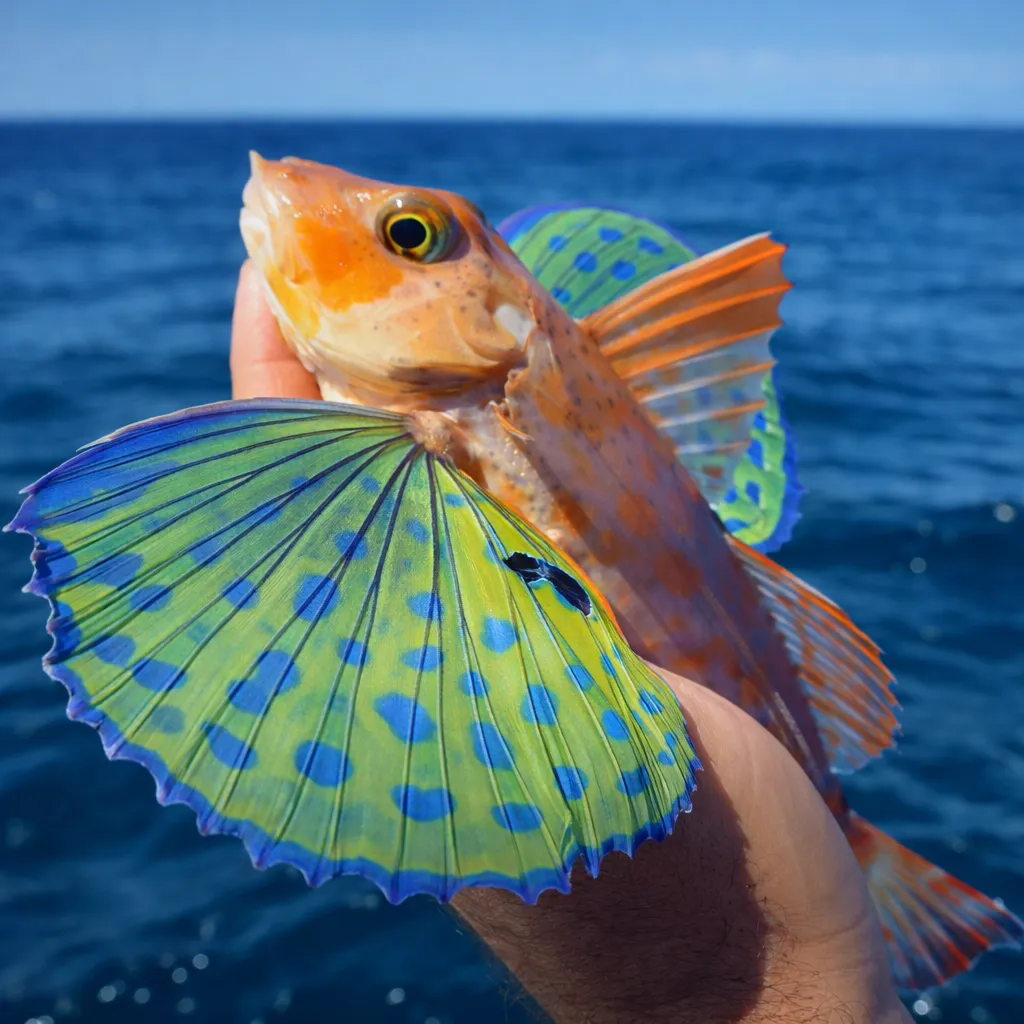
Meet the astounding *Flying Gurnard*! This magnificent fish flaunts flamboyant “wings” that let it glide gracefully through the azure waters. Dive into this captivating world where awe meets artistry! Did you know that the they can actually use these wing-like pectoral fins to propel itself across the ocean, capturing the wonder of every onlooker? From their vibrant colors to unique abilities, prepare to be astonished by nature’s design!
The depths of our oceans are home to creatures that seem to defy the laws of biology, but few are as visually arresting as the flying gurnard. Scientifically known as Dactylopterus volitans, this species is a master of adaptation, possessing traits that allow it to “walk” across the sand, vocalize like a terrestrial animal, and display wings that glow with phosphorescent light. While its name suggests a life spent in the air, the reality of the flying gurnard sea existence is rooted firmly on the ocean floor, where it serves as a “nuclear forager” for the benthic community.
Table of Contents
In this exhaustive guide, we will explore the intricate biology of this “fisch,” its unique locomotion, and answer the most pressing questions for enthusiasts and potential owners. Whether you are searching for information on a flying gurnard pet or curious about the Flying Gurnard size, this article covers every aspect of this biological marvel.
Biological Specifications
| Feature | Description of Dactylopterus volitans |
| Scientific Name | Dactylopterus volitans |
| Max Length | 50 cm (20 inches) |
| Max Weight | 1.8 kg (4.0 lbs) |
| Habitat | Sandy, muddy, or rocky bottoms; 1–100m deep |
| Location | Tropical/Warm Atlantic and Mediterranean Sea. |
| Diet | Carnivorous (Crabs, shrimp, mollusks, small fish) |
| Key Trait | Split pectoral fins (“hands” and “wings”) |
Deciphering the Flying Gurnard Facts and Taxonomy
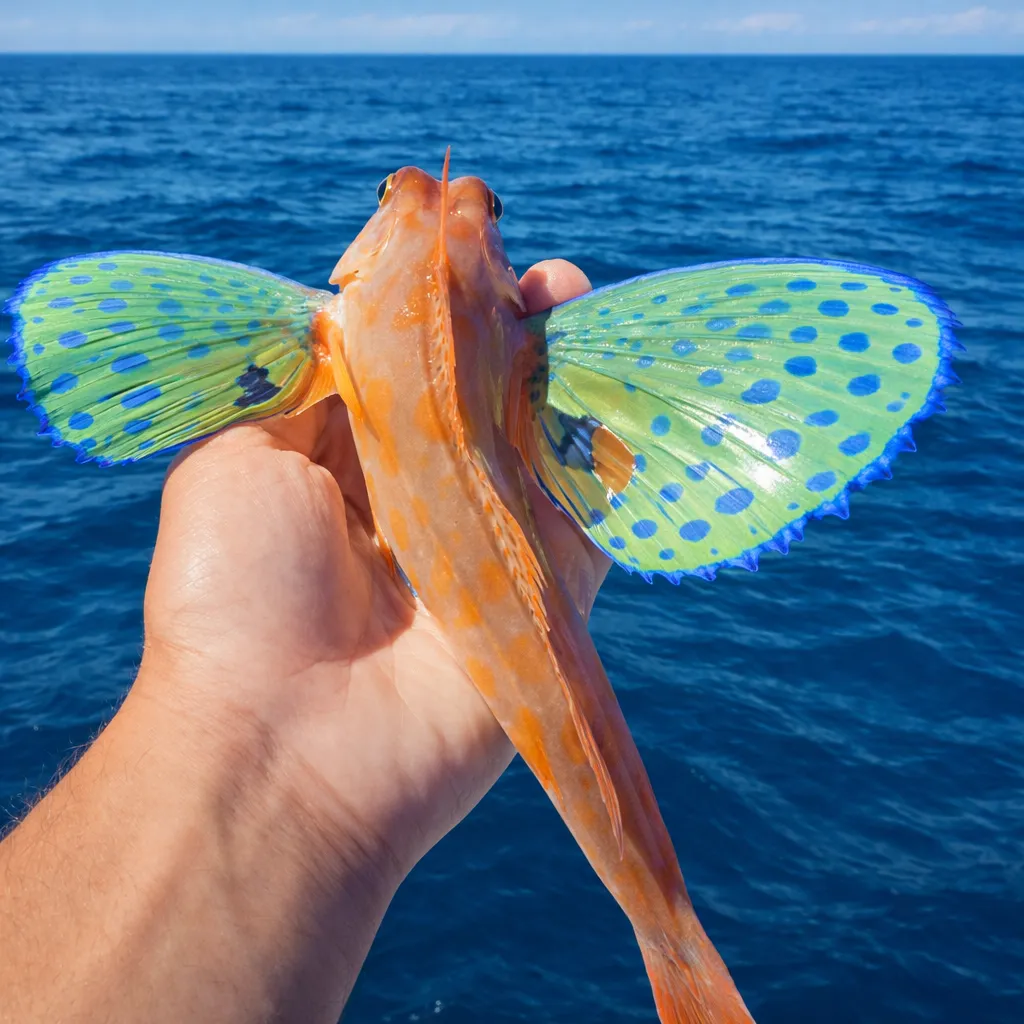
The taxonomic journey of this species has been one of historical debate and scientific revision. Classified within the family Dactylopteridae, the flying gurnard was once grouped alongside sea robins due to superficial similarities. However, modern genomic data has shifted its position significantly.
Evolutionary Lineage
Initially, Carl Linnaeus described the fish in 1758 as Trigla volitans, associating it with the true gurnards. For centuries, it remained within the order Scorpaeniformes—the “mail-cheeked” fishes—because of its suborbital stay, a bony strut in the skull. Contemporary DNA research now suggests this trait is a result of convergent evolution, actually placing the flying gurnard closer to Syngnathiformes, an order that includes seahorses and pipefish.
The Meaning of the Name
The specific epithet volitans is Latin for “flying,” a persistent misnomer based on early 18th-century observations of its massive fins. In ancient Hawaii, the fish was known as pinao, which is also the word for a dragonfly, further cementing its aerial reputation in cultural history. Despite the confusion, the name has stuck, even though the flying gurnard sea life is strictly demersal.
The Helmet and the Wings
The physical architecture of Dactylopterus volitans is a study in protection and specialization. It is often called the “helmet gurnard” because its head is entirely encased in massive, bony plates.
Cranial Armor and Spines
The “helmet” is not just for defense; it creates a rigid shield against predators. At the rear of this armor are two long, sharp preopercular spines that point backward. These spines act as a physical deterrent and provide structural support for the pectoral girdle. This makes the flying gurnard fish an uncomfortable meal for larger predators like sharks or groupers.
The Split Pectoral Fins
The most striking feature of the flying gurnard is the dichotomy of its pectoral fins, which are split into two sections:
- Anterior “Hands”: The front section consists of six rays that are largely free from the membrane. These function like fingers, allowing the fish to probe and stir up the sediment to find food.
- Posterior “Wings”: The larger rear section forms the expansive “wings”. These fins feature semitransparent membranes with phosphorescent electric blue edges and spots. In the dim light of the seabed, these wings can actually glow, providing a stunning visual for anyone lucky enough to see a flying gurnard 4k video or observe one in person.
Flying Gurnard Location and Environmental Dynamics
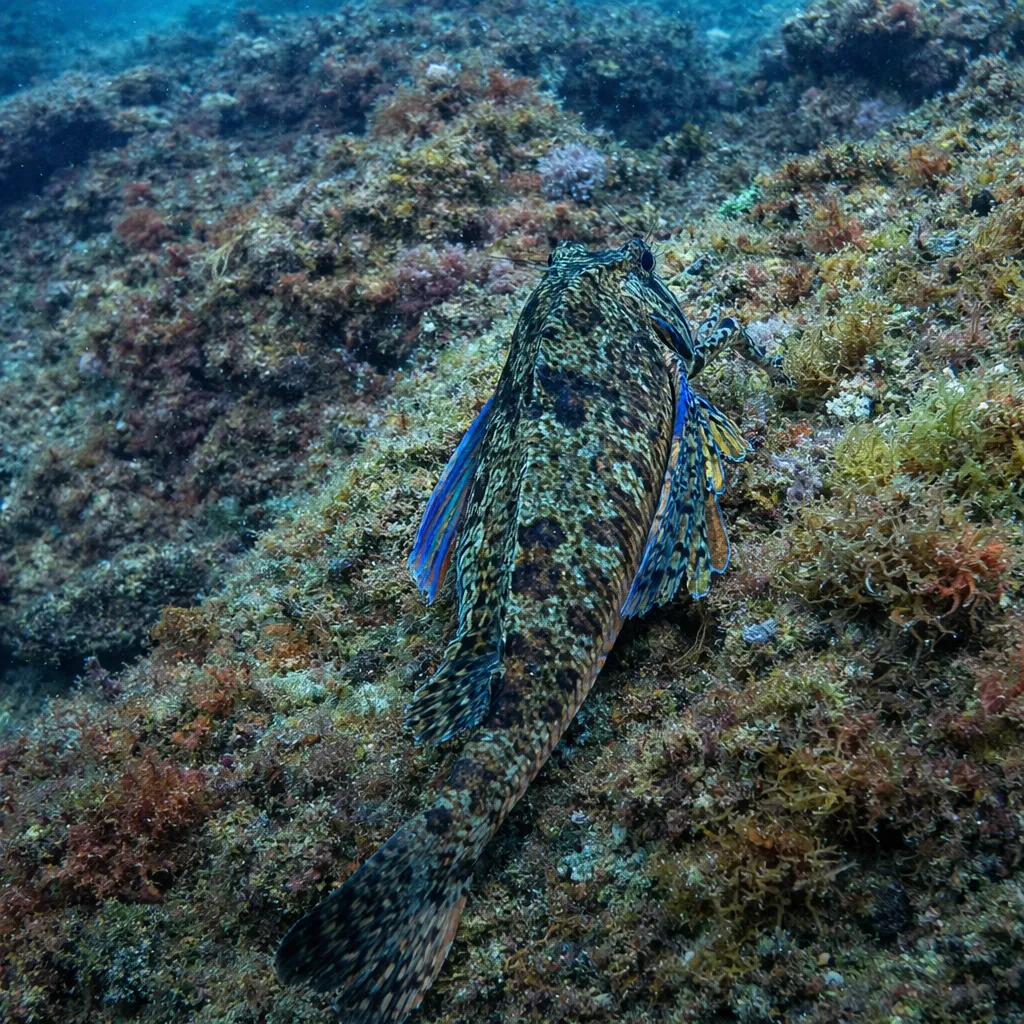
Understanding the flying gurnard location is key to appreciating its global impact. This species is a warm-water inhabitant, with its distribution largely dictated by the 20°C isotherm.
Global Range
The Flying gurnards are found across the Atlantic Ocean and the Mediterranean Sea.
- Western Atlantic: Their range extends from Massachusetts down to Argentina, including the Gulf of Mexico and the Caribbean.
- Eastern Atlantic: They are found from the English Channel to Angola, as well as the Azores and Madeira.
- Mediterranean: They are particularly common near Lampedusa, Malta, and Crete.
Habitat Preferences
As a demersal species, it is most frequently found at depths between 1 and 100 meters. They prefer sandy bottoms, where they can use their specialized rays to forage, but they are also found in muddy estuaries and near rocky outcroppings that offer cover. Interestingly, while adults live on the bottom, the flying gurnard sea cycle begins with a pelagic phase, where larvae and juveniles drift in open ocean currents before settling.
The “Walking” Fish: Locomotion and Foraging
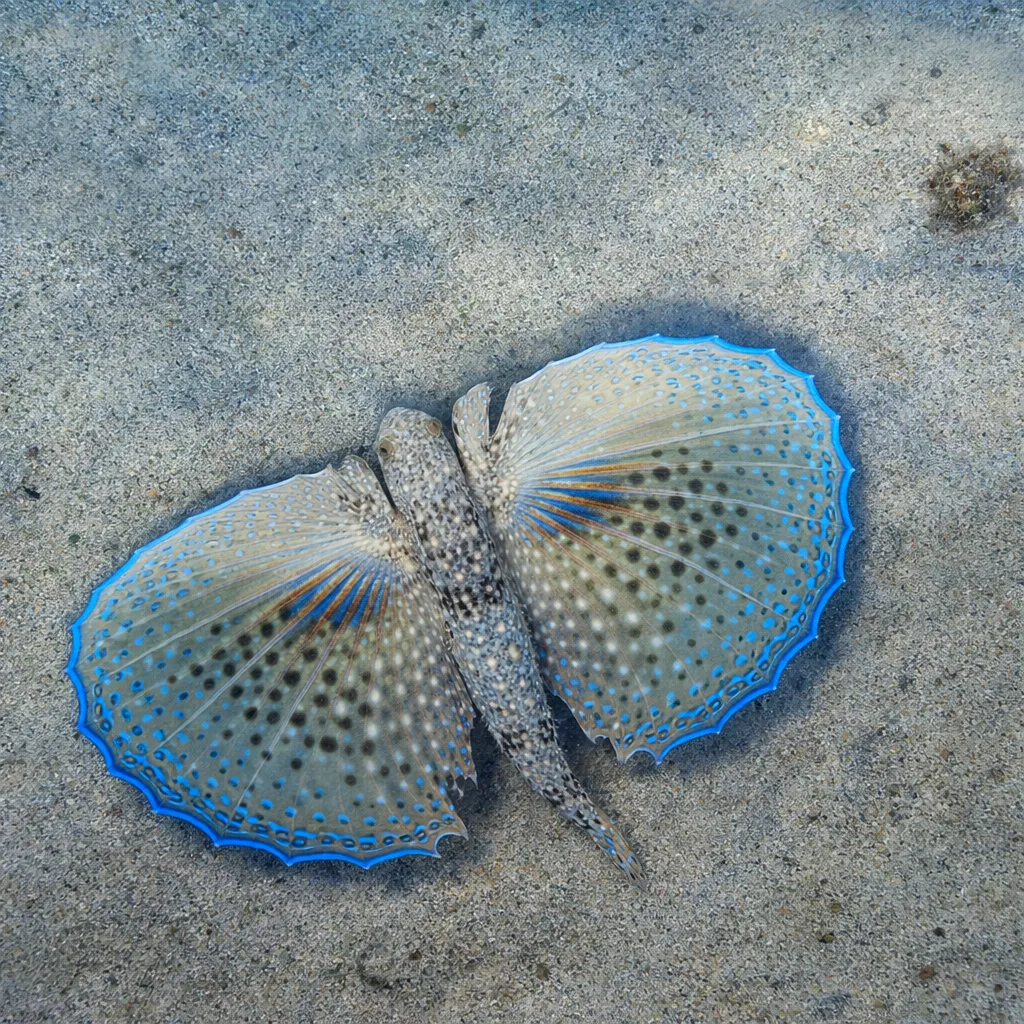
One of the most viral topics online is the flying gurnard walking behavior. This fish has evolved a sophisticated system for terrestrial-like travel on the seafloor.
Walking on the Bottom
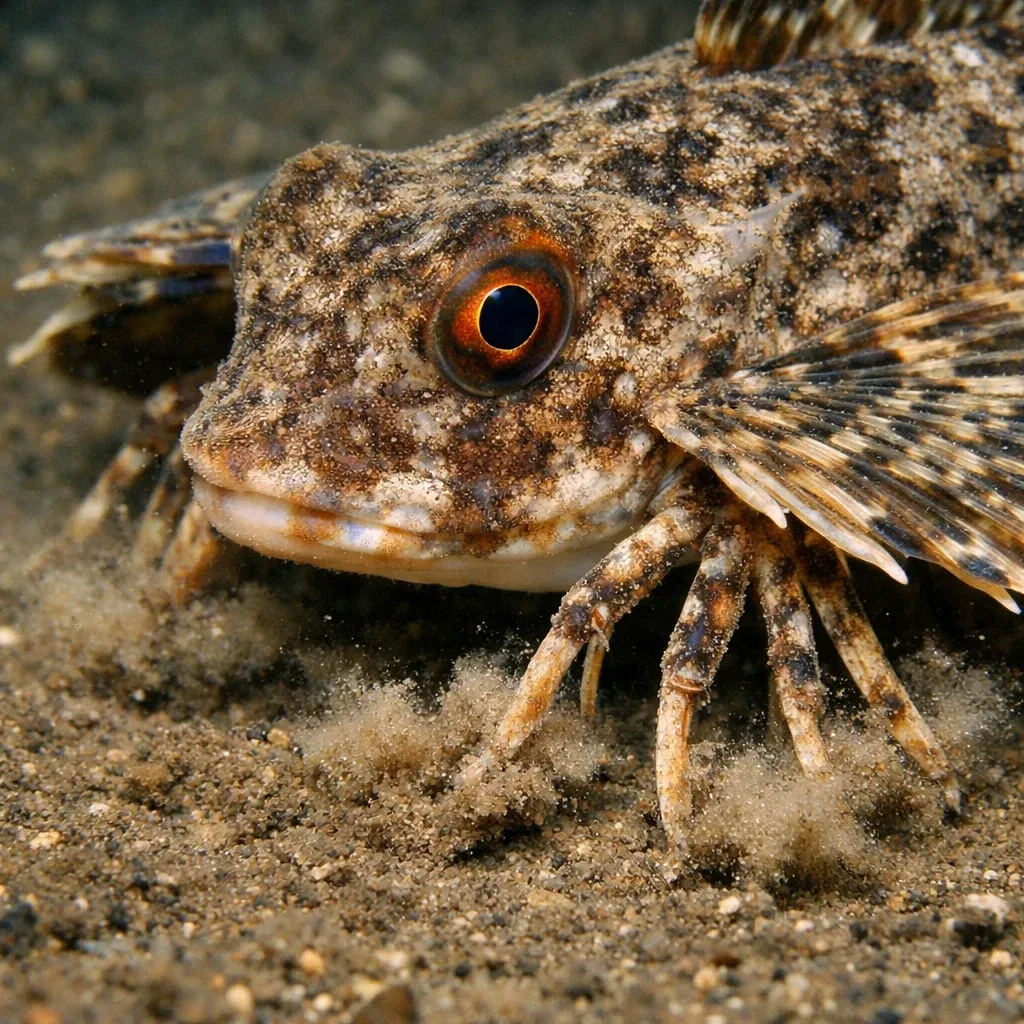
The flying gurnard walking mechanism is driven by the pelvic fins located underneath the body. These fins have finger-like spines that the fish uses like legs to stroll across the substrate. This allows the armored fish to conserve energy compared to sustained swimming while it methodically searches for prey.
The Foraging Strategy
The flying gurnard diet consists primarily of crustaceans, mollusks, and small fish hidden in the sand. During the foraging process, the fish uses its “hands” (anterior pectoral rays) to “tap” or “drum” on the sand to disturb buried organisms. Once prey is flushed out, the fish uses oral suction to swallow it whole.
Social Dynamics: The Nuclear Forager
The flying gurnard is a “nuclear forager,” meaning its digging activity attracts a “pack” of followers. These opportunistic predators, such as Yellow Jacks or Coneys, hover nearby to snatch up creatures that the gurnard disturbs but does not eat. This is a classic example of commensalism in the flying gurnard sea community.
Defense Mechanisms: Flash and Armor
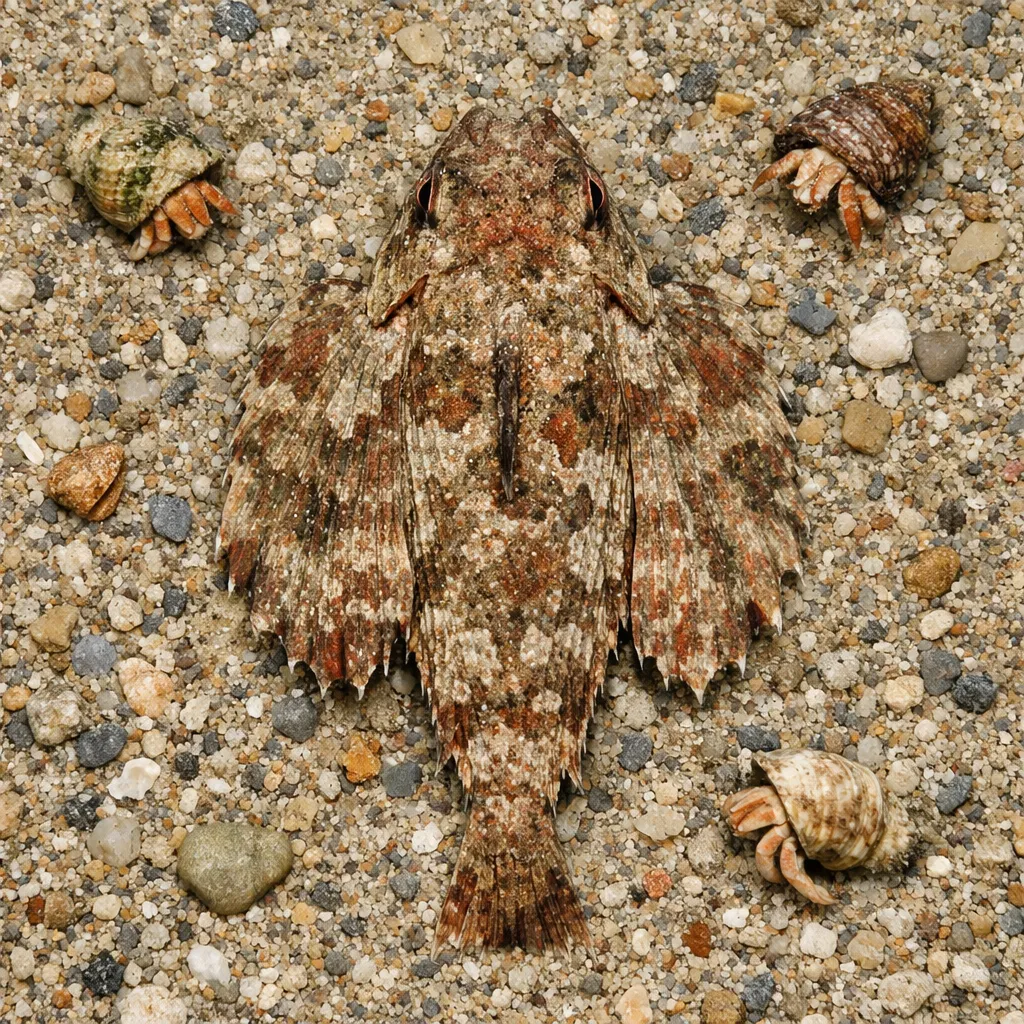
Since they are relatively slow-moving, flying gurnards have developed a layered defense system.
- Cryptic Camouflage: When resting, the fish folds its wings and blends perfectly with the mottled sand and rocks.
- The “Flash” Display: If a predator approaches, the fish suddenly spreads its enormous blue-edged wings. This sudden increase in size and the bright, glowing colors are designed to startle the attacker.
- Mechanical Deterrence: If the warning fails, the bony cranial helmet and serrated scales provide a final line of passive defense.
Acoustic Communication: The “Screaming” Fish
The name “gurnard” is onomatopoeic, derived from words meaning “to grunt”. This refers to the flying gurnard sound—a distinct drumming or growling produced by contracting specialized muscles against the swim bladder. Fishermen have often reported being startled by a fisch falling flying gurnard on deck that emits loud, guttural “screams”. These sounds are used for predator deterrence and signaling presence to other members of the species.
The Flying Gurnard FAQ
In this section, we address the most common misconceptions and queries regarding this species.
Are flying gurnards rare?
No, flying gurnards are not rare; they are quite abundant throughout their tropical and warm-temperate range. However, because they are shy and exceptionally well-camouflaged, they can be difficult for casual observers to spot. In northern regions like Canada, they are considered rare “strays” brought in by warm currents.
Are gurnards venomous?
A common concern is whether the Flying Gurnard poisonous or venomous. The answer is no; they are not venomous. Unlike their cousins, the scorpionfish, they lack venom glands and specialized spines. However, their sharp preopercular spines and serrated scales can cause painful mechanical injuries if they are handled improperly.
Can flying gurnards fly?
Despite the name and the wings, flying gurnards cannot fly like birds or even like true flying fish. They are too heavy, and their fins are not designed for aerial lift. While they may occasionally skip or “glide” briefly along the water’s surface to escape a predator, they are primarily bottom-dwellers.
Are flying gurnards good to eat?
Yes, they are edible and highly valued in many cultures. While often ignored by American anglers, they are sold as “chicken” in Senegal due to their firm, sweet, white meat. They are high in protein and Omega-3 fatty acids.
| Nutrient | Amount per 100g |
| Protein | 19.4 g |
| Fat | 4.0 g |
| Calcium | 30.8 mg |
| Vitamin A | 30.2 µg |
Differentiating the Flying Gurnard vs Sea Robin
It is common for beachgoers to confuse the flying gurnard with the sea robin (Triglidae). While both have “walking” rays and large pectoral fins, there are key differences:
- Armor: The flying gurnard has a much heavier, box-like bony helmet.
- Fins: Sea robins have three separate “walking” rays, whereas the gurnard has about six.
- Wings: The brilliant electric blue and phosphorescent edges are unique to the flying gurnard.
Challenges for the Flying Gurnard as Pet
For those looking to bring this alien beauty into their homes, keeping a flying gurnard aquarium inhabitant is a major commitment. According to resources like Petnarianpets, these fish require specialized care.
Space and Tank Requirements
Due to the Flying Gurnard size (up to 20 inches) and their need for a large sandy area to walk and forage, a standard home tank is often insufficient. They require very large, wide tanks with a deep sand bed.
Diet and Behavior
In a flying gurnard aquarium, they must be fed a diet of live or frozen crustaceans to mimic their natural foraging habits. Because they are diurnal and shy, they should not be housed with aggressive tank mates that might nip at their delicate wings. Prospective owners should check the flying gurnard price at specialized retailers, as they are often sold as exotic specimens.
Engineering Inspiration: Biomimicry and Robotics
The unique biology of the flying gurnard has caught the attention of engineers at institutions like Princeton and Drexel. Researchers are studying the kinematics of their fins to design unmanned aerial-aquatic vehicles (UAAVs). The gurnard’s ability to deploy its wings at 90 degrees acts as a high-performance brake, reducing stopping time in robotic models by nearly 50%. This makes them a primary model for the future of soft robotics
Conservation and the Future of the Species
Currently, Dactylopterus volitans is classified as a species of “Least Concern” by the IUCN Red List. Their wide distribution and the fact that they are not a primary target for industrial fishing keep their populations stable.
However, they remain vulnerable to:
- Bottom Trawling: Being demersal, they are often caught as by-catch in industrial nets, which also destroy the sandy reefs they call home.
- Climate Change: Rising ocean temperatures may shift their distribution, forcing them into new areas where they may lack established food sources.
- Habitat Degradation: Pollution and coastal development can harm the seagrass and shallow reefs where larvae settle.
A Masterpiece of the Deep
The flying gurnard is more than just a biological oddity; it is a masterpiece of evolutionary engineering. From its “walking” gait to its “screaming” swim bladder and its glowing blue wings, it represents the incredible diversity of the flying gurnard sea environment. Whether viewed in a flying gurnard video, studied for robotic design, or appreciated by a diver on the Mediterranean floor, this fish reminds us of the endless wonders hidden beneath the waves.
As we continue to explore the oceans, protecting the habitats of the flying gurnard—the sandy bottoms and shallow reefs—remains essential. For more specialized information on exotic species and care, community resources like Petnarianpets offer a gateway to understanding these complex inhabitants of the blue. Respect the wings, watch the “walk,” and cherish the “ghostly” glow of one of nature’s most eccentric creations.
Stay wild, stay curious – only on PetNarianPets!
Join The Fun On Instagram, X, Pinterest and YouTube.
Wanna Say Something about animals ? Contact Us.