An Ultimate Guide to the Babirusa
The Indonesian archipelago, particularly the Wallacean transition zone, serves as one of the world’s most significant biological laboratories for the study of allopatric speciation. Among the most enigmatic and visually striking mammalian lineages within this region is the genus Babyrousa. Known colloquially as the “deer-pig” due to its deer-like legs and porcine body, the Babirusa is a living relic of a suid lineage that diverged from the main swine family millions of years ago. To understand this creature is to look back into a prehistoric version of the natural world, where evolution took a turn toward the bizarre.
In this comprehensive guide, we will explore the intricate biology, the misunderstood dental anatomy, and the conservation status of this incredible species. We will also address the most pressing questions about their safety, religious considerations regarding their meat, and the rare occurrence of the “self-impaling” tusk.
Table of Contents
Taxonomic Foundations and the Evolution of the Babyrousa
The taxonomic history of these animals is a narrative of shifting systematic perspectives. For much of the 19th and 20th centuries, all members of the genus were consolidated into a single species. However, modern phylogenetic techniques and extensive morphological analysis of the Babirusa skull led to a 2002 revision by taxonomists Meijaard and Groves. Today, science recognizes four distinct species, with the (Babyrousa babyrussa) serving as the nominate species of the genus.
Molecular evidence indicates that the ancestors of the modern Babirusas diverged from other suids—the ancestors of today’s wild boars and domestic pigs—approximately 12 to 26 million years ago. This deep evolutionary isolation in the sanctuary of the Indonesian islands allowed them to develop traits seen nowhere else in the pig family. While they are classified under the family Suidae, they are unique enough to warrant their own subfamily, Babyrousinae. This taxonomic isolation is a key part of what is unique about a babirusa; they are effectively the last survivors of an ancient branch of the porcine family tree.
Detailed Morphology and Modern Babirusa size Standards
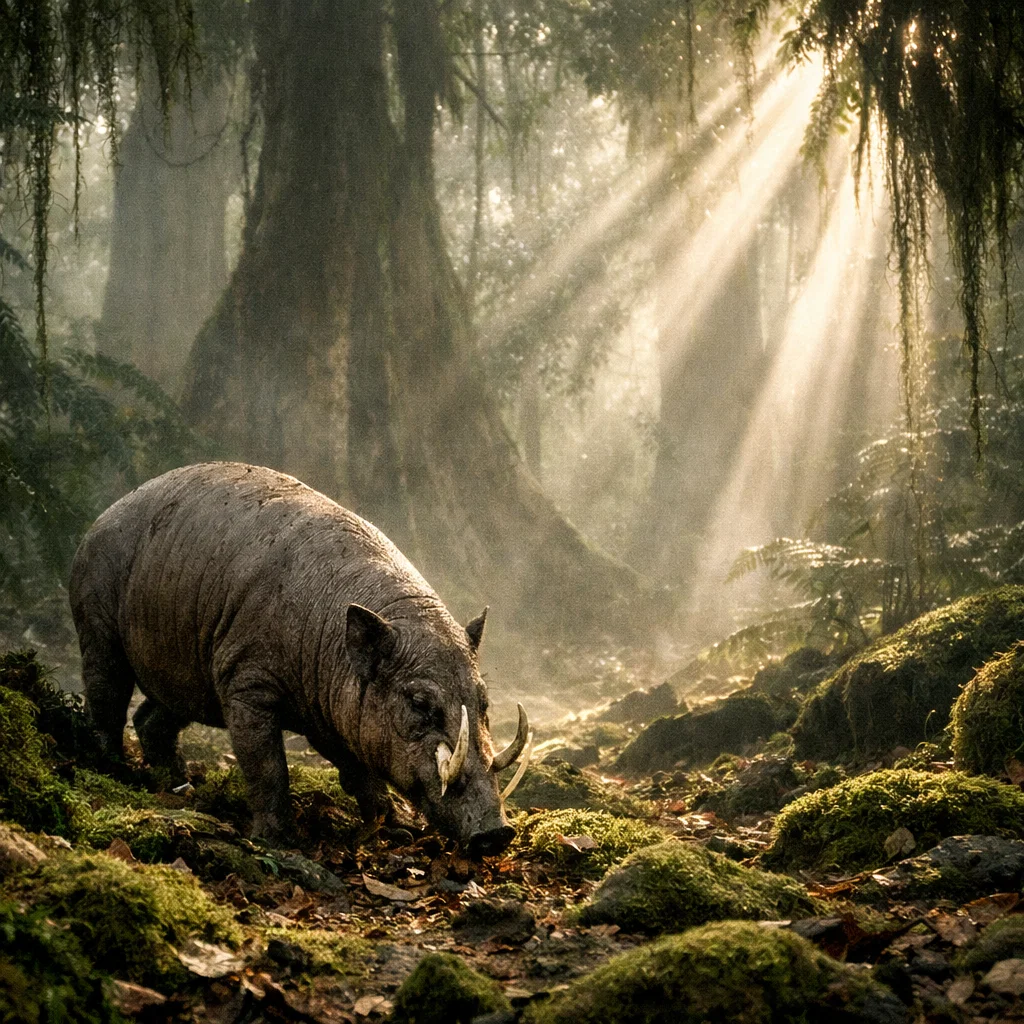
When observing a Babirusas pig, the most immediate impression is its strange proportions. Unlike the stocky, low-slung build of a common wild boar, these animals possess long, slender legs that facilitate agile movement through the hilly and swampy terrain of islands like Buru and Sulawesi. Their bodies are barrel-shaped, covered in skin that ranges from a pale grey to a golden-brown hue.
The size varies slightly depending on the specific island population, but general metrics remain consistent across the genus. Adult males are significantly larger and more robust than females, exhibiting a clear example of sexual dimorphism.
| Feature | Male Average | Female Average |
| Weight | 60 kg – 100 kg | 43 kg – 70 kg |
| Shoulder Height | 65 cm – 80 cm | 60 cm – 75 cm |
| Head-Body Length | 85 cm – 110 cm | 80 cm – 100 cm |
| Skin Type | Often wrinkled, grey to golden | Thinner, less wrinkled |
The Buru species, in particular, is noted for its “hairy” or “golden” appearance. While the Sulawesi species often looks nearly hairless, the Buru variety possesses a thick pelage of roughly 3 to 5 cm in length. This hair provides essential protection against the dense, thorny undergrowth of the primary rainforests it inhabits.
The Architectural Wonder of the Babirusa skull
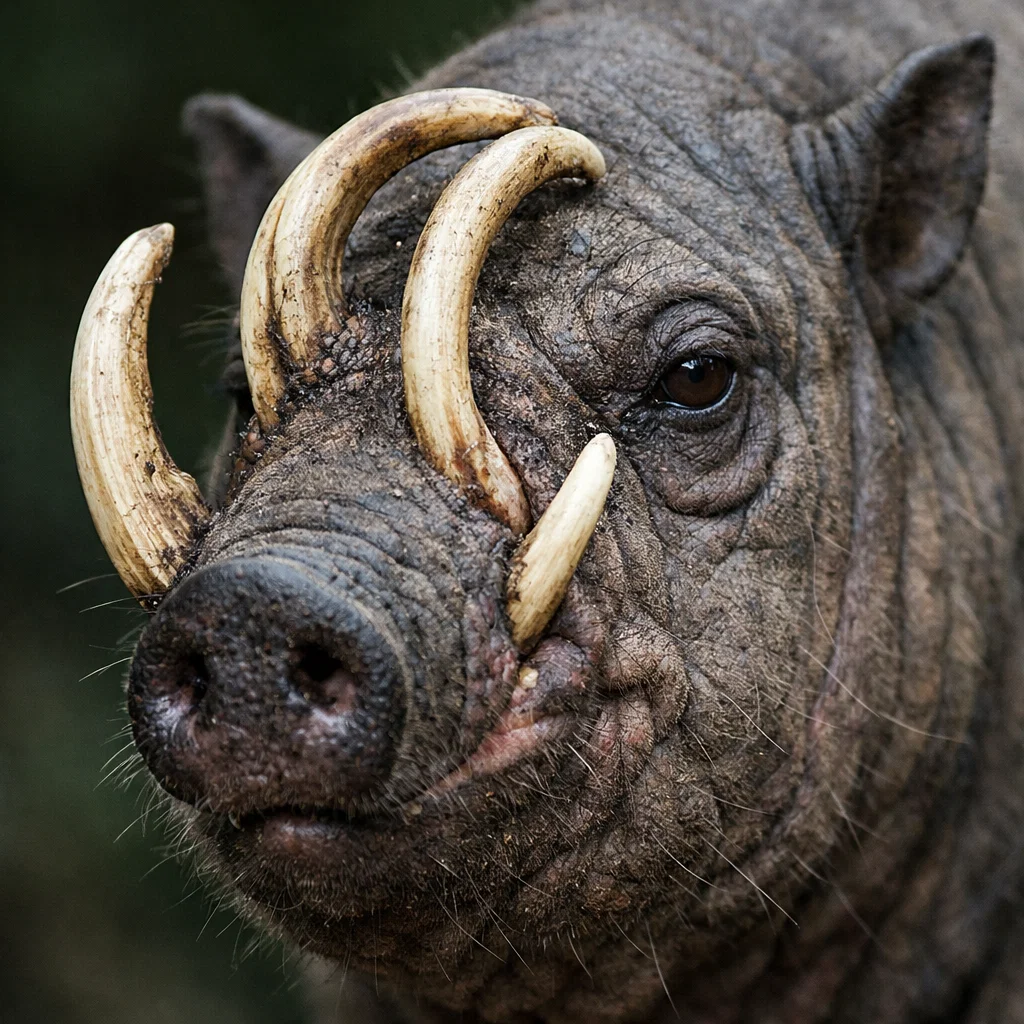
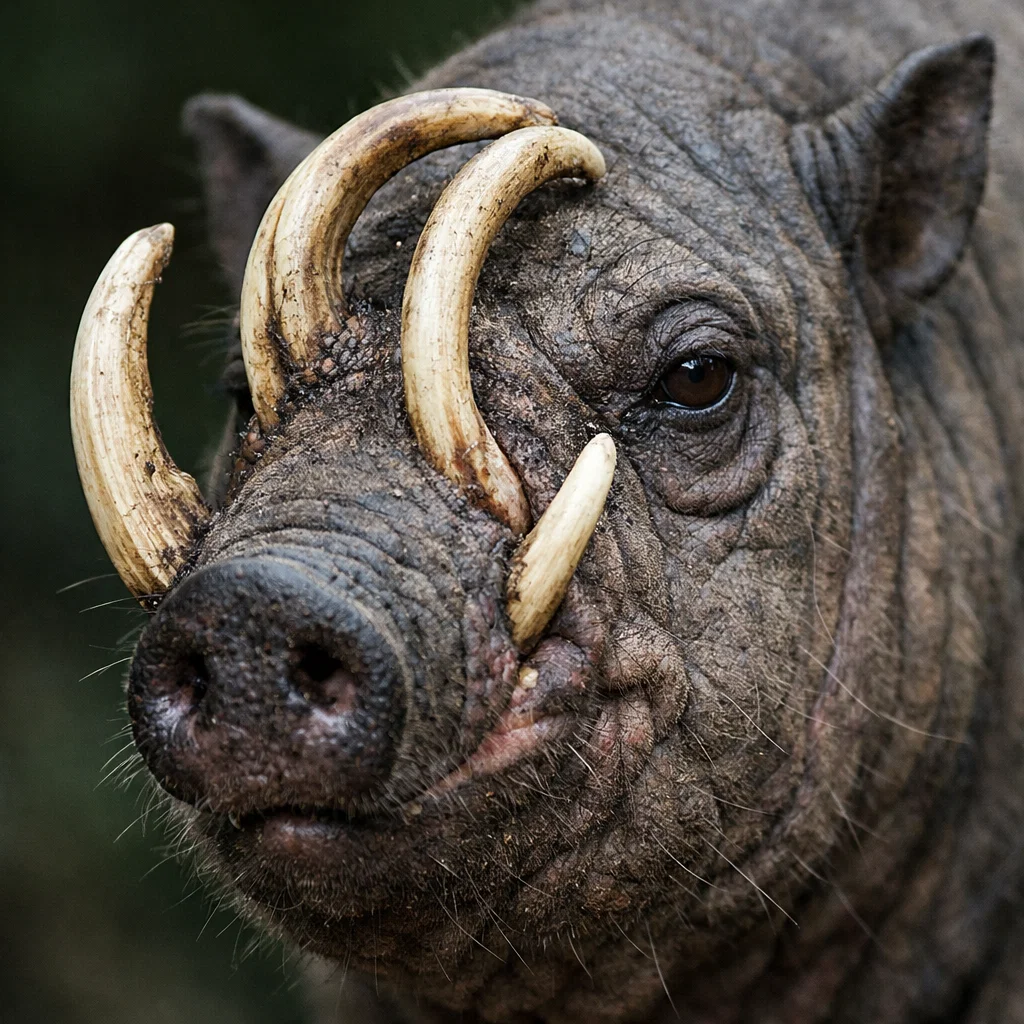
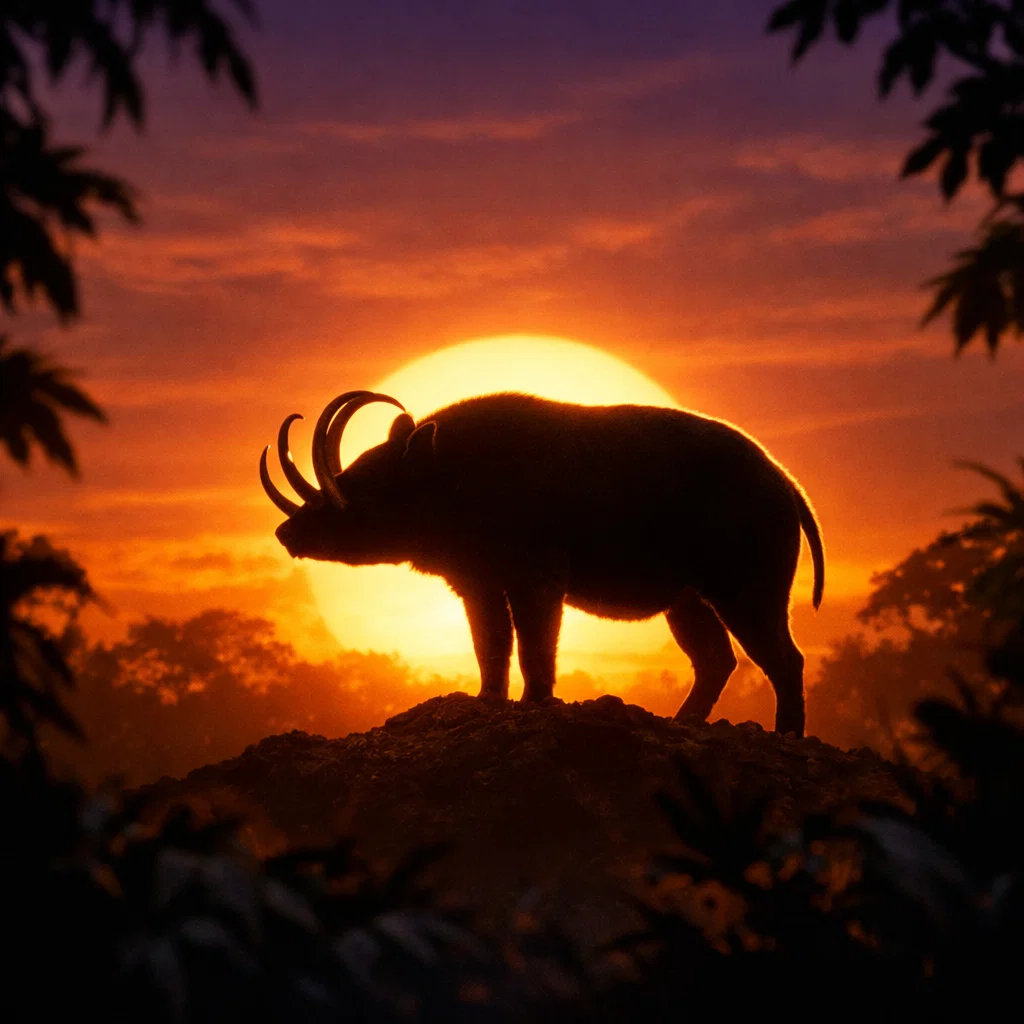
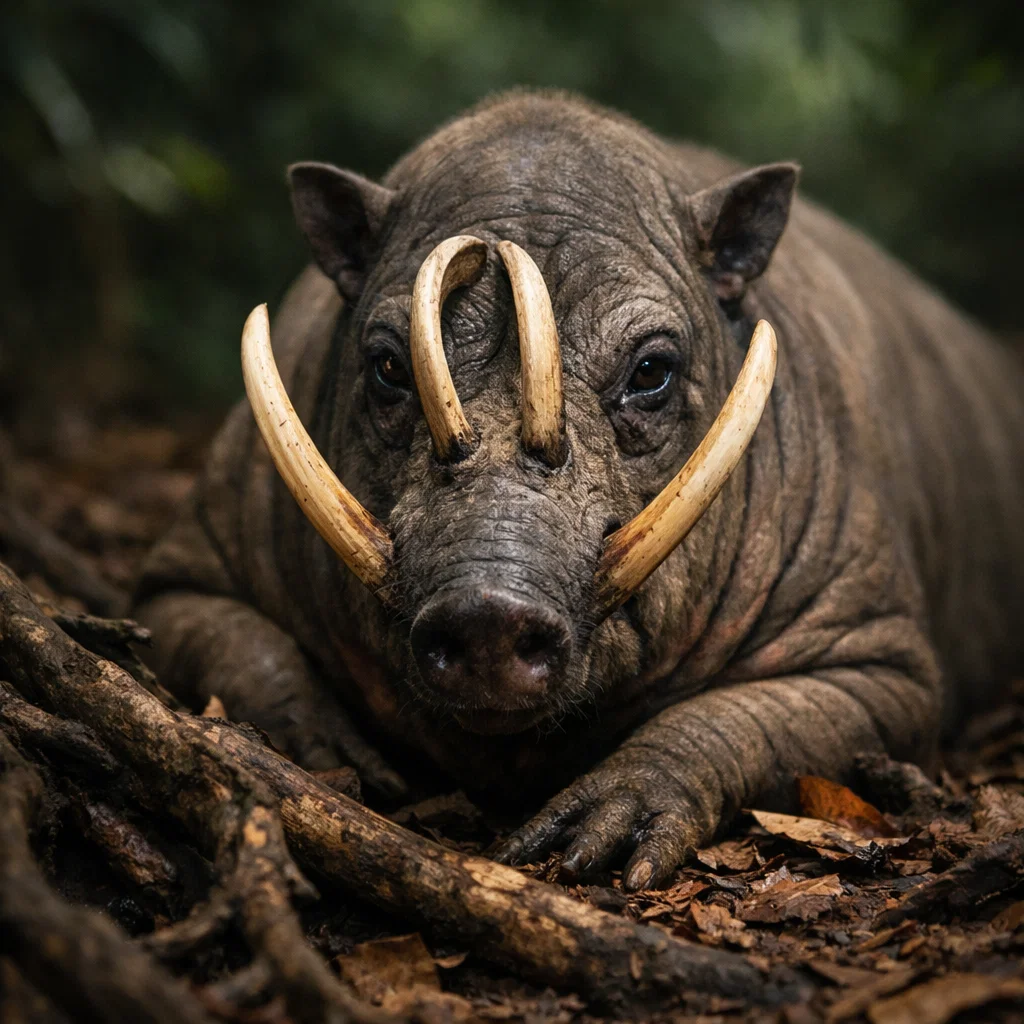
No discussion of this animal is complete without addressing its most famous feature: the tusks. Their skull is an anomaly in the mammalian kingdom. While most pigs have tusks that grow outward from the side of the mouth, the male babirusa’s upper canines undergo a radical developmental shift.
The alveoli (the sockets of the teeth) of the upper canines are actually rotated. This causes the teeth to grow vertically, piercing through the skin of the snout and curving backward over the forehead toward the animal’s eyes. The lower canines also grow upward, but they emerge from the side of the mouth in a more traditional, albeit exaggerated, fashion. This dental arrangement has sparked centuries of debate among scientists and locals alike. For years, .
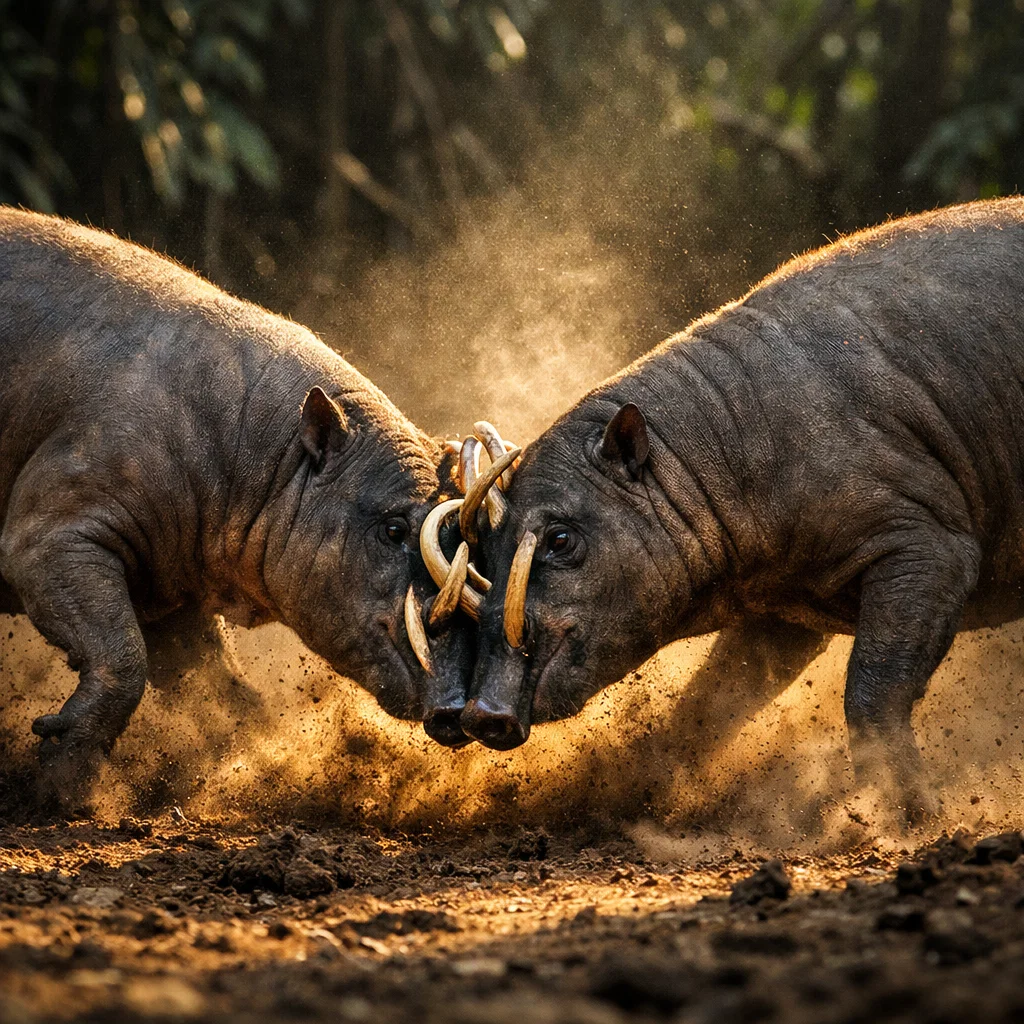
People believed the tusks were used for fighting, but research shows that males actually prefer “boxing” with their front hooves. The tusks are relatively brittle and may serve more as a visual signal of maturity or a shield to protect the eyes during combat.
Fatal Ornaments: Investigating Babirusa tusk death
One of the most persistent and macabre questions asked by naturalists is: Do babirusa tusks hurt them? Because the tusks grow continuously throughout the animal’s life, they can occasionally become a liability. In rare cases, if the tusk is not broken or worn down, it can curve back so far that it begins to grow into the animal’s own forehead.
The phenomenon of Babirusa tusk death occurs when the tip of the tusk eventually penetrates the cranium. While this is often cited as a common end for the species, it is actually quite rare in the wild. Most males break their tusks in social displays or wear them down against trees long before they reach a dangerous length.
However, in captive settings where animals live longer and face fewer environmental challenges, the risk increases. This “evolutionary design flaw” is a fascinating example of how a sexual selection trait (the tusks) can sometimes conflict with the survival needs of the individual.
Growth and Development of the Babirusa baby
The reproductive cycle of this species is remarkably different from that of common pigs. While a domestic pig might have a litter of 10 or 12 piglets, a Babirusa baby is usually part of a very small group. A typical litter consists of only one or two piglets, and rarely three.
This low birth rate suggests a high-investment parental strategy. The Babirusa baby is born in a precocial state, meaning it is much more developed at birth than other suids. Interestingly, babirusa piglets lack the characteristic camouflage stripes found on the young of almost all other wild pig species. Instead, they are born with a solid, light-colored coat.
They are capable of eating solid food within just 10 days of birth, though they continue to nurse for up to eight months. This rapid development is necessary in a forest environment where predators like pythons and monitors are constant threats.
Estimating the Average Babirusa lifespan
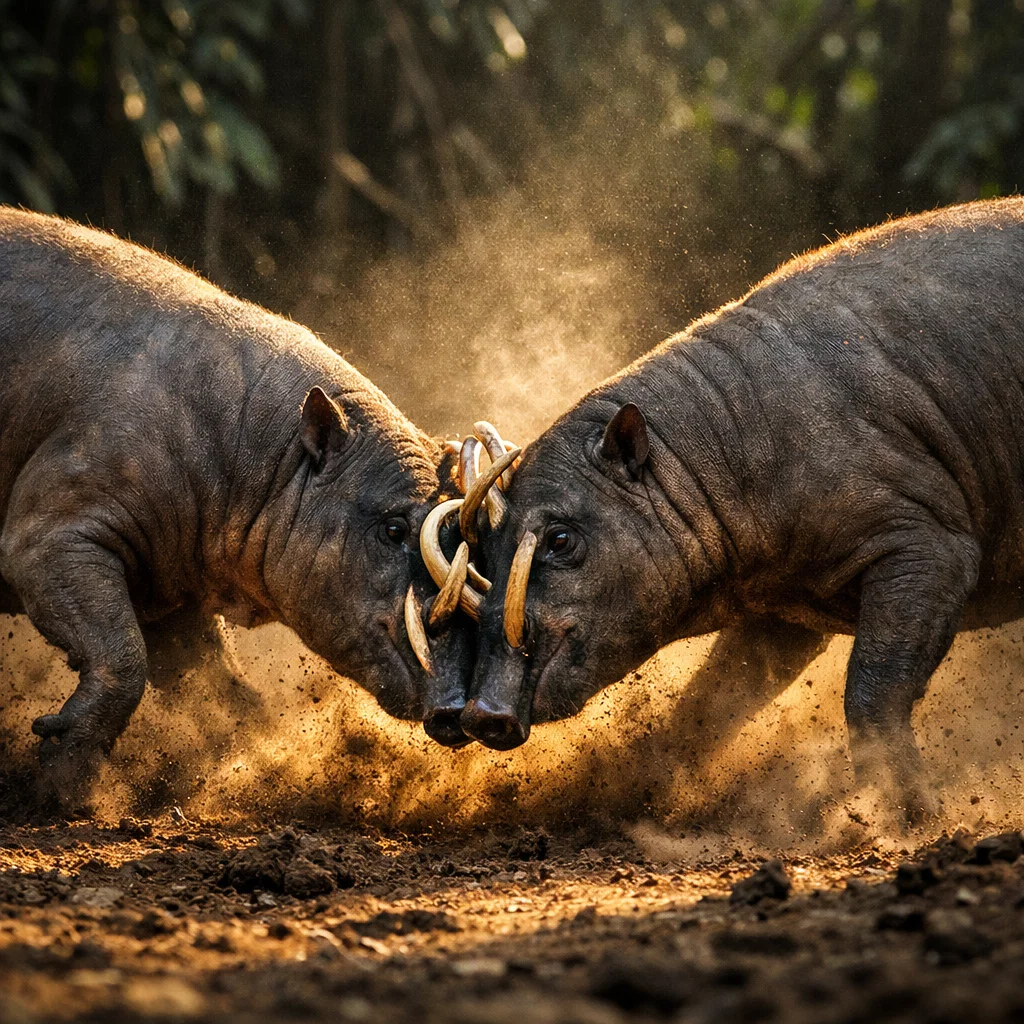
The survival duration of these animals depends heavily on their environment. In the wild, the Babirusa lifespan is estimated to be between 7 and 12 years. The rigors of island life—including parasites, competition for mates, and the potential for tusk-related injuries—keep the population turnover relatively high.
However, in captivity, where they are protected from predators and provided with a stable diet, they can live for more than 24 years. This longevity in zoos has allowed scientists to study their aging process in detail. Interestingly, as they age, their tusks continue to thicken and curve, often requiring veterinary intervention in older males to prevent the aforementioned cranial penetration.
Behavioral Traits of the Babirusa pig
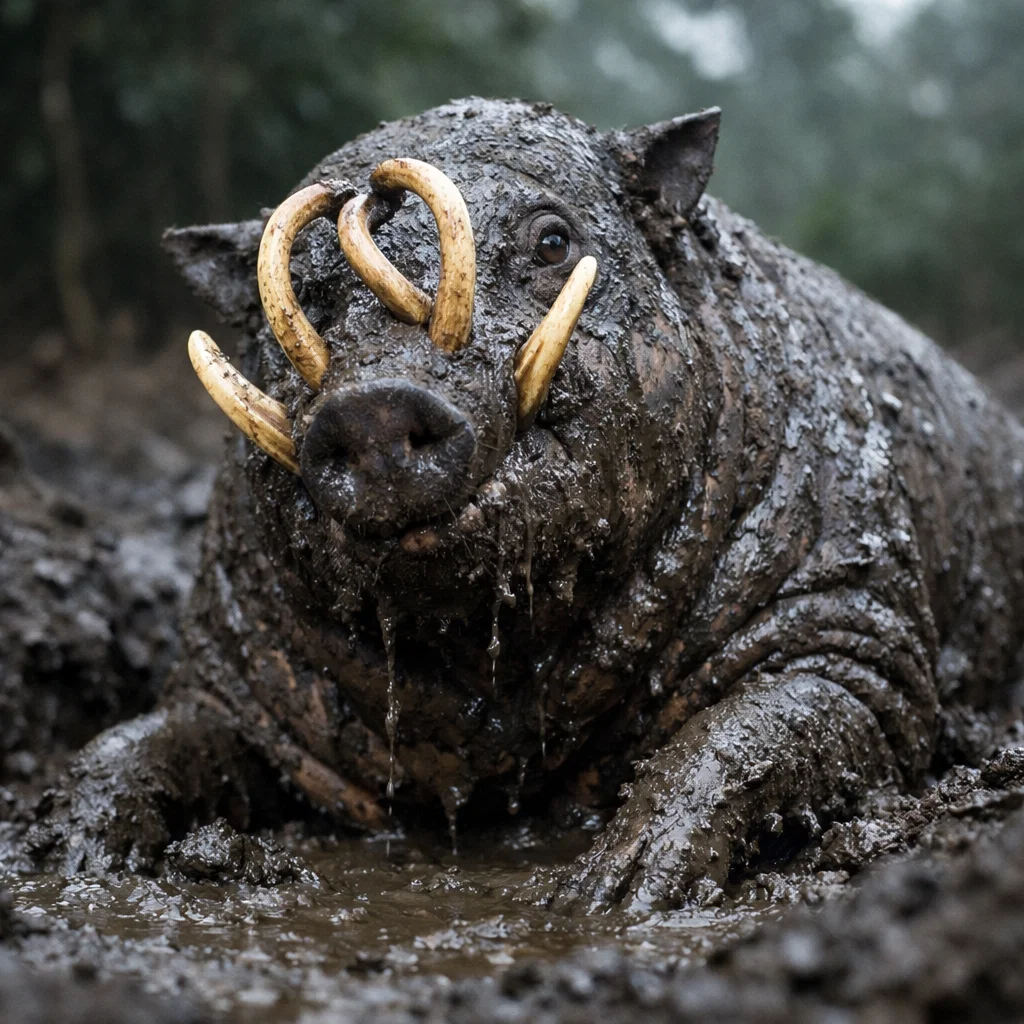
The behavior of the Babirusa pig is as unique as its appearance. Unlike many other wild pigs that are highly aggressive, the babirusa is generally shy and elusive. They are diurnal, meaning they are most active during the day. They spend a significant portion of their morning foraging and wallowing in mud to regulate their body temperature and protect against insect bites.
One of their most peculiar behaviors is “ploughing.” A male will kneel on his chest and slide forward through soft sand or mud while salivating profusely. This is believed to be a scent-marking behavior, as they possess glands in the neck that release chemical signals during the process. They are also excellent swimmers, often seen crossing small stretches of water to reach uninhabited islands in the Sula Archipelago.
Investigating the Question: Are babirusa dangerous?
Given their prehistoric look and sharp lower tusks, people often ask: Are babirusa dangerous to humans? In general, the answer is no. They are far more likely to flee than to fight. They lack the aggressive “charge-first” mentality of the wild boar. However, they are still large, powerful wild animals.
If cornered, or if a female perceives a threat to her Babirusa baby, they can defend themselves with surprising speed. Their lower tusks are sharp and can cause significant puncture wounds. In the wild, their primary defense is their agility; their long legs allow them to bolt through dense undergrowth where a human or a larger predator would struggle to follow. As with all wildlife, they deserve a respectful distance, but they are not considered a major threat to human safety.
Trophic Ecology: What Do They Eat?
The digestive system of the babirusa is another point of biological intrigue. They possess a two-chambered stomach, which is more complex than the single-chambered stomach of a domestic pig. This led early researchers to believe they might be ruminants (animals that chew cud), but this was later disproven.
Instead, they are specialized omnivores. Because they lack a thick bone in their snout, they cannot “root” in hard soil like other pigs. This means they are restricted to soft mud or the forest floor. Their diet includes:
- Fallen Fruit: They are highly dependent on the seasonal fruiting of rainforest trees.
- Leaves and Bark: They browse on low-hanging vegetation.
- Insects and Small Vertebrates: They occasionally supplement their diet with animal protein.
- Salt Licks: They are frequent visitors to natural mineral licks, which are essential for their health, especially for pregnant females.
Religious and Cultural Factors: Can Muslims eat babirusa?
The human-wildlife dynamic on islands like Buru is heavily influenced by religion. A common question in the region is: Can Muslims eat babirusa? Because the animal is taxonomically a member of the pig family (Suidae), the answer is a firm no. Under Islamic dietary law, all pork products are considered Haram (forbidden).
On Buru Island, the population is roughly split between Muslim and Christian/Animist communities. This has created a unique conservation situation. In the northern parts of the island, where Muslim populations are more concentrated, the babirusa faces very little hunting pressure.
However, in the southern regions, where Christian and Animist groups live, the animal is frequently hunted for its meat, which is considered a local delicacy. This disparity in hunting pressure has led to “safe zones” for the species based entirely on the religious demographics of the human residents.
Conservation Status: Is the babirusa extinct?
While sightings were rare for several decades, the question “Is the babirusa extinct?” can now be answered with a hopeful “no.” In 2021, the Maluku Natural Resources Conservation Agency (BKSDA) successfully captured camera trap footage of the Buru babirusa in the Masbait Nature Reserve. This was a major milestone, as it was the first official confirmation of the species in that area for over 25 years.
Despite this, the species is listed as “Vulnerable” by the IUCN. They face several critical threats:
- Habitat Loss: Logging and the expansion of coconut and cacao plantations are shrinking their primary forest home.
- Illegal Hunting: In non-Muslim areas, they are still targeted for bushmeat.
- Mining Activity: Illegal gold mining in the interior of Buru Island has increased human encroachment into previously untouched babirusa habitats.
Comparative Species Table: The Four Types of Babirusa
To better understand the diversity within this genus, we must look at how the different species compare. While they all share the “deer-pig” moniker, their physical traits vary based on their geographic isolation.
| Species Name | Common Name | Native Location | Primary Characteristic |
| Babyrousa babyrussa | Buru Babirusa | Buru, Mangole, Taliabu | Long, thick golden hair; smaller tusks. |
| Babyrousa celebensis | N. Sulawesi Babirusa | Northern Sulawesi | Nearly hairless; very large, dramatic tusks. |
| Babyrousa togeanensis | Togian Babirusa | Togian Islands | Largest species; lighter hair than the Buru species. |
| Babyrousa bolabatuensis | Bola Batu Babirusa | S. Sulawesi | Known primarily from fossils; possibly extinct. |
Why the Babirusa skull Matters to Science
The study of the Babirusa skull and tusks is not just a matter of curiosity; it provides vital insights into evolutionary trade-offs. Scientists use the growth patterns of these tusks to understand how extreme sexual selection—the process where traits evolve solely for mating advantage—can lead to biological features that seem to hinder an animal’s daily survival.
Furthermore, the “ruminant-like” stomach of the Babirusa pig is being studied for its potential applications in understanding the evolution of complex digestive systems in other ungulates. By protecting this species, we are not just saving an animal; we are preserving a unique piece of the evolutionary puzzle that cannot be found anywhere else on Earth.
Summary of Quokka facts and Babirusa Comparisons
In the world of exotic mammals, the babirusa often gets compared to other “living fossils.” For example, when looking at Quokka facts, we see another animal that survived in island isolation. However, where the Quokka evolved to be social and “friendly” to humans, the babirusa evolved to be elusive and mysterious. Both represent the incredible diversity of island biogeography, but the babirusa’s journey—spanning millions of years and resulting in the self-piercing tusk—is arguably one of the most unique stories in all of zoology.
Frequently Asked Questions about the Babirusa
Why is it called a deer-pig?
The name comes from the Indonesian words babi (pig) and rusa (deer). The local people gave it this name because of its long, thin legs and the way its tusks resemble the antlers of a deer.
Do the tusks ever break?
Yes, frequently. In the wild, males often snap their tusks while fighting or while trying to navigate through thick, woody vegetation. A broken tusk is actually safer for the animal, as it eliminates the risk of the tusk growing into the skull.
Can they be kept as pets?
No. Aside from being a protected species under international law (CITES Appendix I), they have very specialized dietary and environmental needs. They require the high humidity and specific flora of an Indonesian rainforest to thrive.
What is the biggest threat to their survival?
Currently, the most significant threat is the combination of habitat fragmentation and illegal gold mining. When humans move into the deep interior of the islands to mine, they bring dogs and noise, and they often hunt the local wildlife for food, which can decimate a slow-breeding population of babirusas.
Conclusion: A Living Fossil Worth Protecting
The Babirusa is a masterpiece of evolutionary eccentricity. From the golden-haired hides of the Buru species to the gravity-defying tusks that characterize the Babirusa skull, every aspect of this animal tells a story of survival and isolation. While the threat of Babirusa tusk death remains a fascinating biological quirk, the true danger to this species comes from human activity.
By supporting conservation efforts in the Wallacean region and respecting the delicate balance of island ecosystems, we can ensure that the “deer-pig” continues to haunt the misty forests of Indonesia. Whether you are a student of biology or a curious traveler, the babirusa remains a powerful reminder that our world still holds secrets that are far more strange and wonderful than anything found in fiction.
Stay wild, stay curious – only on PetNarianPets!
Join The Fun On Instagram, X, Pinterest and YouTube.
Wanna Say Something about animals ? Contact Us.